
In the evolving landscape of modular blockchains, Celestia rollup data storage stands out as a game-changer for developers building scalable applications. With Celestia (TIA) trading at $0.3299, up $0.003380 or and 1.04% in the last 24 hours, its network continues to power efficient data availability for rollups. This guide dives into optimizing your rollups using Celestia’s data availability layer, helping you cut costs and boost performance without the baggage of monolithic chains.

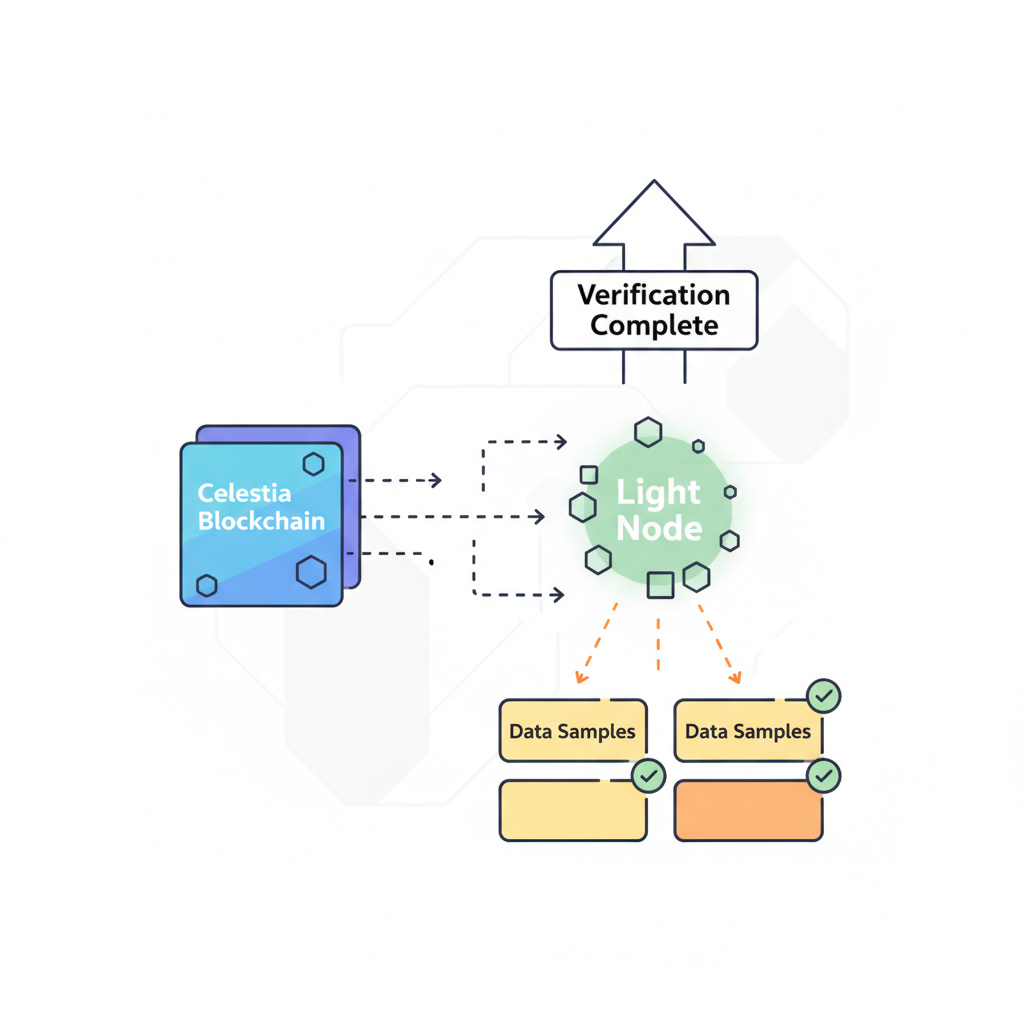
Celestia decouples data availability from execution and consensus, letting rollups post transaction data cheaply and verify it efficiently. Light nodes use data availability sampling (DAS) to check blocks without downloading everything, a clever trick powered by Namespaced Merkle Trees (NMTs). This setup means your modular rollups on Celestia can scale massively while keeping data accessible.
Mastering Celestia’s Data Availability Layer for Rollups
The Celestia data availability layer is the backbone of any rollup using it. Unlike Ethereum L2s where posting data eats into your budget, Celestia slashes those costs dramatically. Developers post raw transaction data to Celestia, which handles ordering and availability, freeing your rollup to focus on execution.
Think about it: in a modular stack, the DA layer stores transaction data and often provides consensus on ordering. Celestia nails this by being a minimal blockchain that only publishes and orders data, not executes it. This specialization drives down expenses, making it ideal for high-throughput apps.
Celestia provides a modular DA layer so light nodes can verify availability efficiently without downloading whole blocks.
For developers, this translates to faster deployments and lower gas fees. Rollups consume DA as a service, but Celestia makes it feel seamless, almost invisible.
Celestia (TIA) Price Prediction 2027-2032
Projections based on modular data availability (DA) adoption, rollup ecosystem growth, and blockchain scalability advancements from 2026 baseline ($0.33)
| Year | Minimum Price (USD) | Average Price (USD) | Maximum Price (USD) | YoY Growth from Prev. Avg (%) |
|---|---|---|---|---|
| 2027 | $0.45 | $1.25 | $4.00 | +242% |
| 2028 | $0.80 | $2.50 | $8.00 | +100% |
| 2029 | $1.20 | $4.50 | $12.00 | +80% |
| 2030 | $1.80 | $7.00 | $18.00 | +56% |
| 2031 | $2.50 | $10.50 | $25.00 | +50% |
| 2032 | $3.50 | $15.00 | $35.00 | +43% |
Price Prediction Summary
Celestia (TIA) is positioned for strong growth as the leading modular DA layer, with rollup adoption driving demand. Predictions account for market cycles: minima for bearish corrections and regulatory hurdles, averages for steady adoption, maxima for bull runs and tech breakthroughs. From 2026’s $0.33 baseline, TIA could achieve 45x average growth by 2032 in optimistic scenarios.
Key Factors Affecting Celestia Price
- Rapid rollup deployment and modular blockchain adoption using Celestia’s DA sampling (DAS) and Namespaced Merkle Trees (NMTs)
- Cost advantages over Ethereum L2s, attracting developers and reducing data posting expenses
- Crypto market cycles, with post-2026 bull phases amplifying altcoin gains
- Regulatory clarity on data availability and blockchain modularity
- Technological upgrades and ecosystem integrations (e.g., OP Stack)
- Competition from Ethereum blobs, Near DA, and other providers
- Overall market cap expansion and Bitcoin/Ethereum correlation
- Developer tools for easy rollup deployment and long-term data storage solutions
Disclaimer: Cryptocurrency price predictions are speculative and based on current market analysis.
Actual prices may vary significantly due to market volatility, regulatory changes, and other factors.
Always do your own research before making investment decisions.
Key Techniques for Optimizing Data Storage in Celestia Rollups
Optimizing Celestia rollup data storage starts with understanding how to post data effectively. Use the PayForBlobs transaction to upload your rollup’s batch data. Celestia’s namespace feature via NMTs lets apps fetch only their slice of the block, reducing bandwidth needs.
One underrated strategy: batch transactions smartly. Compress calldata before posting, and leverage DAS to ensure light clients confirm availability with tiny samples. Costs are significantly cheaper than Ethereum L2s, enabling rapid rollup adoption even at TIA’s current $0.3299 price point.
- Implement DAS for efficient verification.
- Use NMTs to namespace your data.
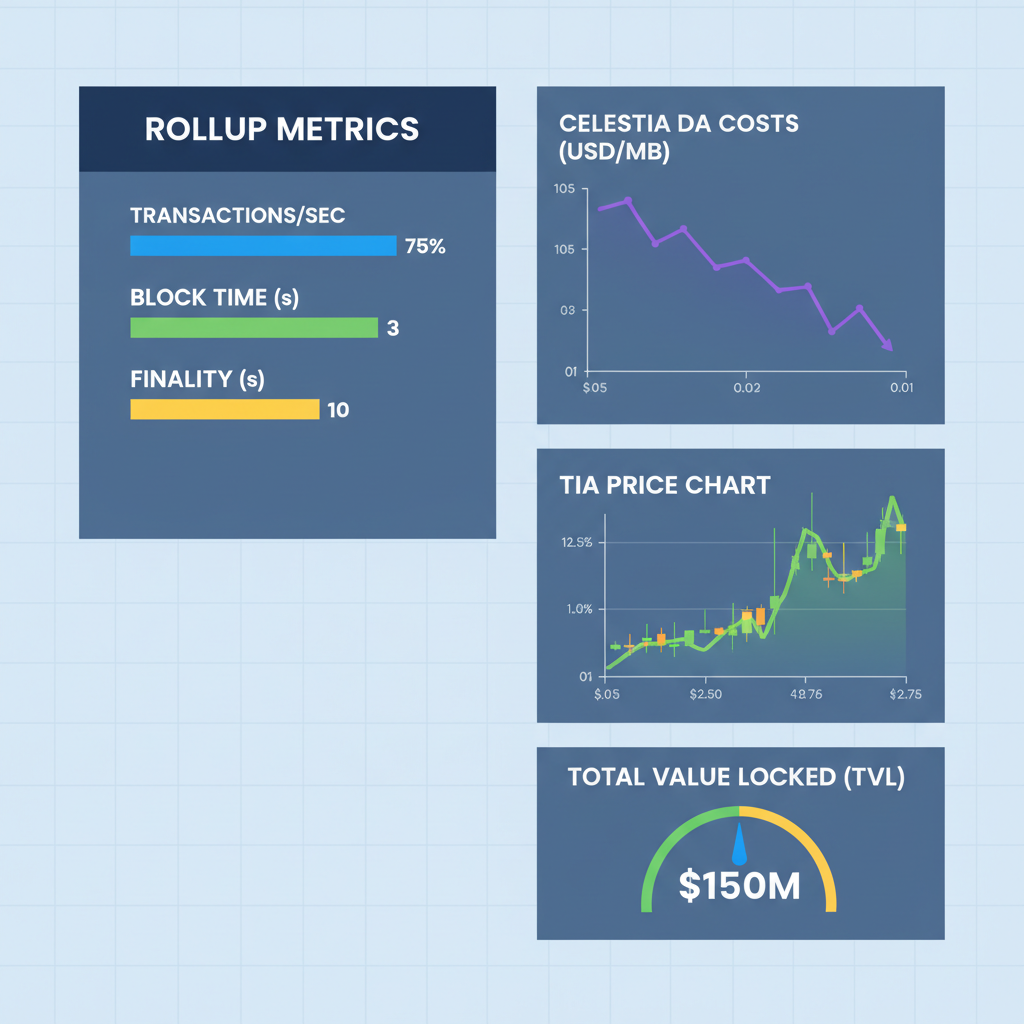
- Monitor blobspace usage to avoid congestion.
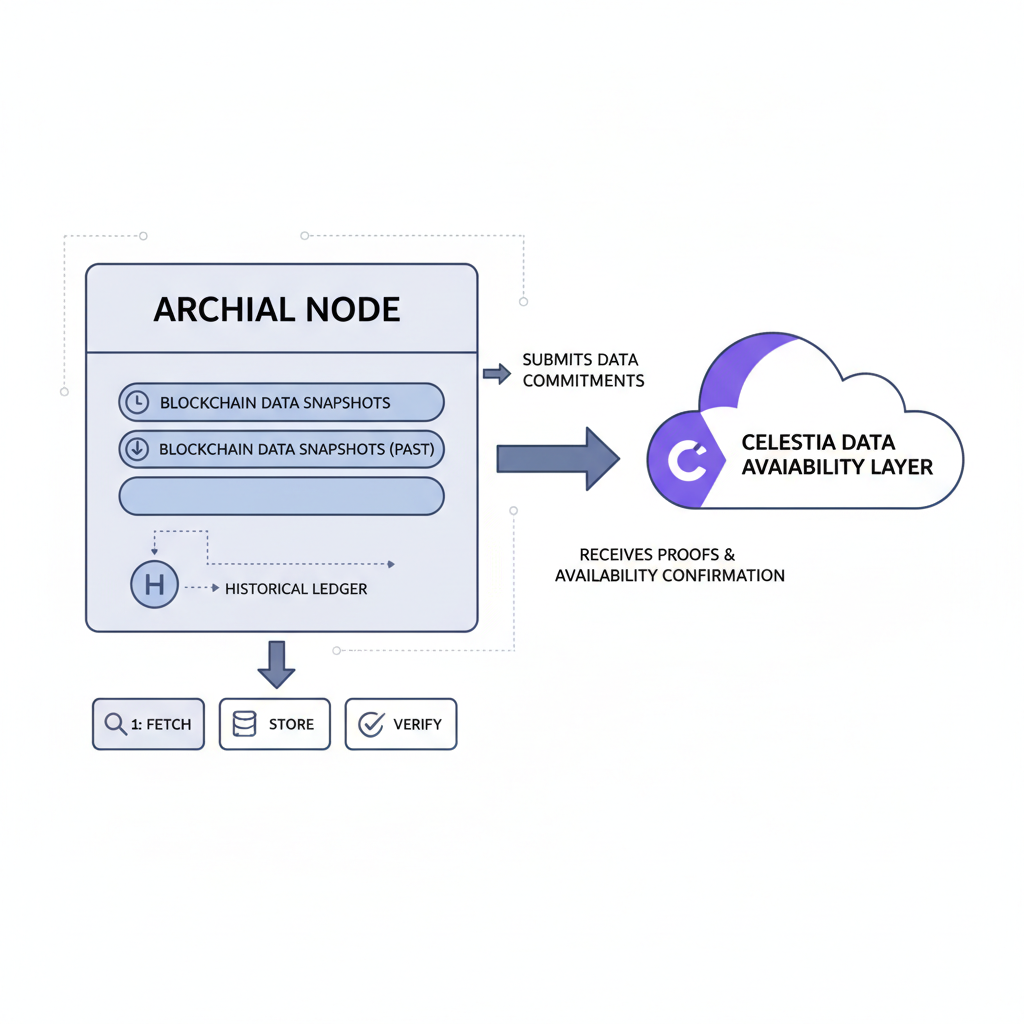
Long-term storage? Celestia guarantees availability for a period, but archival nodes or snapshots on your end ensure historical data sticks around. This hybrid approach keeps your rollup robust.
Integrating with rollup frameworks like Celestia is straightforward. Tools from the ecosystem let you deploy in minutes, perfect for testing modular setups.
Check this step-by-step for deploying on Celestia.
Why Celestia Outshines Competitors in Modular Ecosystems
Celestia’s edge lies in its focus: pure DA and consensus as a service. Monolithic chains bundle everything, leading to bloat. Here, rollups post to Celestia and execute anywhere, unlocking true modularity.
Compared to Ethereum, Celestia’s DA is orders of magnitude cheaper, fueling modular rollups Celestia style. Developers gain flexibility; users get speed. Pair it with frameworks like Eclipse or Conduit for even more power, though Celestia remains the DA king.
As TIA holds steady at $0.3299 after a 24-hour high of $0.3423, the network’s adoption signals strong developer interest. Dive deeper into these optimizations, and your rollups will thrive in the modular era.
Real-world deployments prove Celestia’s prowess. Take Doma, a rollup leveraging Celestia for social apps; it posts data cheaply and scales user interactions effortlessly. This isn’t theory; it’s battle-tested modularity in action.
Hands-On: Posting Data to Celestia with PayForBlobs
To optimize Celestia rollup data storage, master the PayForBlobs transaction. This lets your rollup upload batch data directly to the DA layer. Start by compressing your calldata; tools like zstd work wonders here. Then, namespace it properly with NMTs so only your app’s data gets fetched.
Here’s a practical example in Go, using the Celestia SDK. This snippet shows how to construct and send a PayForBlobs tx, ensuring your modular rollup posts efficiently.
Go SDK Example: PayForBlobs for Rollup Data Posting
To post your rollup’s data to Celestia for data availability, you’ll use a PayForBlobs transaction. This pays the fees to include your data as blobs in a Celestia block. Here’s a clear Go example using the Celestia App SDK. (You’ll need to install it with `go get github.com/celestiaorg/celestia-app` and set up your client context properly.)
```go
package main

import (
	"context"
	"fmt"
	"log"

	sdk "github.com/cosmos/cosmos-sdk/types"
	"github.com/cosmos/cosmos-sdk/types/tx"
	blobtypes "github.com/celestiaorg/celestia-app/x/blob/types"
)

// payForBlobs creates and broadcasts a PayForBlobs transaction.
// Assumes clientCtx is configured with RPC endpoint, signer keys, gas, etc.
func payForBlobs(clientCtx tx.Context, signer sdk.AccAddress, rollupData []byte) error {
	// Define namespace for your rollup (typically derived from app namespace)
	namespace := []byte{0x0a, 0x0b, 0x0c, 0x0d, 0x0e, 0x0f, 0x10, 0x11, 0x12, 0x13}

	// In practice, compute share commitment using SDK helpers:
	// shareCommitment, err := blobtypes.ComputeShareCommitment(rollupData, namespace)
	// For this example, using empty (invalid in prod - compute properly!)
	shareCommitment := []byte{}

	blob := &blobtypes.Blob{
		Data:            rollupData,
		Namespace:       namespace,
		ShareCommitment: shareCommitment,
	}

	msg := &blobtypes.MsgPayForBlobs{
		Creator: signer.String(),
		Blobs:   []*blobtypes.Blob{blob},
	}

	// Broadcast the transaction
	txRes, err := clientCtx.BroadcastTx(msg)
	if err != nil {
		return fmt.Errorf("failed to broadcast: %w", err)
	}

	log.Printf("Successfully posted blob! Tx hash: %s", txRes.Hash().String())
	return nil
}

// Usage:
// func main() {
//     clientCtx := // setup with celestia-appd or light client
//     signer := sdk.AccAddress{} // from keyring
//     data := []byte("Your rollup batch data here")
//     if err := payForBlobs(clientCtx, signer, data); err != nil {
//         log.Fatal(err)
//     }
// }
```
This function handles creating the message with your rollup data, signing, and broadcasting. In production, always compute the share commitment correctly using the SDK’s `ComputeShareCommitment` or equivalent, set appropriate gas limits/fees, and connect to a Celestia node RPC. Your rollup can now reference these blobs for DA! Check the tx hash on a Celestia explorer.
Run this on a testnet first. Monitor the blobspace; Celestia allocates it dynamically, but peaking during high traffic means planning ahead. Pair with light node verification via DAS, and your setup hums along at minimal cost, even as TIA sits at $0.3299.
Deploy Rollups with Celestia Modular DA in Minutes
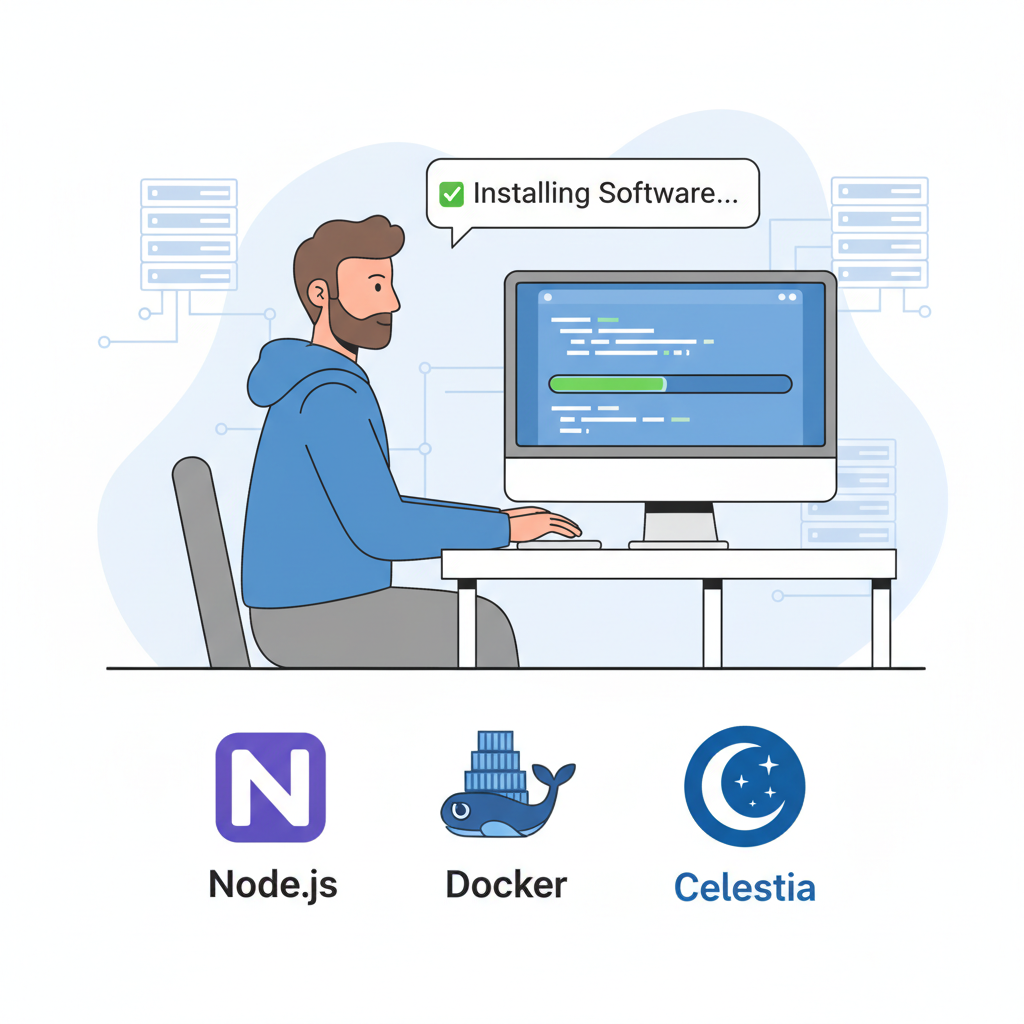
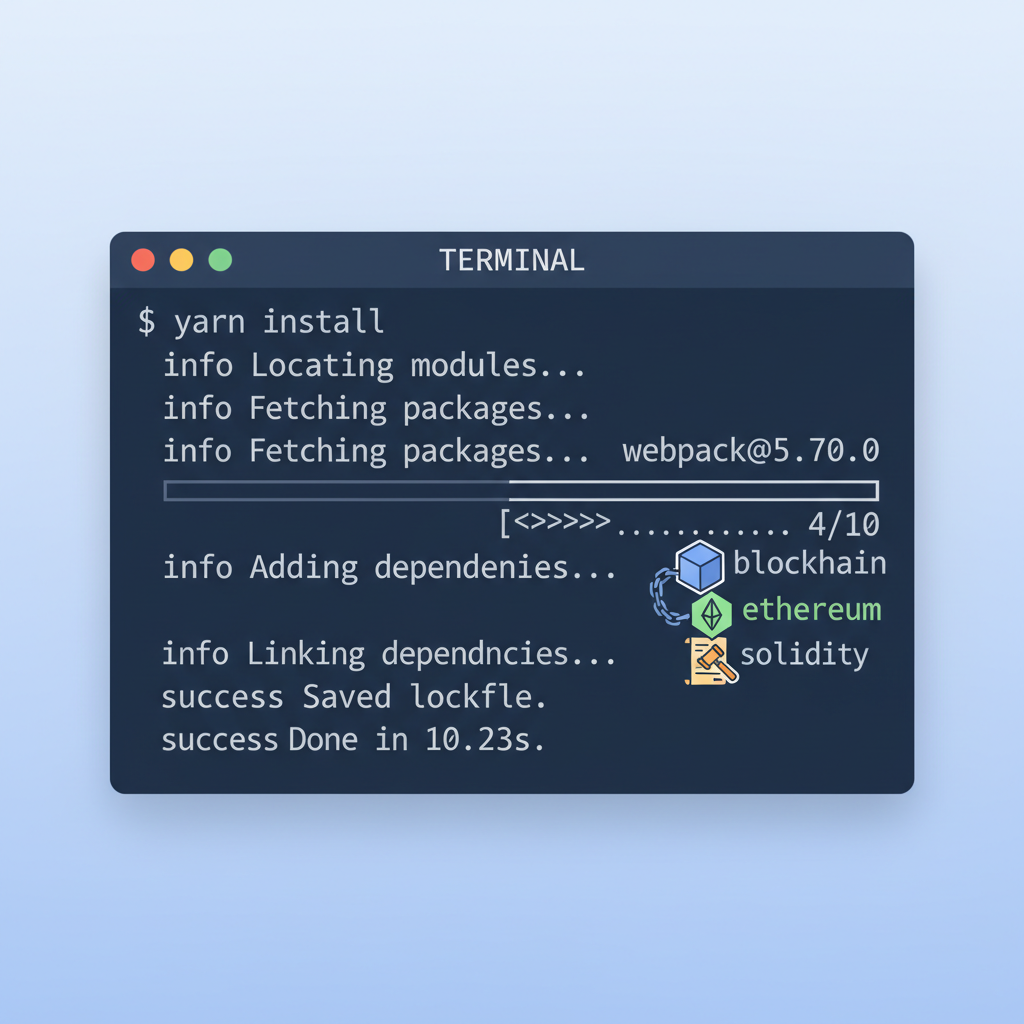
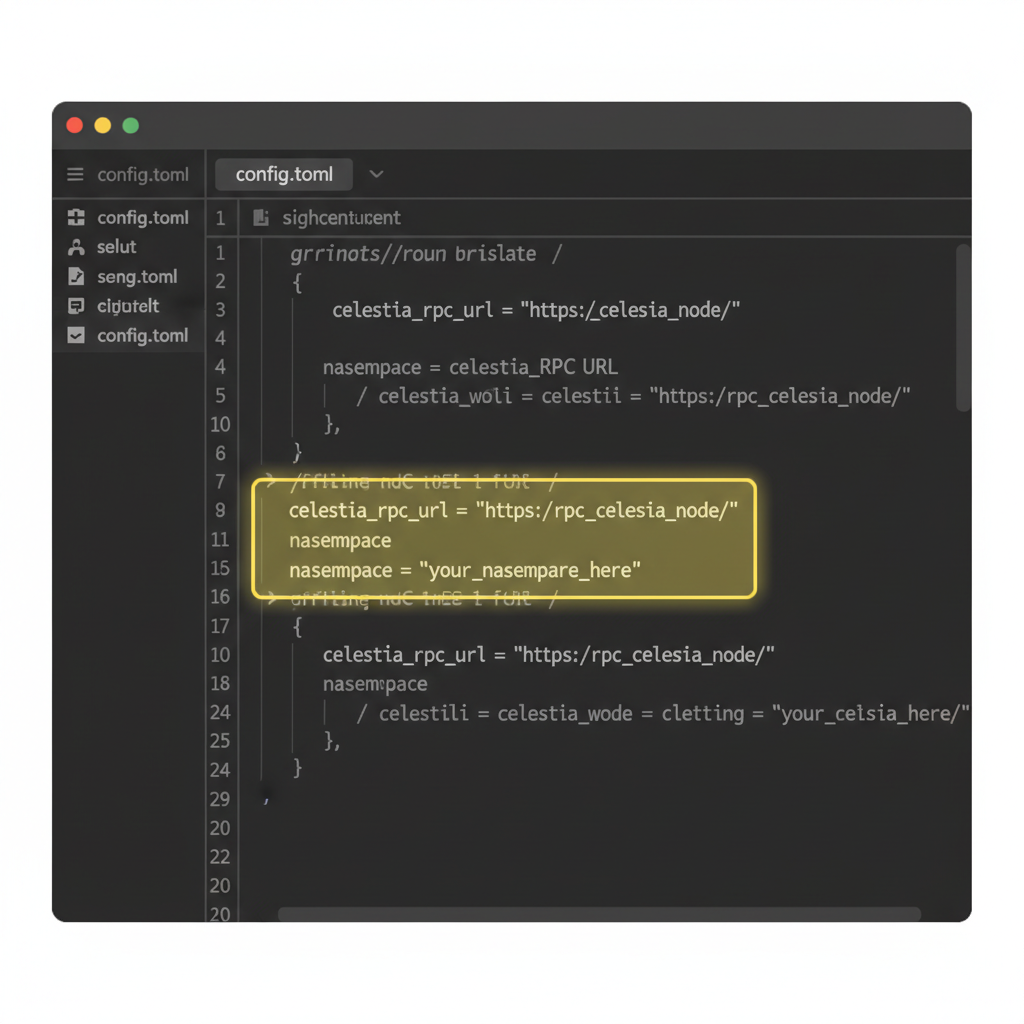
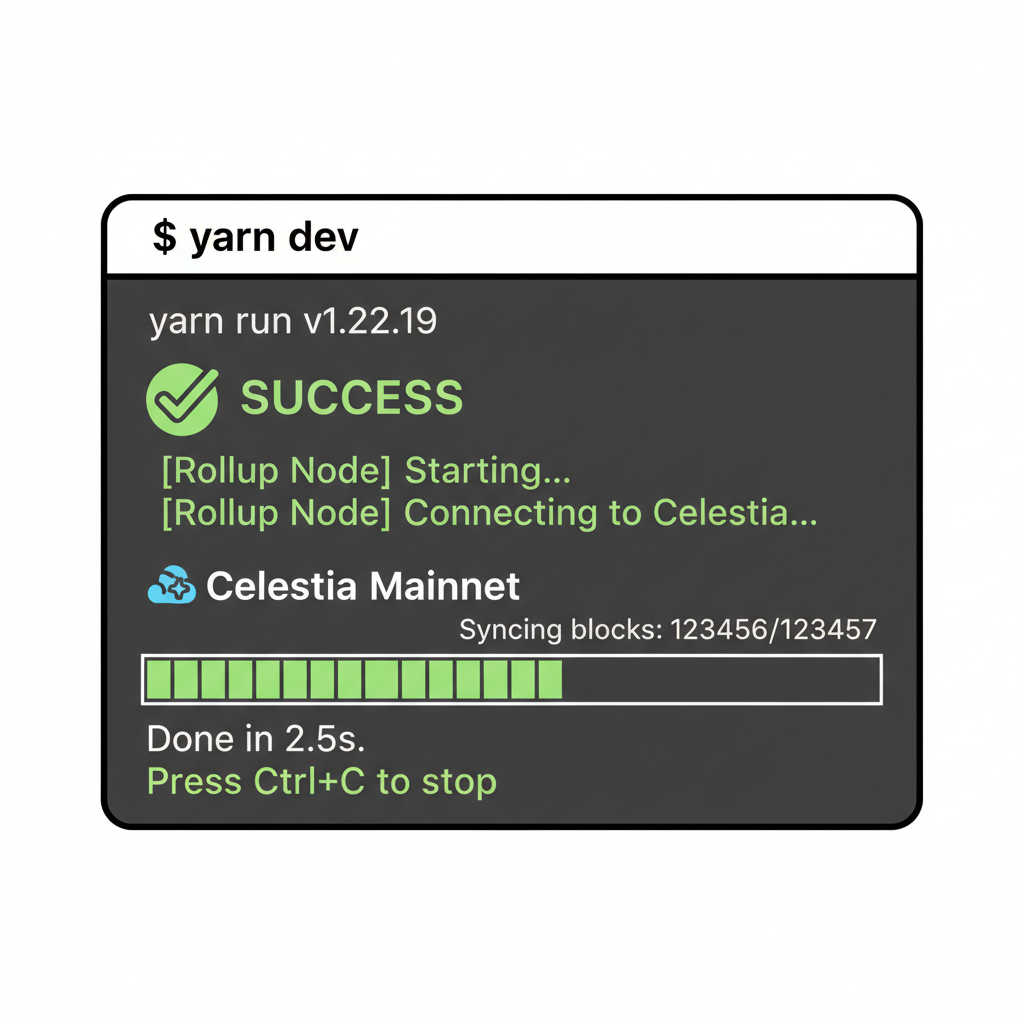
Watch that video, and you’ll deploy a basic rollup in under 10 minutes. It’s that accessible. For production, integrate archival nodes for long-term data. Celestia handles short-term availability flawlessly, but snapshots on IPFS or decentralized storage keep history alive indefinitely.
Seamless Integration: Celestia with Eclipse and Conduit
Why stop at Celestia alone? Celestia Eclipse Conduit integration elevates your stack. Eclipse brings Solana-style execution speed atop Celestia’s DA, while Conduit offers customizable sequencing. This trio crafts app-specific chains that feel monolithic in performance but modular in cost.
Developers love it: post data to Celestia, sequence with Conduit, execute on Eclipse. Result? Throughput that crushes Ethereum L2s without the fees. I’ve seen teams cut data costs by 90% this way. It’s not hype; the numbers back it up.
Explore modular rollup architectures with Celestia and Eclipse here.
Rollup frameworks Celestia compatible, like OP Stack, plug in effortlessly. Modify your rollup config to point DA to Celestia endpoints, and you’re live. Test economic security too; Celestia’s proof-of-stake ensures data stays available against attacks.
- Choose Eclipse for high TPS execution.
- Use Conduit for sovereign sequencing control.
- Always fallback to Celestia’s DA core.
TIA’s steady $0.3299 price, with a 24-hour range from $0.3261 to $0.3423, reflects maturing infrastructure. Adoption grows as devs realize modular beats monolithic every time.
Challenges remain, sure. Retrievability beyond Celestia’s window demands diligence; lazy teams lose data. But proactive ones? They build empires. Optimize blob sizing, automate batching, and monitor via dashboards. Your modular rollups Celestia powered will lead the pack.
From my six years in crypto, Celestia’s DA layer isn’t just tech; it’s a mindset shift. It hands power back to developers, letting innovation flourish without legacy chains holding you back. Build on it, and watch your projects scale.
About the Author