

Privacy is rapidly becoming a top priority for developers building on modular blockchains, especially as applications handle more sensitive data and complex interactions. The recent partnership between Conduit and Zama is a watershed moment for privacy-preserving blockchain infrastructure. By integrating Fully Homomorphic Encryption (FHE) into modular rollups, they are empowering developers to create confidential smart contracts that process encrypted data end-to-end, without ever exposing it, even to the nodes executing the code.

What Is Fully Homomorphic Encryption (FHE) and Why Does It Matter?
Fully Homomorphic Encryption is a cryptographic breakthrough that allows computations to be performed directly on encrypted data. This means you can run calculations, update records, or execute smart contract logic without ever decrypting the underlying information. For blockchains, where every node processes every transaction, this capability is transformative.
With FHE, sensitive financial transactions, personal health records, or proprietary business logic can remain confidential throughout their lifecycle on-chain. There’s no longer a trade-off between decentralization and privacy; developers can deliver both.
The Role of Zama’s FHEVM: Confidential Smart Contracts in Solidity
Zama has pioneered the FHEVM (Fully Homomorphic Encryption Virtual Machine), an innovative framework that brings FHE capabilities directly to EVM-compatible chains. Developers can now write Solidity smart contracts using native encrypted data types and operations. The FHEVM compiles these contracts so that all computation happens over ciphertexts, ensuring that neither validators nor attackers can access plaintext data at any point.
This is not just theoretical: Zama’s developer hub offers comprehensive documentation and hands-on guides for building with encrypted variables in Solidity, making advanced cryptography accessible to mainstream blockchain engineers. If you’re curious about how this looks in practice or want to see code samples for confidential voting systems or private DeFi primitives, their open-source resources are an excellent starting point.
Conduit’s Modular Rollups: Scalable Privacy at Layer 2
Conduit specializes in Rollup-as-a-Service (RaaS), enabling teams to deploy enterprise-grade rollup chains with minimal setup time. These modular rollups batch transactions off-chain before submitting proofs back to Ethereum or other base layers, dramatically reducing costs while boosting throughput.
The Conduit-Zama integration means these high-performance rollups can now process fully encrypted transactions using FHEVM-powered contracts. Developers no longer have to choose between scalability and confidentiality; they get both out of the box. Whether you’re building privacy-preserving DeFi protocols, secure identity solutions, or confidential NFT marketplaces, this stack unlocks new design space previously out of reach for most teams.
- Enhanced Privacy: Sensitive user data stays encrypted from input through execution to output.
- No Deep Cryptography Required: Write confidential smart contracts in familiar Solidity syntax using Zama’s libraries.
- Scalable Infrastructure: Leverage Conduit’s modular rollups for high throughput at industry-beating prices, even when processing encrypted payloads.
If you want a deep dive into how this works under the hood, including step-by-step guides for setting up your environment with Hardhat or Foundry, stay tuned for part two of this guide where we’ll walk through deploying your first fully homomorphic contract on a Conduit-powered rollup chain.
Developer Workflow: From Idea to Confidential Rollup
Building with FHE in modular rollups might sound daunting, but the Conduit and Zama collaboration is designed to make the journey as frictionless as possible. Developers can now go from concept to live, privacy-preserving dApp in just a few streamlined steps. Thanks to Zama’s FHEVM and Conduit’s RaaS tooling, even teams without deep cryptography backgrounds can launch encrypted smart contracts that scale.
Deploying a Confidential Smart Contract with Zama's FHEVM on Conduit Rollups



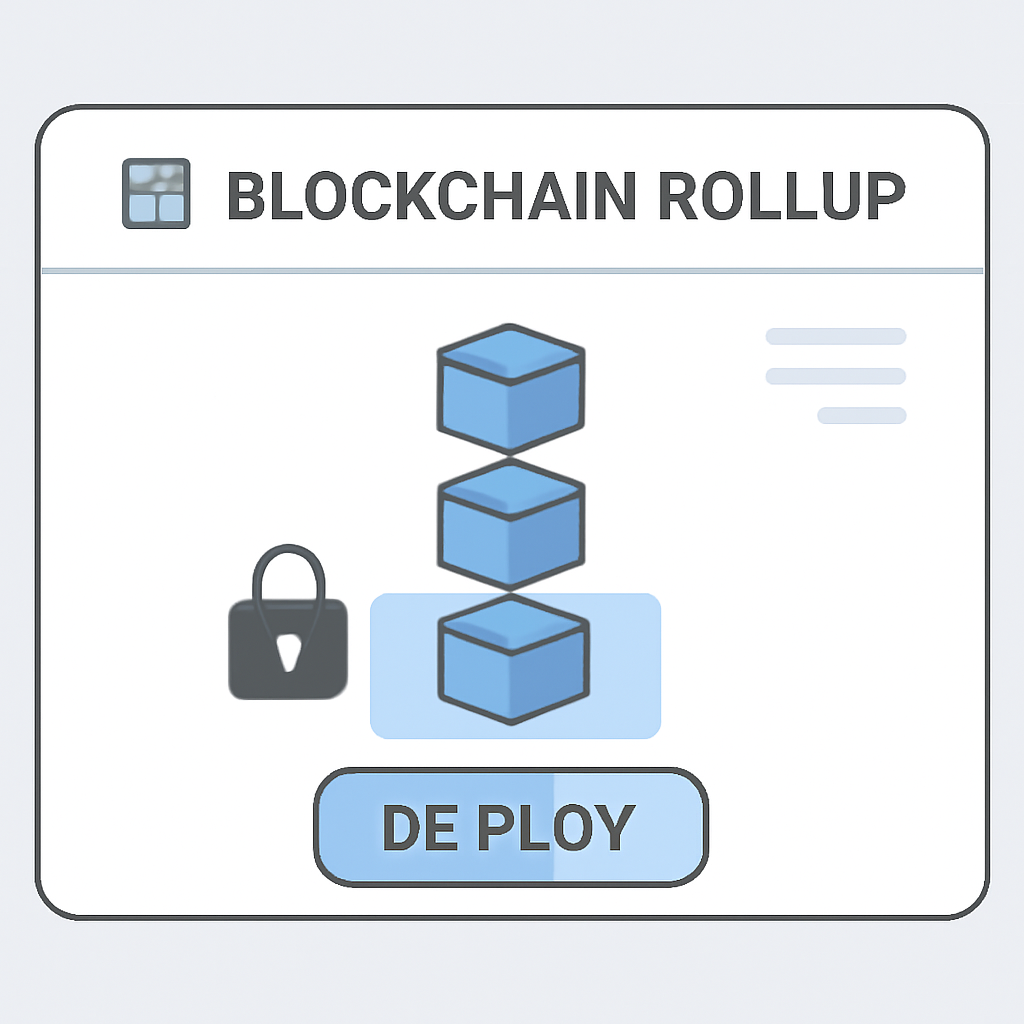

Let’s break down the typical workflow:
- Design your confidential logic. Decide which variables and operations should remain private, think user balances, votes, or sensitive business rules.
- Write your contract in Solidity. Use Zama’s encrypted data types and libraries. No need to reinvent the wheel, the SDK abstracts away most cryptographic complexity.
- Test locally with Hardhat or Foundry. The FHEVM supports familiar dev tooling, so you can simulate encrypted execution before deploying on-chain.
- Deploy on a Conduit-powered rollup chain. Use Conduit’s self-serve platform or APIs to launch your modular rollup with built-in FHE support. Your contract will process encrypted payloads at scale, confidentiality and performance combined.
This workflow unlocks new use cases for confidential smart contracts across DeFi, gaming, healthcare, identity management, and more. Imagine zero-knowledge auctions where bids are never revealed, or private DAO voting where ballots remain secret yet verifiable, all possible today with this stack.
Real-World Use Cases: Privacy That Scales
The combination of Conduit’s modular infrastructure and Zama’s privacy layer is already powering projects at the frontier of blockchain confidentiality. Consider these examples:
- Private DeFi Protocols: Enable lending or trading platforms where user positions and transactions are shielded from public view but still auditable for compliance.
- Confidential Voting: DAOs can run elections where only aggregate results are visible on-chain, individual votes remain encrypted throughout the process.
- Sensitive Data Marketplaces: Build NFT platforms or data exchanges that protect intellectual property and personal information by default.
If you’re eager for technical deep-dives or want to see this in action, check out community demos and developer stories emerging around this integration. The pace of innovation is accelerating, and every new confidential smart contract brings us closer to a truly privacy-first Web3 ecosystem.
Frequently Asked Questions: Getting Started With Modular Rollup Privacy
If you want to learn more about how these technologies work together or see detailed deployment walkthroughs, visit our resource page at How Conduit and Zama Are Bringing FHE Privacy to Modular Rollups.
The future of blockchain is modular, and now it’s confidential by design. With tools like Zama’s FHEVM and Conduit’s RaaS platform, developers have everything they need to build secure applications that respect user privacy without sacrificing scalability or usability. The next wave of decentralized innovation starts here, will you be part of it?




No comments yet. Be the first to share your thoughts!