

Celestia's Matcha upgrade marks a pivotal advancement in modular blockchain infrastructure, propelling the network toward unprecedented scalability with 128MB blocks and enhanced data availability. This upgrade directly empowers developers to deploy rollups capable of handling 200k transactions per second (TPS), addressing longstanding bottlenecks in throughput and interoperability. As of the latest data, Celestia (TIA) trades at $0.4589, reflecting a 24-hour change of $-0.0141 (-0.0298%), with a 24h high of $0.4730 and low of $0.4542.
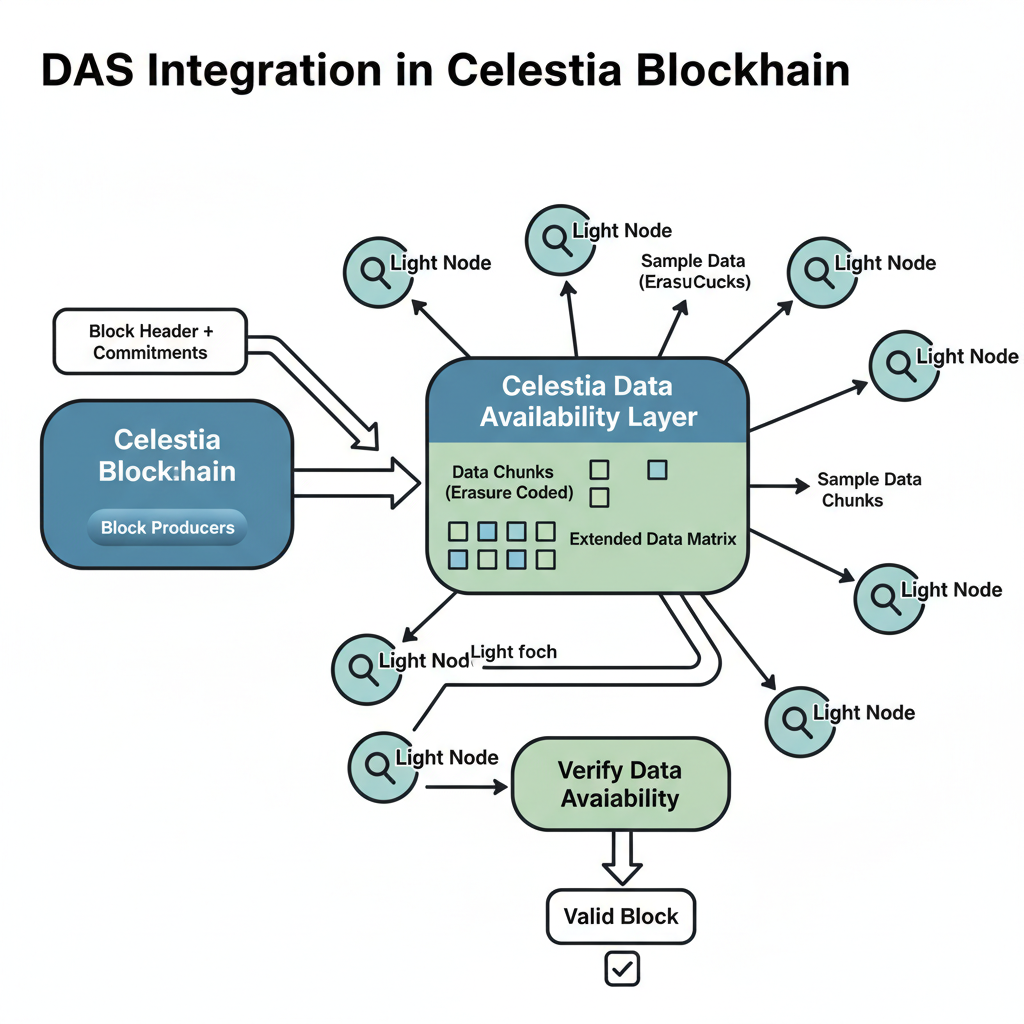
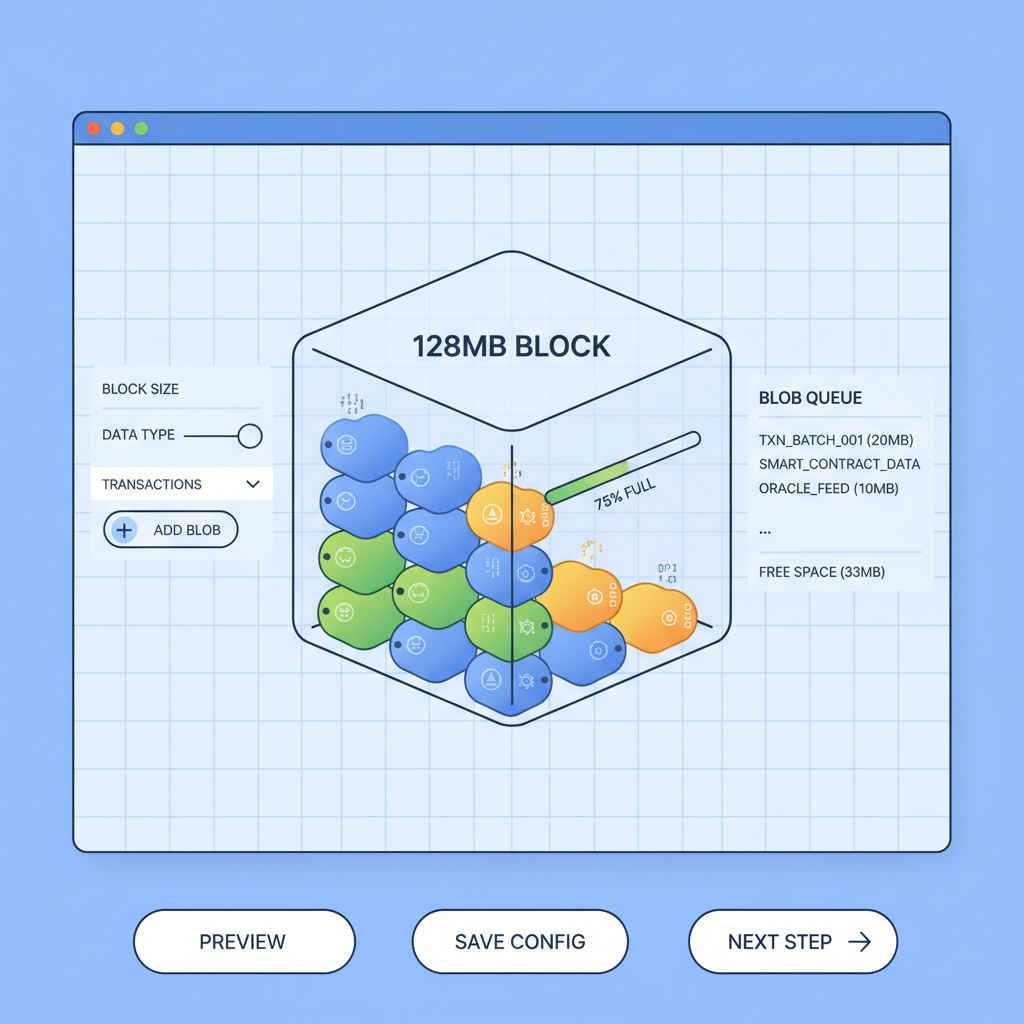
The Matcha upgrade, now live on mainnet, introduces a sophisticated block propagation mechanism that scales maximum block sizes from 8MB to 128MB, unlocking roughly 16x higher throughput. This isn't mere hype; it's a pragmatic evolution built on staged rollouts from Arabica to Mocha testnets, progressively ramping throughput from 1.3 MB/s to 21.3 MB/s while minimizing risks. Developers stand to benefit immensely, as larger blocks mean more data availability sampling (DAS) capacity, essential for high-TPS rollups on Celestia.
Dissecting Matcha's Technical Backbone
At its core, Matcha overhauls block propagation to handle massive payloads efficiently, reducing node storage demands by up to 77% according to analyses. It also halves annual token inflation from 5% to 2.5%, fostering a more sustainable economic model, and eliminates cross-chain token filters, streamlining non-TIA asset transfers. These changes position Celestia as a frontrunner in data availability layers, outpacing competitors by enabling rollups to post vastly more data without compromising decentralization.
Matcha ships performance and economic upgrades - unlocks scaling to 128MB blocks.
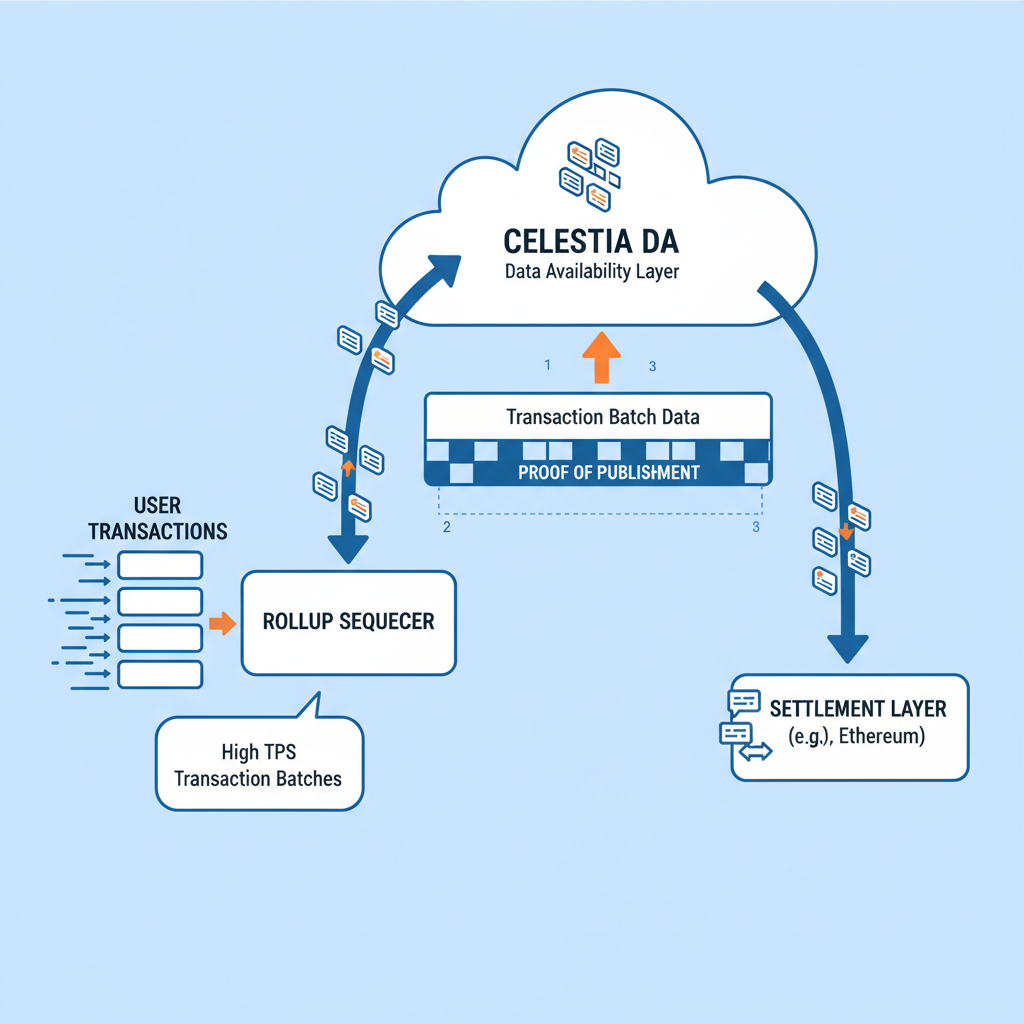
For rollup frameworks like those on Celestia, Eclipse, and Conduit, this translates to real-world deployability. Imagine sovereign rollups processing 200k TPS: previously constrained by 8MB limits, now feasible with 128MB blocks paving the way to the community's 1GB ambition. My view as a risk manager? This conservative scaling trajectory mitigates outage risks while delivering compounding returns for builders.
Pathway to 200k TPS Rollups: Throughput Realities
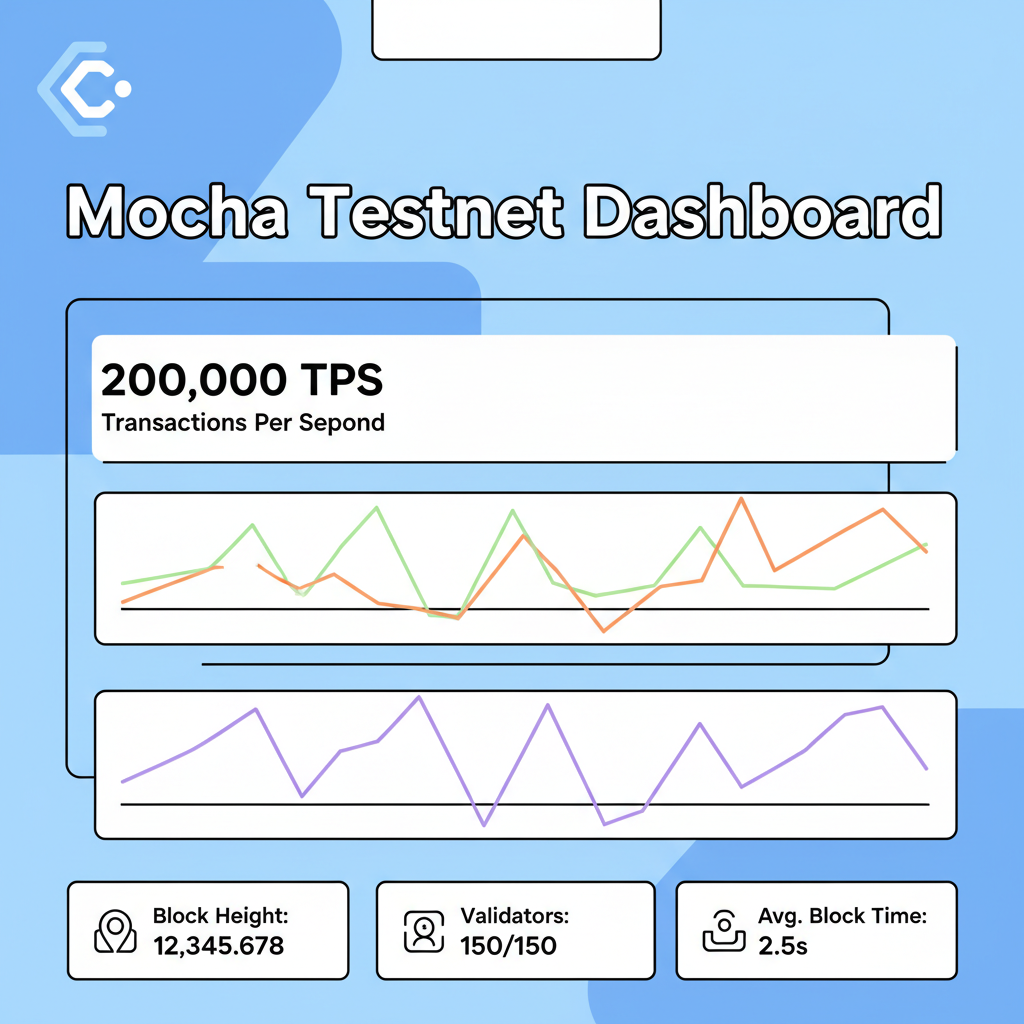
Achieving 200k TPS on Celestia rollups hinges on Matcha's throughput leap. Pre-upgrade, networks topped out at modest speeds due to data posting limits; post-Matcha, sustained rates near 21 MB/s become viable. For context, a typical Ethereum L2 transaction requires about 100-200 bytes of data; at 128MB blocks, that's theoretical capacity for hundreds of thousands of TPS across multiple rollups.
Yet pragmatism demands nuance: real-world TPS depends on compression, namespace efficiency, and sequencer optimization. Celestia's modular design shines here, allowing rollups to leverage shared DA without execution overhead. Early adopters on Mocha testnet report seamless propagation, hinting at mainnet stability. With TIA at $0.4589, the market tempers enthusiasm, but fundamentals suggest upside as deployment volumes rise.
Celestia (TIA) Price Prediction 2027-2032
Post-Matcha Upgrade Forecasts: 128MB Blocks, Rollup Adoption, and Modular Scaling
| Year | Minimum Price | Average Price | Maximum Price | Avg YoY % Change |
|---|---|---|---|---|
| 2027 | $1.00 | $3.00 | $7.00 | +362% |
| 2028 | $2.00 | $6.00 | $15.00 | +100% |
| 2029 | $3.00 | $8.00 | $18.00 | +33% |
| 2030 | $4.50 | $12.00 | $25.00 | +50% |
| 2031 | $6.00 | $16.00 | $32.00 | +33% |
| 2032 | $8.00 | $22.00 | $40.00 | +38% |
Price Prediction Summary
Post-Matcha upgrade in 2026, TIA is forecasted to recover strongly from $0.65 baseline, with average prices climbing progressively to $22 by 2032 amid rollup deployments and scalability gains. Bullish maxima reflect high adoption and bull cycles (e.g., 2028 halving), while minima account for bearish corrections but show net upward trend.
Key Factors Affecting Celestia Price
- Matcha upgrade: 128MB blocks (16x throughput), halved inflation to 2.5%, improved bridges
- Path to 1GB blocks and 200k TPS rollups driving modular blockchain adoption
- Crypto market cycles, with bull potential in 2028-2030
- Regulatory clarity on DA layers and interoperability
- Competition from Ethereum L2s, Avail, and other modular protocols
- Ecosystem growth: developer tools, rollup deployments, and TVL increases
Disclaimer: Cryptocurrency price predictions are speculative and based on current market analysis. Actual prices may vary significantly due to market volatility, regulatory changes, and other factors. Always do your own research before making investment decisions.
Rollup developers must prioritize DAS client integration and blob sizing to maximize gains. Tools from Celestia ecosystem, like those detailed in deployment guides, simplify this: configure your rollup's data root to fit expanded blocks, test on Mocha equivalents, then go live.
Strategic Deployment Tactics for Matcha-Era Rollups
Deploying a 200k TPS rollup starts with Celestia's sovereign stack. Begin by forking an OP Stack or similar, integrating Celestia DAS via the celestia-app SDK. Post-Matcha, set max blobs per block to exploit 128MB space - aim for 80-90% utilization to buffer spikes. Risk assessment: monitor propagation latency; if exceeding 12s, dial back namespace density.
Interoperability gets a boost too. Removed filters mean seamless bridging for assets like USDC or ETH derivatives, critical for DeFi rollups chasing high TPS. Pair this with Eclipse's SVM compatibility or Conduit's execution layers for hybrid setups. In my analysis, the true edge lies in economic security: lower inflation strengthens TIA's reserve asset role, stabilizing fees long-term.
Early metrics from mainnet show network capacity surging, with block times holding steady. For builders, this is the green light to scale ambitions. Check this deployment guide for hands-on steps tailored to Matcha.
Optimization remains key in this high-stakes environment. Sequence batches aggressively but cap at 90MB effective payload to avoid propagation delays, which could spike under congested namespaces. Leverage Conduit's prover networks for faster finality, stacking Celestia's DA with Eclipse's Solana VM for TPS bursts exceeding 200k in simulations. My conservative take: stress-test under 21 MB/s loads before mainnet commits, as real traffic patterns reveal hidden latencies.
Deploy 200k TPS Rollup on Post-Matcha Celestia: Full Guide


Matcha Rollout Timeline and Milestones
Celestia's phased approach exemplifies prudent scaling. From Arabica's initial 1.3 MB/s trials to Mocha's 5 MB/s validation, mainnet activation hit 21.3 MB/s with 128MB blocks live as of early 2026. This trajectory not only slashed node storage by 77% but set the stage for Lotus upgrades targeting sub-second propagation. Builders deploying Celestia modular rollups 2026 can now anchor high-throughput chains confidently, with throughput metrics validating 200k TPS feasibility across diversified rollups.
Looking ahead, the roadmap eyes 1GB blocks, a quantum leap for Matcha upgrade throughput. This isn't speculative; community governance prioritizes incremental halvings in latency, ensuring decentralization holds as TPS scales. For risk-averse developers, this means diversified data posting - split across namespaces to hedge single-block failures.
Economic Ripples and TIA Fundamentals
Matcha's economic tweaks - inflation cut to 2.5%, frictionless bridges - bolster TIA's utility as a DA reserve. At $0.4589, with a 24-hour change of $-0.0141 (-0.0298%), 24h high $0.4730 and low $0.4542, the token digests post-upgrade digestion amid broader market caution. Yet, fundamentals scream value: higher throughput correlates to surged data posting fees, captured by stakers. Rollup proliferation will amplify demand, as each 200k TPS chain posts gigabytes daily.
Institutional lens: volatility tempers entry, but TIA's 77% storage efficiency gain de-risks light client adoption, expanding the validator set. Compare to legacy DA layers; Celestia now leads with 16x capacity, positioning 200k TPS rollups Celestia as the default for production DeFi and gaming chains.
Interop enhancements shine brightest for cross-framework plays. Deploy a Celestia-DA rollup with Eclipse execution for SVM speed, or Conduit for app-specific VMs - all unified under Matcha's expansive blocks. Deployment hurdles evaporate with SDKs handling blob commitments automatically. For Celestia rollup deployment, prioritize sequencer sovereignty; centralization risks fade as DAS scales linearly.
Pragmatic builders audit namespaces pre-launch, simulating 200k TPS floods to benchmark fees at $0.4589 TIA levels. Economic security holds: staked TIA backs data roots, with lower inflation preserving yields. As volumes climb, expect fee accrual to outpace dilution, rewarding early scalers.
Matcha cements Celestia as the backbone for modular futures. With 128MB blocks operational and 1GB horizons clear, developers hold the toolkit for transformative rollups. Dive into ecosystem guides, prototype on testnets, and capture the throughput revolution before saturation hits.




No comments yet. Be the first to share your thoughts!