
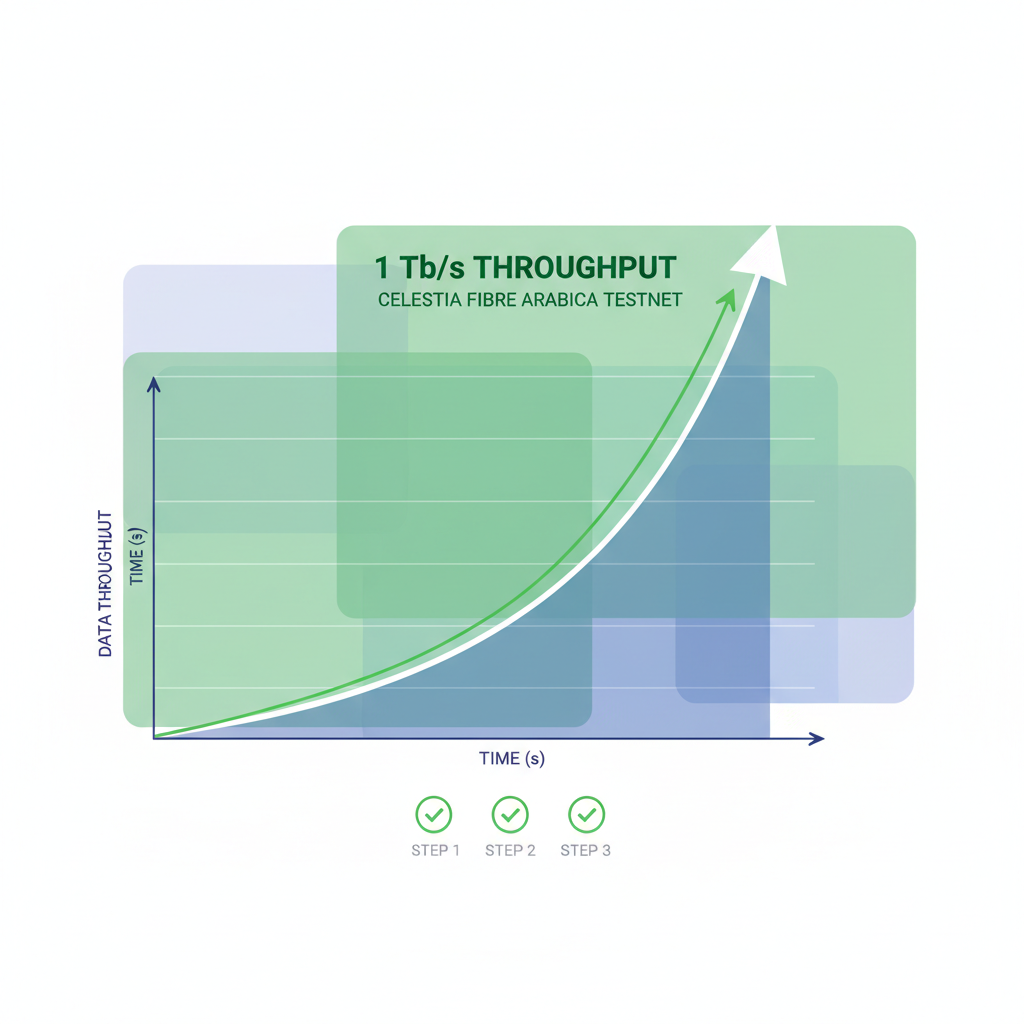
Celestia just dropped a bombshell for rollup developers: Fibre Blockspace, pushing data availability to a mind-bending 1 Tb/s across 500 nodes. If you’re building modular L2s, this isn’t hype; it’s the infrastructure to finally ditch throughput bottlenecks and scale sovereign rollups without compromise. With TIA trading at $0.3217, up $0.0152 in the last 24 hours, the market’s sniffing opportunity in Celestia’s Celestia data availability leap.
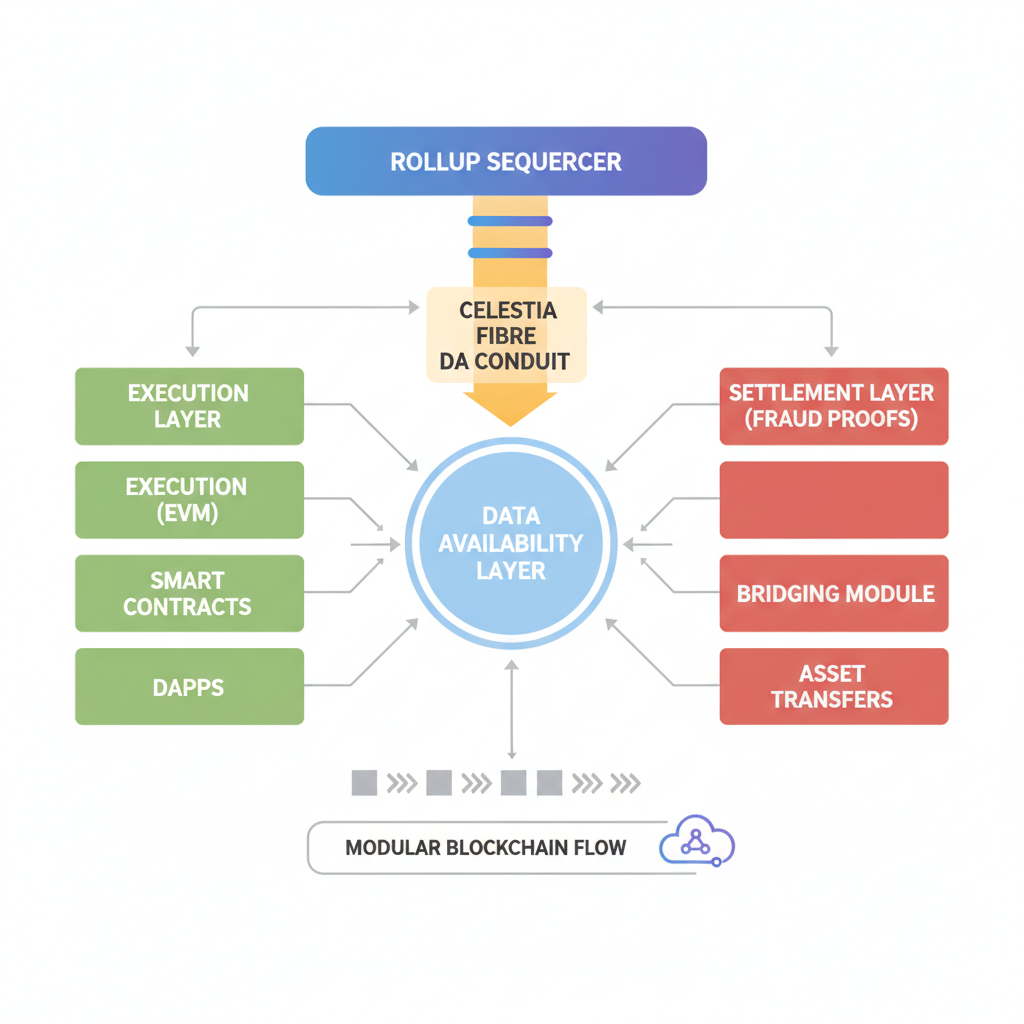
Fibre slots right into Celestia’s modular playbook, running parallel to the Layer 1 DA layer. Pick it for high-speed needs, stick with L1 for lighter loads. The secret sauce? A ZODA-based encoding protocol that’s 881 times faster than KZG commitments. Developers get simple submission APIs, predictable fees, and blockspace that won’t flinch under load. Code’s public now, testnet rollout incoming on Arabica, then mainnet ramps up incrementally.
Fibre’s Tech Edge in Celestia Rollup Scaling
Let’s cut to the chase: traditional DA layers choke at megabits per second. Fibre obliterates that with terabit territory. It samples data across nodes efficiently, ensuring availability without the full download grind. For sovereign L2s Celestia style, this means posting massive transaction batches directly, no Ethereum middleman drama. Sovereign rollups post data to Celestia for ordering and DA, nodes execute locally. Pair it with Dojo or Eclipse stacks, and you’re cooking real-time apps like ad auctions or AI agent crawls.
Outsourcing data throughput to Celestia lets L2s focus on killer user products with minimal overhead.
I’ve traded through enough bull runs to know: scalability wins markets. Fibre’s 1 Tb/s isn’t theoretical; it’s engineered for on-chain markets craving speed. Current TIA at $0.3217 reflects early buzz, but as devs integrate, expect momentum.
Why Rollup Devs Need Fibre for 1 Tbit/s Modular Rollups
Picture this: your rollup hits viral adoption, TPS explodes, but DA lags, fees spike, users bail. Fibre fixes that permanently. It sustains 1 Tb/s, enough for hundreds of high-throughput rollups sharing the space. Celestia Fibre Blockspace means predictable costs, no congestion auctions. For modular rollups 1 Tbit/s scale, it’s the DA provider that matches execution layers’ ambitions.
Blobstream bridges Ethereum L2s to Celestia already; Fibre supercharges it. Sovereign setups with Cosmos SDK shine here, storing data cheaply in headers. No settlement on Celestia, pure DA duty. Devs, test it soon: Arabica net drops first, tweak your stacks before mainnet floods.
Celestia (TIA) Price Prediction 2027-2032
Factoring in Fibre Blockspace Launch (1 Tb/s Scalability) and Modular L2 Adoption Impact
| Year | Minimum Price (USD) | Average Price (USD) | Maximum Price (USD) |
|---|---|---|---|
| 2027 | $0.50 | $3.00 | $8.00 |
| 2028 | $1.00 | $5.00 | $15.00 |
| 2029 | $2.00 | $10.00 | $25.00 |
| 2030 | $4.00 | $18.00 | $40.00 |
| 2031 | $6.00 | $28.00 | $60.00 |
| 2032 | $10.00 | $45.00 | $90.00 |
Price Prediction Summary
Celestia (TIA) is positioned for substantial growth post-Fibre launch, with average prices projected to rise from $3.00 in 2027 to $45.00 by 2032, driven by unprecedented 1 Tb/s blockspace capacity. Minimums reflect bearish market cycles or regulatory hurdles, while maximums capture bullish adoption by rollup developers and modular ecosystems.
Key Factors Affecting Celestia Price
- Fibre Blockspace: 1 Tb/s throughput across 500 nodes using ZODA encoding (881x faster than KZG)
- Increased adoption of sovereign rollups and L2s via simple APIs and predictable fees
- Integration with Ethereum ecosystem through Blobstream
- Crypto market cycles, including potential bull runs post-2028 Bitcoin halving
- Regulatory developments favoring modular blockchains
- Competition from other DA providers and overall market cap expansion potential
Disclaimer: Cryptocurrency price predictions are speculative and based on current market analysis.
Actual prices may vary significantly due to market volatility, regulatory changes, and other factors.
Always do your own research before making investment decisions.
Practical Steps to Leverage Fibre in Your Rollup[/h2>
Start simple. Grab the open-source Fibre code, spin up a node cluster. Submit payloads via APIs; monitor sampling efficiency. Integrate with Conduit for sequencing or Eclipse for VM flexibility. Throughput tests show it handles real-world bursts. TIA holds $0.3217 today; Fibre news could spark the next leg up if adoption kicks in. Rollup builders, this is your cue: scale now, dominate later.
Modular thesis proven: separate DA, explode capacity. Celestia’s four pillars – sovereignty, scalability, etc. – stand taller with Fibre. Devs outsourcing to specialists like this win every time.
Time to get hands-on. Fibre’s public repo means you can prototype today. Benchmark it against your current DA setup; the ZODA encoding crushes latency. With Celestia rollup scaling hitting this stride, sovereign rollups on Eclipse or Conduit gain a massive edge. No more rationing blockspace or praying for low congestion.
Deploy Test Rollup on Celestia Fibre: Unlock 1 Tb/s Scale Fast
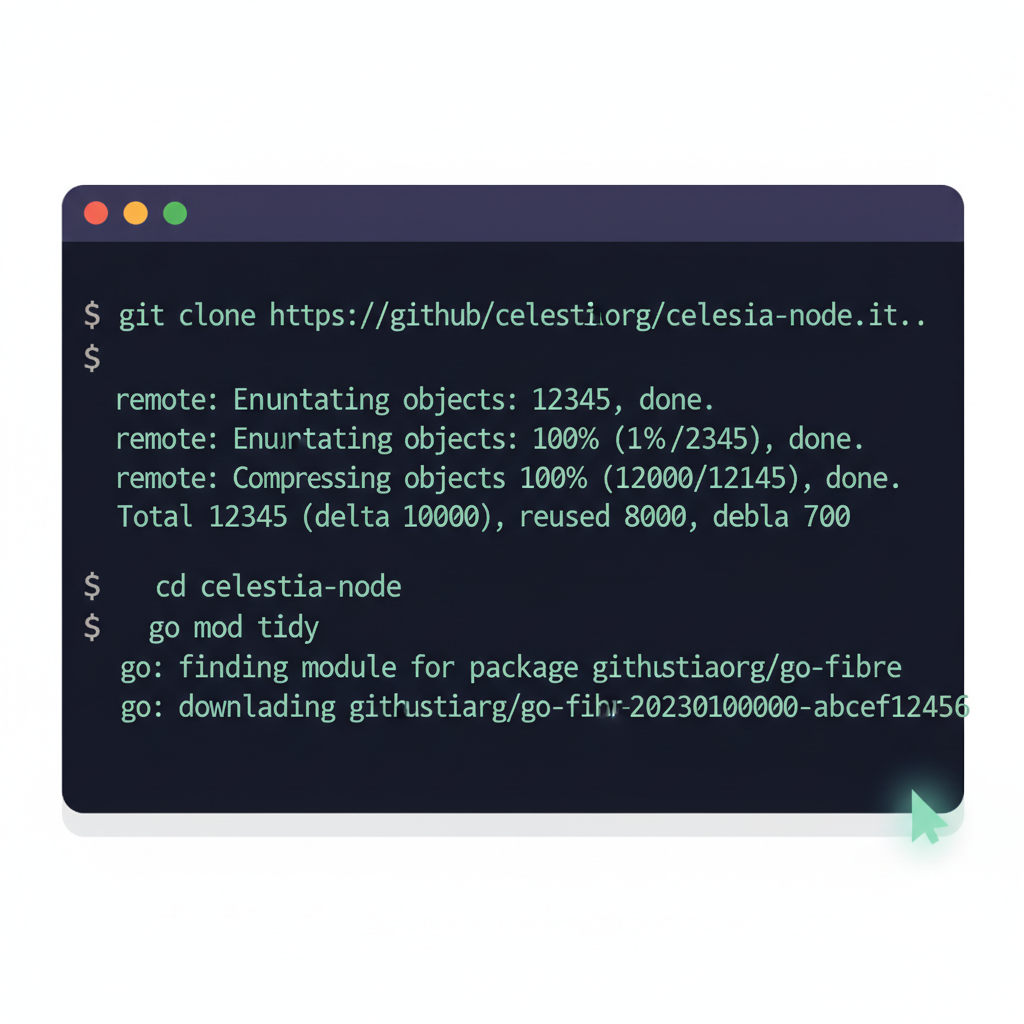
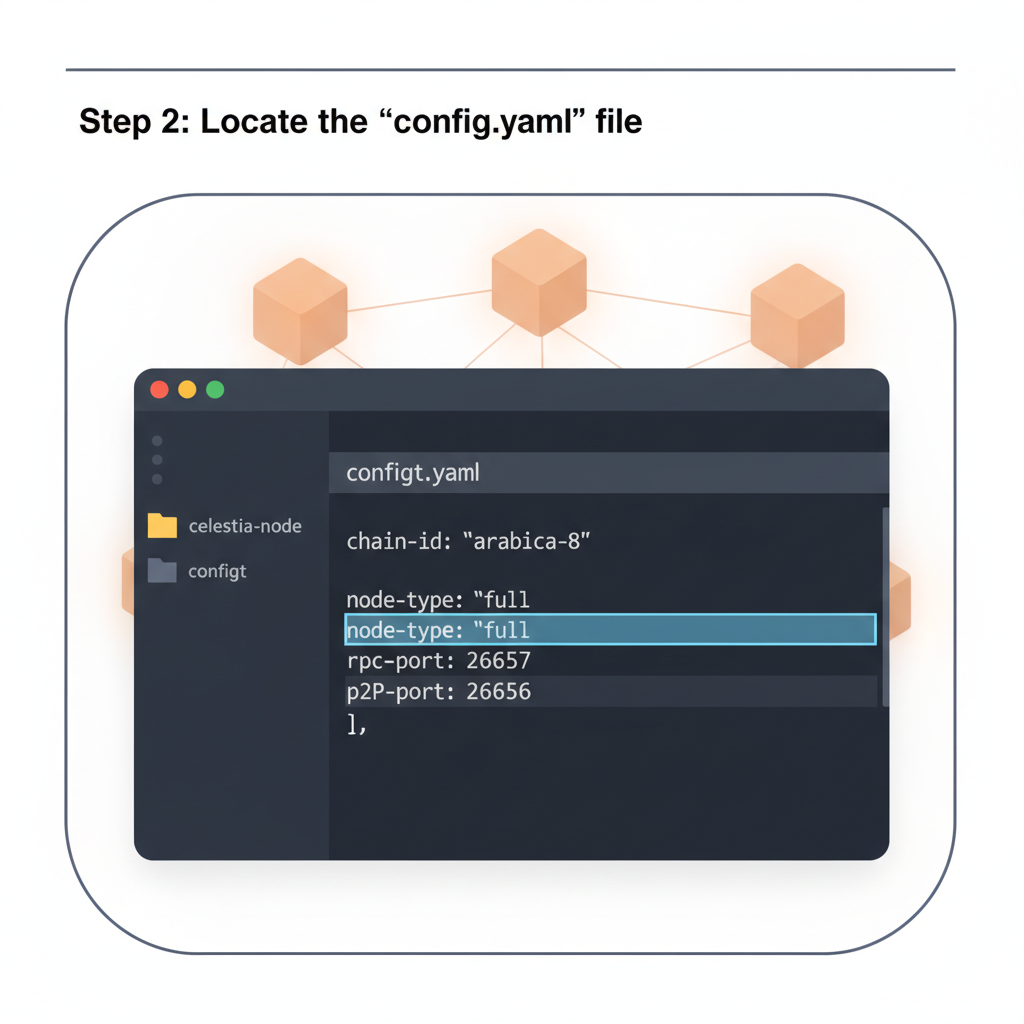
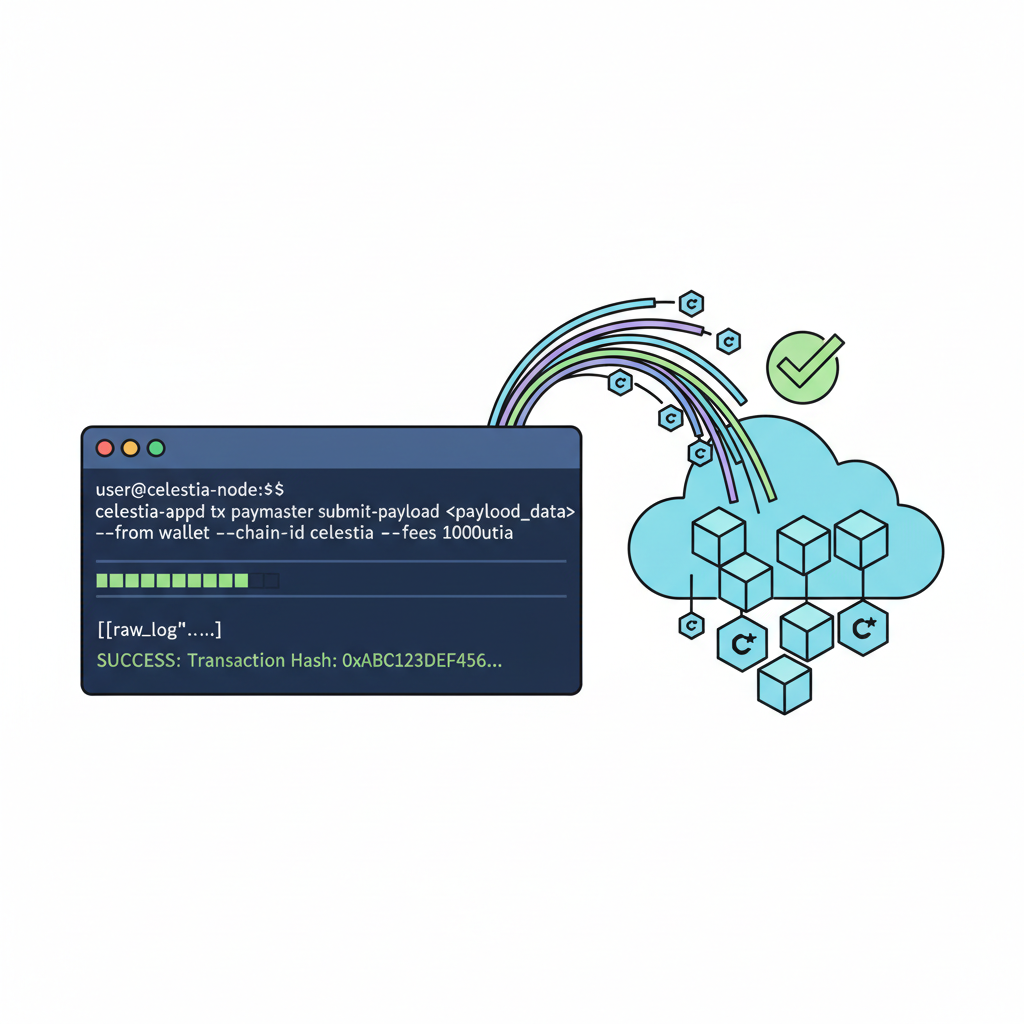
Run those tests with TIA steady at $0.3217, up $0.0152 over 24 hours (high $0.3218, low $0.2986). Market’s pricing in the dev frenzy ahead. Fibre isn’t just faster; it’s reliable under fire. Nodes sample fractions of data, reconstruct on demand, slashing bandwidth needs by orders of magnitude. For modular rollups 1 Tbit/s, this unlocks parallel chains hammering real-time DeFi, gaming, or AI workloads without shared bottlenecks.
Code It Up: Quick Fibre Payload Submission
Devs, here’s where rubber meets road. Fibre’s APIs mirror Celestia’s simplicity but scale to terabits. Hook your rollup’s sequencer to post blobs directly. Pair with Blobstream for Ethereum bridges, or go full sovereign with Dojo’s stack. I’ve seen traders chase pumps on less; this tech shift could mirror TIA’s next breakout as L2s migrate en masse.
Payload Submission to Fibre DA
Submit high-throughput rollup payloads to Celestia Fibre DA with this dead-simple curl command:
curl -X POST https://fibre-da.celestia.org/v1/submit-payload \
  -H "Content-Type: application/json" \
  -H "Authorization: Bearer $API_KEY" \
  -d '{"namespace": "rollup123", "data": "$(base64 -w0 high_throughput_payload.bin)", "zoda_commitment": "0xzkproofcommitmentdata"}'
Boom—1 Tbit/s scale unlocked. Pipe in your binary payloads, add ZODA commitments, and deploy.
Expect incremental rollouts: Arabica testnet first for tuning, then mainnet phases ramping to full 1 Tb/s. Monitor node counts – 500 strong now, but it scales horizontally. Sovereign L2s Celestia powered thrive here, posting data to headers without execution drag. Cosmos SDK roots keep it lightweight; no bloat.
Fibre complements L1 DA perfectly. Low-volume rollups stick cheap; high-flyers blast Fibre. This dual-lane highway fits every builder’s pace. Outsourcing DA to Celestia frees you to obsess over UX, not plumbing. Real-world wins? Pay-per-crawl AI agents streaming terabytes, ad platforms settling auctions in blocks. TPS that’d melt monoliths now routine.
Market Momentum and Rollup Roadmap
TIA’s holding $0.3217 amid Fibre hype proves the modular bet pays. 24-hour gain of $0.0152 signals smart money positioning for adoption waves. Rollup devs on Conduit or Eclipse: audit your stacks now. Fibre’s predictable fees kill MEV roulette; simple APIs mean faster iterations. Sovereign rollups post, nodes verify locally – pure flexibility.
I’ve day-traded enough crypto cycles to spot catalysts. This is one: 881x encoding speed via ZODA isn’t fluff; it’s benchmarked. Public code invites forks, optimizations. By mainnet, expect Eclipse rollups pushing 1 Tb/s frontiers, Conduit sequencers feeding the beast. Modular world accelerates; Celestia leads with Celestia data availability that doesn’t quit.
Builders, deploy early. Test bursts on Arabica, scale sovereign L2s Celestia-style. Fibre cements the four pillars: sovereignty first, now backed by insane throughput. Trade smart, build faster – markets reward the prepared.
About the Author