
As of March 2026, with Celestia and #39;s TIA priced at $0.3174 after a modest 24-hour dip of -0.0198%, modular blockchain developers stand at a crossroads. The celestia eclipse conduit comparison reveals distinct paths for scaling applications via rollups, each balancing flexibility, performance, and ease against the demands of Ethereum and #39;s congested base layer. Celestia pioneers data availability, Eclipse fuses Solana and #39;s virtual machine prowess, and Conduit streamlines custom deployments; selecting wisely can define a project and #39;s viability in a fragmented yet opportunity-rich ecosystem.

Modular rollups decouple data availability from execution and settlement, slashing costs while boosting throughput. Celestia handles DA off-chain, Eclipse layers EVM-compatible logic atop high-speed VMs, and Conduit integrates sequencers and proofs for turnkey sovereignty. This trifecta addresses rollup frameworks modular blockchains pain points: interoperability silos, sequencer centralization, and deployment friction. From my vantage as a risk assessor in volatile markets, frameworks mitigating these risks offer the steadiest path to long-term adoption.
Celestia and #39;s Rollkit: Unmatched Modularity for Sovereign Rollups
Celestia, via Rollkit, stands as the modular bedrock, enabling developers to mix DA, execution, and settlement like Lego blocks. Rollkit supports diverse VMs, from EVM to SVM, and sequencer setups ranging from decentralized to permissioned. Its strength lies in celestia data availability rollups, posting transaction data to Celestia and #39;s namespace-secured layer, ensuring availability without bloating Ethereum. Developers experiment rapidly; a DeFi app might pair Rollkit with Reth execution and Ethereum settlement, achieving sub-second finality at fractionally lower fees.
Pragmatically, Rollkit shines for teams prioritizing sovereignty. Unlike monolithic stacks, it avoids vendor lock-in, a risk I and #39;ve seen sink rigid infrastructures. Recent integrations, like deploying Eclipse rollups on Celestia DA, underscore its versatility. Yet, customization demands expertise; novices may falter without thorough testing, echoing commodity trades where leverage amplifies errors.
Rollkit empowers and quot;sovereign rollups that can run on any blockchain, and quot; per Celestia and #39;s developer portal.
Eclipse: High-Throughput EVM via Solana VM Integration
Eclipse flips the script by embedding the Solana Virtual Machine within Ethereum and #39;s settlement orbit, leveraging Celestia for DA. This yields eclipse evm rollup framework throughput eclipsing traditional OP stacks: thousands of TPS with sub-cent fees. Vertical integration via a unified SDK abstracts complexities; developers port Solana apps seamlessly, gaining Ethereum and #39;s liquidity without its bottlenecks.
In practice, Eclipse suits high-velocity dApps like gaming or socialfi, where SVM and #39;s parallel processing trumps EVM and #39;s sequential limits. Its sequencer, fortified against MEV, aligns with conservative risk profiles by distributing censorship resistance. Drawbacks? SVM and #39;s youth means fewer audited tools, a cautionary parallel to unproven derivatives in my FRM playbook. Still, with TIA at $0.3174 anchoring the stack, Eclipse positions projects for 2026 and #39;s throughput arms race.
Read more on comparing these for scalability.
Celestia (TIA) Price Prediction 2027-2032
Bear, Base, and Bull Scenarios Amid Rollup Framework Adoption and Modular Blockchain Growth
| Year | Minimum Price (Bear) | Average Price (Base) | Maximum Price (Bull) |
|---|---|---|---|
| 2027 | $0.45 | $1.25 | $4.50 |
| 2028 | $0.70 | $2.80 | $9.00 |
| 2029 | $1.10 | $4.50 | $14.00 |
| 2030 | $1.60 | $7.00 | $20.00 |
| 2031 | $2.20 | $10.50 | $28.00 |
| 2032 | $3.00 | $14.00 | $38.00 |
Price Prediction Summary
Celestia (TIA) is expected to recover from its 2026 low of $0.32, driven by increasing adoption of Rollkit, Eclipse, and Conduit rollup frameworks. Base case projects steady growth to $14 by 2032, with bull scenarios reaching $38 amid modular blockchain dominance, while bear cases reflect prolonged market caution.
Key Factors Affecting Celestia Price
- Widespread adoption of Celestia’s Rollkit for sovereign rollups and integrations with Eclipse (SVM) and Conduit platforms
- Expansion of rollups-as-a-service (RaaS) and modular data availability layers boosting TIA demand
- Crypto market cycles, with potential bull runs in 2027-2028 and 2031-2032
- Regulatory developments favoring scalable L2 solutions
- Technological advancements in interoperability and throughput
- Competition from EigenLayer DA and other modular stacks influencing market share
Disclaimer: Cryptocurrency price predictions are speculative and based on current market analysis.
Actual prices may vary significantly due to market volatility, regulatory changes, and other factors.
Always do your own research before making investment decisions.
Conduit: Feature-Rich Platform for Effortless Customization
Conduit emerges as the pragmatic powerhouse, bundling OP Succinct proofs, G2 sequencers, and a marketplace of pre-built apps. Dubbed for conduit custom rollup infrastructure, it supports account abstraction natively, easing user onboarding. Deployment condenses to SDK commands, ideal for bootstrapped teams chasing speed-to-market.
What sets Conduit apart is its ecosystem glue: plug Celestia DA or Eclipse-like execution without rewriting stacks. For risk managers like myself, its built-in monitoring dashboards flag sequencer liveness issues early, akin to real-time VaR tracking. In 2026 and #39;s RaaS surge, Conduit and #39;s predictions from conduit. xyz highlight its tooling dominance, though reliance on integrated tech introduces subtle centralization vectors.
Explore hybrid scaling insights.
Developers weighing celestia eclipse conduit comparison must quantify trade-offs across modularity, performance, and operational overhead. Celestia’s Rollkit excels in composability but requires assembly; Eclipse prioritizes speed via SVM, trading some EVM familiarity; Conduit minimizes friction with batteries-included tooling, at the cost of abstraction layers. With TIA holding steady at $0.3174 amid a 24-hour range of $0.3122 to $0.3288, market signals favor frameworks leveraging Celestia’s DA for cost efficiency.
Head-to-Head: Key Metrics Comparison
Raw specs illuminate strengths. Celestia via Rollkit offers boundless customization across DA, execution, and settlement, supporting VMs like EVM, SVM, or Wasm. Eclipse delivers 1,000 and TPS through SVM parallelism, settling on Ethereum with Celestia DA for data security. Conduit bundles zero-knowledge proofs and account abstraction, enabling rapid launches with G2 sequencer resilience.
Celestia Rollkit vs Eclipse vs Conduit: Rollup Framework Comparison
| Framework | DA Layer | Execution VM | Throughput (TPS) | Deployment Ease | Key Strength | |
|---|---|---|---|---|---|---|
| Celestia Rollkit | Celestia | Modular (EVM, SVM, etc.) | Scalable (10k+ TPS) | Moderate | Flexibility & Modularity | 🔄🧩 |
| Eclipse | Celestia | Solana VM (SVM) | Very High (100k+ TPS) | Easy (Single SDK) | High Performance & SVM Integration | ⚡🚀 |
| Conduit | Modular (e.g., Celestia) | EVM/OP Stack | High (10k+ TPS) | Very Easy (RaaS) | Feature-Rich Marketplace & AA | 🛒✨ |
This matrix underscores pragmatic choices: Rollkit for bespoke sovereignty, Eclipse for velocity, Conduit for acceleration. In my experience auditing volatile assets, Conduit’s monitoring edges out in risk mitigation, flagging liveness faults akin to early circuit breakers in derivatives trading.
Tailored Recommendations: Match Framework to Project Needs
Selection hinges on project DNA. DeFi protocols fragmented by liquidity silos thrive on Celestia’s interoperability, posting data to its namespace-secured layer for verifiable availability. Gaming or NFT marketplaces demand Eclipse’s sub-second latencies, porting Solana codebases without Ethereum’s gas wars. Enterprise pilots or MVPs favor Conduit’s marketplace, deploying abstracted rollups in days, not months.
Tailored Use Cases
-
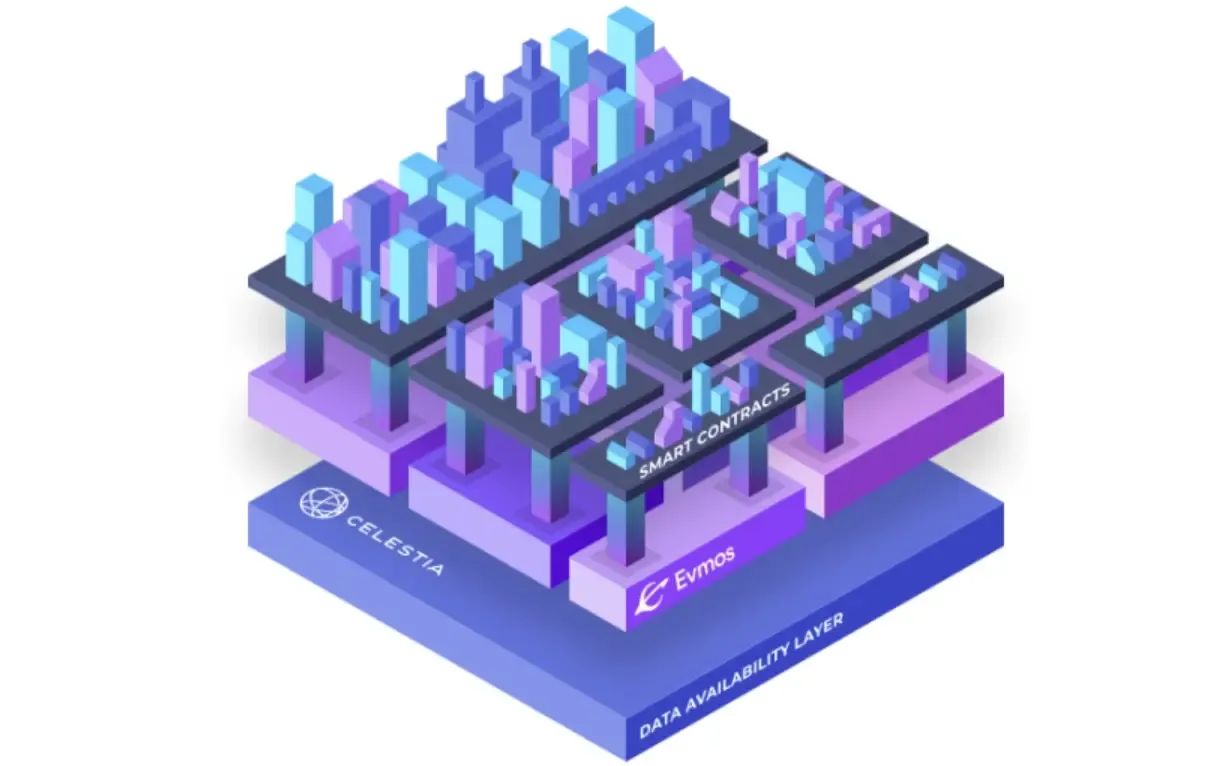
Celestia Rollkit: Sovereign DeFi and appchains, enabling modular, customizable rollups with flexible execution environments, sequencers, and proofs for rapid innovation.
-
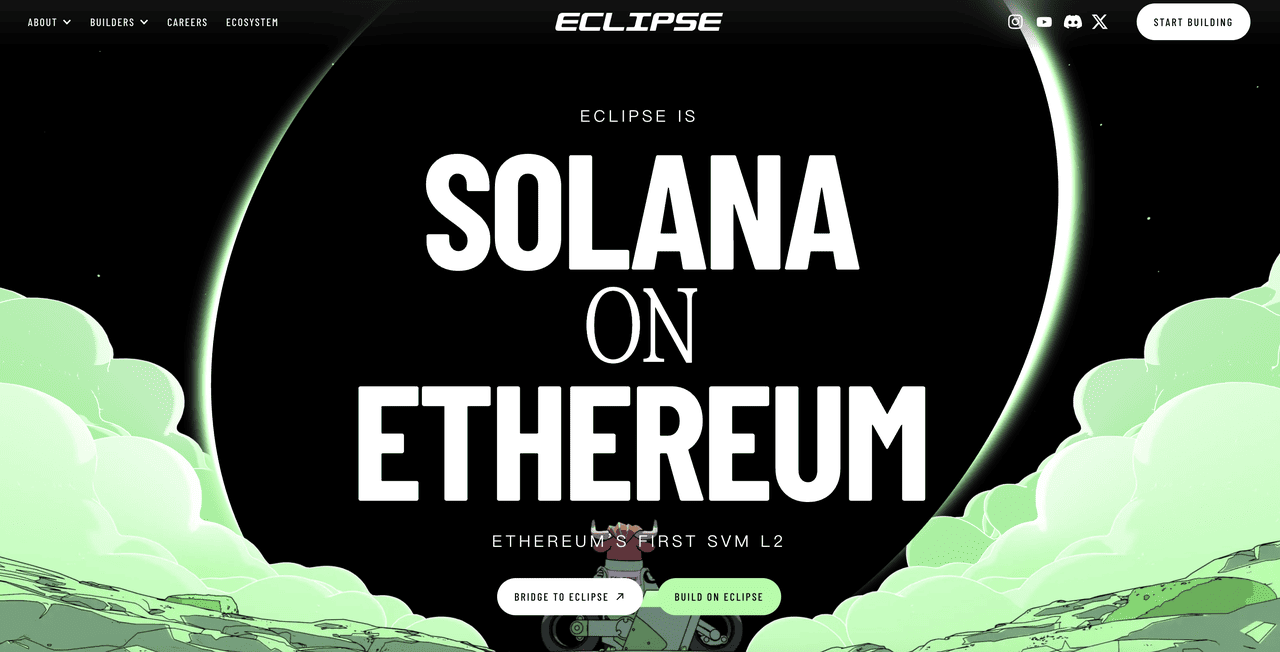
Eclipse: High-TPS gaming and SocialFi, leveraging Solana VM (SVM) integration with Celestia DA for performant, vertically integrated rollups via a unified SDK.
-

Conduit: Rapid MVP and enterprise rollups with account abstraction (AA) and proofs, featuring OP Succinct, G2 sequencer, and app marketplace for easy deployment.
Hybrid stacks amplify potential; layer Eclipse execution atop Celestia DA via Conduit orchestration, as guides detail for 2026 deployments. Yet, over-customization courts fragility, much like leveraged commodity positions unraveling on margin calls. Test rigorously: simulate sequencer failures, audit DA sampling, benchmark TPS under load. TIA’s resilience at $0.3174 reflects ecosystem maturity, buoying all three.
“A framework for building seamlessly scalable and interoperable rollups that can run on any blockchain, ” Celestia’s portal affirms, echoing Rollkit’s ethos.
For risk-averse builders, start with Conduit’s guardrails, migrate to Rollkit as sovereignty scales. Eclipse slots in where throughput trumps tradition. In modular blockchains’ ascent, these frameworks democratize scaling; pair with Ethereum settlement for liquidity, Celestia DA for thrift. As RaaS matures per 2025 trend reports, expect tighter integrations, shrinking deployment deltas. Your stack’s choice, calibrated to threats and ambitions, forges enduring advantage.
Dive deeper with our step-by-step Conduit-Celestia guide.
About the Author