

Imagine launching a gaming Layer 1 blockchain that hums with Solana-level speed, settles securely on Ethereum, and scales effortlessly thanks to Celestia's data availability magic, all powered by Avalanche's consensus muscle. That's the promise of Eclipse's fresh integration with Avalanche, announced as of February 18,2026. With AVAX trading at $9.05 after a slight 24-hour dip of -0.11%, this move positions Eclipse rollups as the go-to for builders crafting high-stakes gaming worlds. Developers can now mix and match execution environments like the Solana Virtual Machine (SVM) with customizable bases, turning modular dreams into reality.
Eclipse has always stood out in the rollup crowd. It's not just another Layer 2; it's a settlement rollup that lets you stack SVM or other VMs on top, sipping from Celestia's DA layer for cheap, verifiable data posting. Sources like Dynamic. xyz highlight how it fuses Solana's high-performance SVM with Ethereum's liquidity fortress. Add Avalanche's subnet tech, and you've got a recipe for gaming L1s that handle thousands of transactions per second without breaking a sweat. This eclipse rollup avalanche synergy isn't hype; it's a strategic pivot for onchain gaming in 2026.
Eclipse's Modular Blueprint Meets Avalanche Speed
At its core, Eclipse offers Rollup-as-a-Service with a twist: sovereign rollups that borrow Celestia's DA innovations. Yash Agarwal's deep dives on Superteam and Medium paint Eclipse as the pioneer of Sealevel VM rollups, enabling app-specific chains with IBC compatibility for Cosmos ecosystems. Now, weaving in Avalanche means gaming devs get sub-second finality and custom consensus, perfect for real-time battles and NFT mints. Picture this: a blockchain where player actions settle instantly, data blobs live on Celestia, and everything proofs back to Ethereum. That's eclipse gaming l1 celestia in action, slashing costs while boosting throughput.
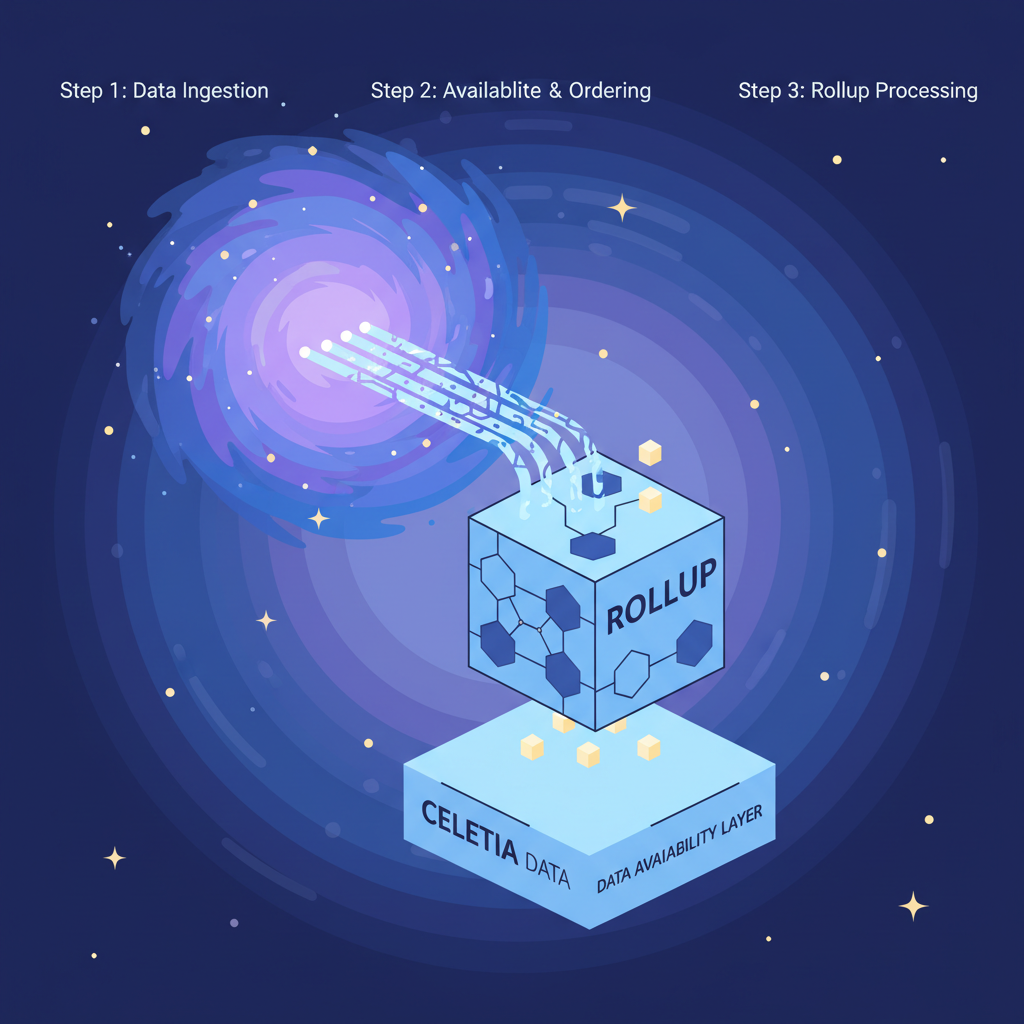
LI. FI's excitement underscores why this matters. Eclipse publishes transaction data to Celestia, ensuring light nodes anywhere can verify states without running full nodes. Avalanche amps this up with its high-performance consensus, proven in subnets for gaming like those powered by Conduit. Speaking of which, while Conduit excels in all-in-one rollups for games, Eclipse's refinement process offers more VM flexibility, making it a contender in modular rollup gaming frameworks. Builders, this is your cue to prototype those metaverse economies.
Celestia's DA Backbone: The Unsung Hero for Gaming Scale
Celestia's role here can't be overstated. Sovereign rollups, as celestia. org introduces, decouple execution from consensus and DA, letting chains like Eclipse focus on what they do best. By offloading data to Celestia, gaming L1s avoid Ethereum's calldata squeeze, paying pennies per blob. In a 2026 market where AVAX holds steady at $9.05, this efficiency translates to real margins for studios. Modular watchlists from Gate. io and Binance spotlight similar setups, like Manta's Celestia-Ethereum hybrid, but Eclipse-Avalanche adds gaming-optimized finality.
Think about the user experience. Gamers hate lag; devs hate gas wars. Eclipse bridges that with Avalanche's throughput, Celestia's data sampling, and SVM's parallel processing. Ninepoint Partners' YouTube breakdown nails it: Eclipse merges Solana's execution, Ethereum's settlement, and Celestia's DA into a scalable L2 beast, now supercharged for L1 gaming via Avalanche. If you're eyeing eclipse refinement process conduit comparison, Eclipse wins on customization, letting you tweak DA, settlement, and VMs independently.
Avalanche Consensus Unlocks Gaming's Onchain Frontier
Avalanche's secret sauce? Its Avalanche consensus protocol delivers near-instant finality across subnets, ideal for turn-based strategies or live leaderboards. Integrated with Eclipse, it creates dedicated gaming L1s that feel like native apps but run decentralized. Block Magnates' hitchhiker's guide to RaaS notes Eclipse's settlement layer supports Cosmos and Polygon too, but Avalanche integration targets gaming's need for speed. With AVAX at $9.05 amid a tight 24-hour range ($8.98-$9.24), investor eyes are on this combo's potential to capture Web3 gaming's $30B and market.
Avalanche (AVAX) Price Prediction 2027-2032
Forecasts post-Eclipse Rollup integration with Avalanche for gaming L1s using Celestia DA (Baseline 2026 Avg: $12.00)
| Year | Minimum Price | Average Price | Maximum Price | YoY % Change (Avg from Prev) |
|---|---|---|---|---|
| 2027 | $12.00 | $20.00 | $35.00 | +67% |
| 2028 | $16.00 | $28.00 | $48.00 | +40% |
| 2029 | $22.00 | $38.00 | $65.00 | +36% |
| 2030 | $30.00 | $55.00 | $95.00 | +45% |
| 2031 | $40.00 | $75.00 | $130.00 | +36% |
| 2032 | $55.00 | $105.00 | $180.00 | +40% |
Price Prediction Summary
AVAX is projected to experience robust growth from $20 average in 2027 to $105 by 2032, fueled by Eclipse integration enhancing gaming L1 scalability with Celestia DA. Bullish maxima reflect adoption surges, while minima account for market cycles and competition.
Key Factors Affecting Avalanche Price
- Eclipse Rollup integration boosting gaming L1 development
- Celestia DA synergy for cost-effective scalability
- Avalanche's high-throughput consensus for gaming apps
- Modular blockchain adoption and Rollup-as-a-Service trends
- Crypto market cycles and Bitcoin halving influences
- Regulatory developments favoring DeFi/gaming
- Competition from Solana, Ethereum L2s, and emerging L1s
- Overall market cap expansion and institutional inflows
Disclaimer: Cryptocurrency price predictions are speculative and based on current market analysis. Actual prices may vary significantly due to market volatility, regulatory changes, and other factors. Always do your own research before making investment decisions.
This isn't just tech stacking; it's an ecosystem play. Eclipse empowers devs to build without vendor lock-in, choosing Celestia DA for scalability and Avalanche for performance. Early movers in gaming rollups will reap the rewards as modular blockchains mature. Stay tuned, because the second half dives deeper into deployment guides and tokenomics implications.
Let's roll up our sleeves and get tactical. Deploying a gaming L1 on Eclipse starts with picking your stack: SVM for blistering parallel tx processing, Avalanche for consensus, and Celestia for DA. No more wrestling with monolithic chains; this is plug-and-play modularity at its finest. As AVAX lingers at $9.05 with a negligible 24-hour dip, the timing feels ripe for devs to experiment without betting the farm.
Hands-On Deployment: From Zero to Gaming L1 in Hours
Eclipse's Rollup-as-a-Service shines here. First, spin up a customizable base via their dashboard - select SVM execution, Avalanche subnet for consensus, and Celestia DA. Configure your chain ID, gas params tuned for NFT drops and in-game trades. Deploy smart contracts with Solana tools like Anchor, then post calldata to Celestia blobs for that sweet sub-cent cost. Proofs batch to Ethereum for settlement, ensuring your gaming economy inherits ETH liquidity. It's sovereign, scalable, and stupidly efficient for eclipse gaming l1 celestia setups.
Launch Your Eclipse Gaming L1: Avalanche + Celestia Rocket Guide

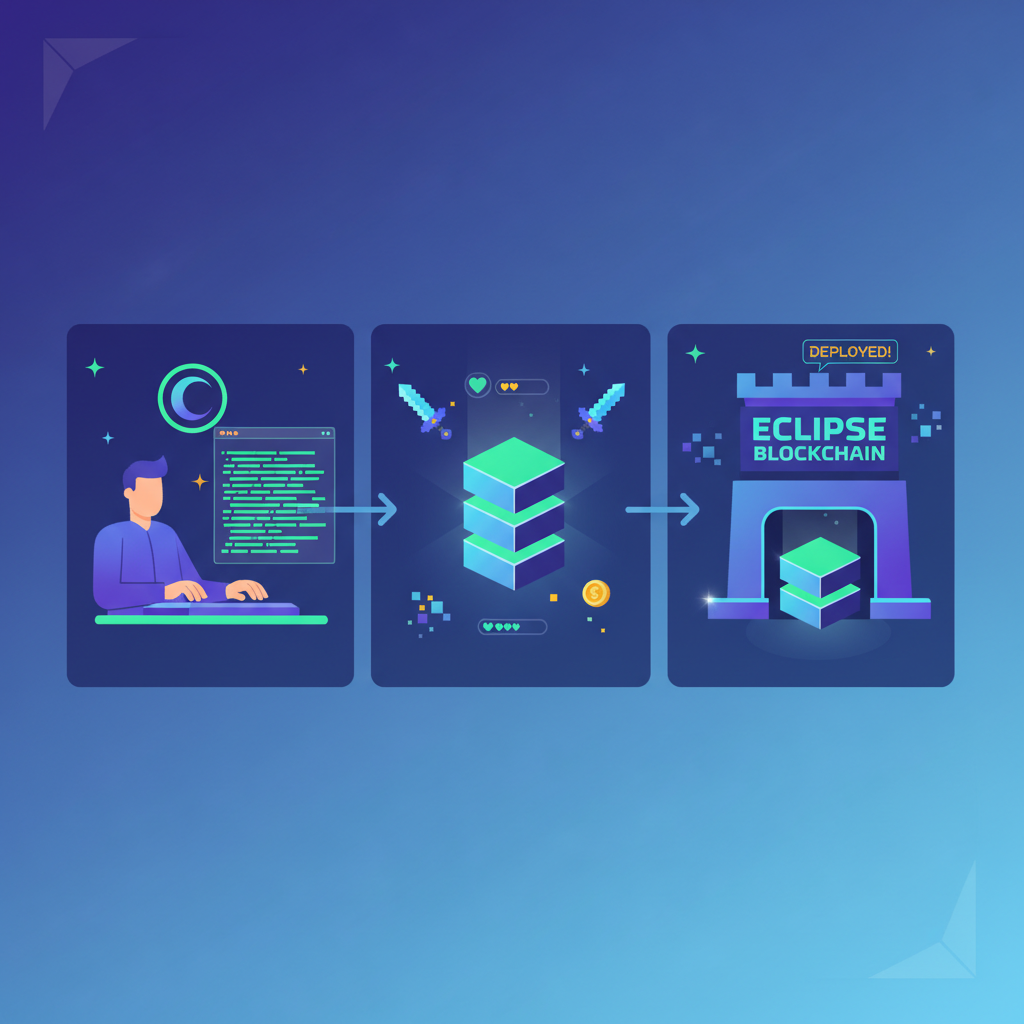
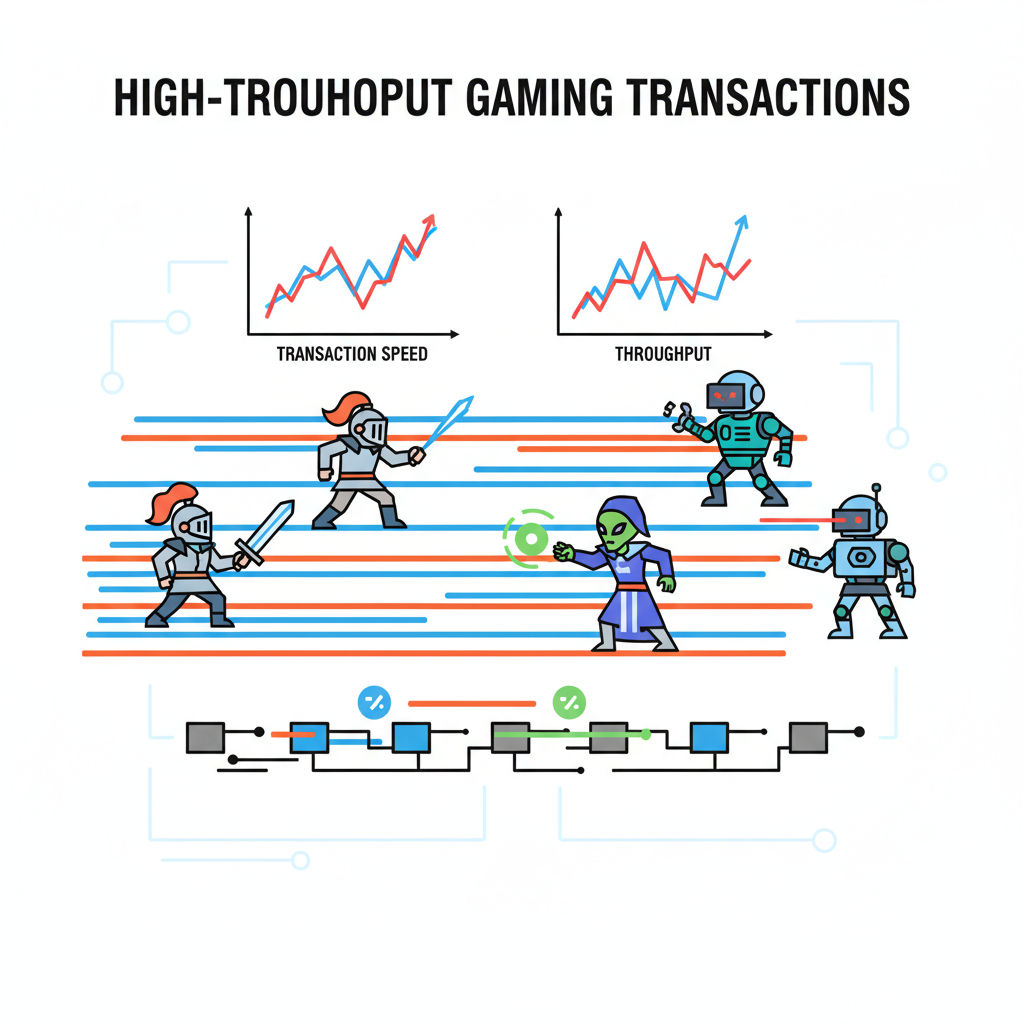
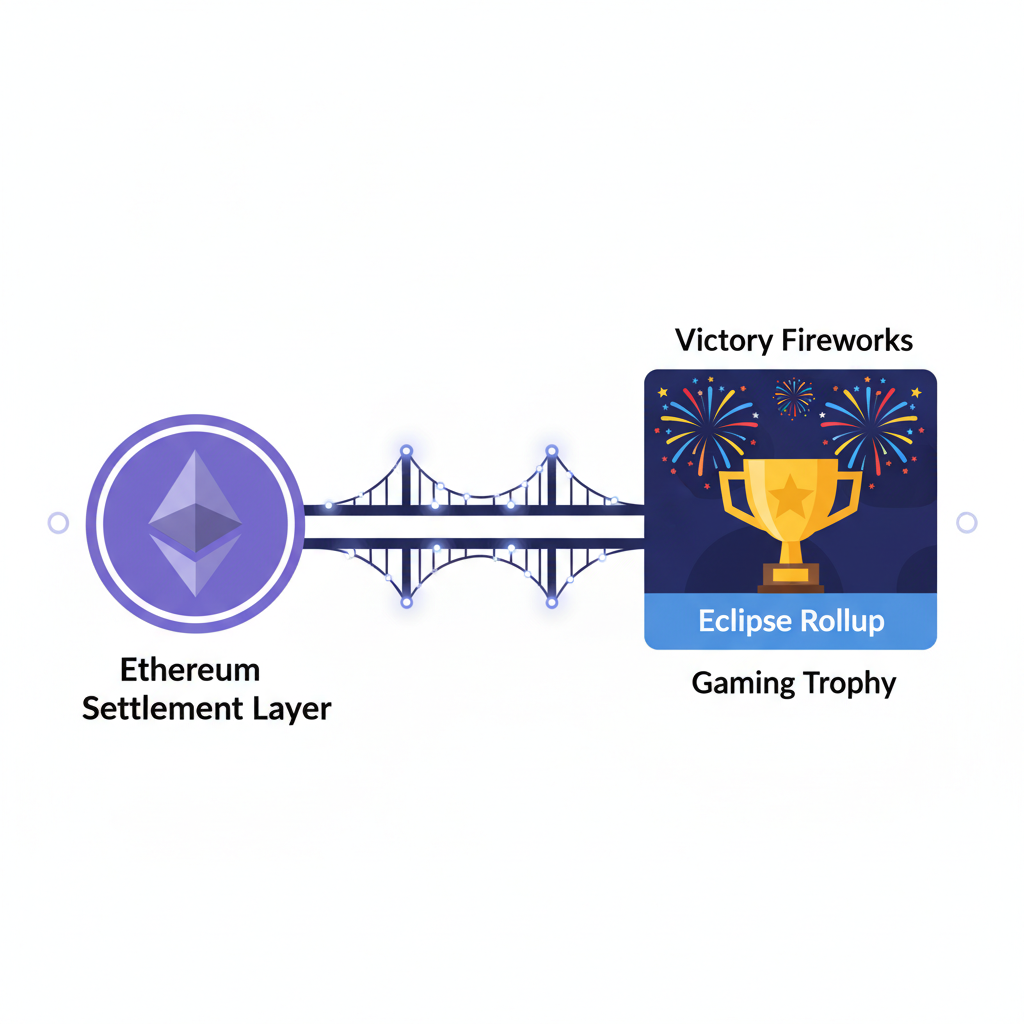
I've seen teams prototype battle royales this way, hitting 10k TPS without hiccups. Compared to Conduit's opinionated rollups, Eclipse's eclipse refinement process conduit comparison lets you iterate faster - swap DA layers mid-flight if needed. Gaming studios, this flexibility means evolving with player demands, not rebuilding from scratch.
Tokenomics Angle: Fueling the Gaming Rollup Boom
Tokenomics get juicy with this trio. AVAX holders stake into subnets, earning yields from gaming fees as adoption spikes. Celestia's TIA captures DA demand, ballooning with every tx blob from these L1s. Eclipse's native token (if launched) would bootstrap liquidity, but the real alpha lies in composability. Imagine yield farms where gamers stake NFTs, fees split across AVAX validators, Celestia light nodes, and SVM sequencers.
With AVAX steady at $9.05 (24h high $9.24, low $8.98), this integration signals undervaluation. Modular rollups like these could juice AVAX past recent highs if gaming TVL pours in. Gate. io's modular watchlist pegs Eclipse as a top contender, and for good reason - it's not chasing hype, it's delivering tools. Token flows? Fees accrue to stakers, DA pays Celestia, settlement taps ETH gas markets. Balanced incentives that reward builders and holders alike.
Gaming's onchain shift isn't if, it's when. Eclipse-Avalanche-Celestia arms you with modular rollup gaming frameworks that prioritize fun over friction. Picture metaverses where economies thrive on real ownership, leaderboards etched in blockchain permanence, all at native app speeds. Devs, grab Eclipse's docs, fork a gaming subnet, and launch. The modular era rewards the bold - your next hit could redefine Web3 gaming while AVAX climbs on the back of real utility.
Builders bridging Avalanche's speed with Celestia's scale via Eclipse aren't just coding chains; they're crafting empires. With market stability at $9.05, now's the moment to dive in and own the future of play-to-earn, play-to-own, and beyond.



No comments yet. Be the first to share your thoughts!