
Rollup frameworks 2026
The rollup framework market in 2026 has consolidated around four primary players: OP Stack, Arbitrum Orbit, Polygon CDK, and ZK Stack. These frameworks now handle the majority of new Ethereum L2 launches, shifting the industry from experimental setups to standardized, production-ready infrastructure. The dominance of these four solutions reflects a broader industry trend toward modular, interoperable, and cost-efficient scaling.
OP Stack remains the standard for optimistic rollups, offering a modular and composable foundation for developers building custom chains. Arbitrum Orbit provides a flexible, shared security model, enabling teams to launch rollups that inherit Ethereum’s security while maintaining operational independence. Polygon CDK focuses on interoperability, allowing seamless cross-chain communication through its Chain Development Kit. ZK Stack, meanwhile, leads in zero-knowledge rollups, leveraging advanced cryptographic proofs for faster finality and enhanced privacy.
These frameworks are not just technical tools; they represent a strategic shift in how blockchain networks are built and scaled. By adopting one of these established frameworks, projects can reduce development time, minimize security risks, and align with the growing ecosystem of rollup-based applications. The choice of framework often depends on specific use cases, such as the need for speed, privacy, or interoperability.
| Framework | Type | Primary Focus |
|---|---|---|
| OP Stack | Optimistic | Modularity & Composability |
| Arbitrum Orbit | Optimistic | Shared Security & Flexibility |
| Polygon CDK | Optimistic | Interoperability |
| ZK Stack | ZK | Speed & Privacy |
As the rollup ecosystem matures, the decision to adopt a specific framework is becoming more nuanced. Projects must weigh factors like developer experience, community support, and long-term sustainability. The frameworks listed above offer distinct advantages, but the right choice depends on the unique requirements of each project. For many, the key is not just selecting a framework, but understanding how it aligns with their broader strategic goals.
Rollup frameworks 2026 choices that change the plan
Choosing a rollup framework in 2026 is no longer just about picking a technology stack; it is a decision about economic alignment and security assumptions. The four dominant frameworks—OP Stack, Arbitrum Orbit, Polygon CDK, and ZK Stack—handle the majority of new Ethereum L2 launches, but they serve fundamentally different needs.
OP Stack and Arbitrum Orbit prioritize speed and developer familiarity. They rely on optimistic verification, meaning transactions are assumed valid unless proven otherwise. This model allows for near-instant finality and a development experience that mirrors Ethereum Mainnet, making it ideal for applications that need rapid user onboarding and high throughput. However, this speed comes with a seven-day withdrawal window, which can be a friction point for users seeking immediate liquidity access.
In contrast, ZK Stack (Zero-Knowledge) and Polygon CDK focus on cryptographic security and data availability. ZK rollups generate a validity proof for every batch of transactions, offering immediate finality upon settlement to Mainnet. This is critical for high-value DeFi protocols or institutional applications where trust minimization is non-negotiable. The tradeoff is complexity; ZK development requires specialized tooling and significant computational overhead for proof generation, which can increase operational costs.
| Framework | Verification | Finality | Best Use Case |
|---|---|---|---|
| OP Stack | Optimistic | ~7 days | Consumer apps, social, gaming |
| Arbitrum Orbit | Optimistic | ~7 days | DeFi, high-throughput chains |
| ZK Stack | Zero-Knowledge | Instant | High-value DeFi, enterprise |
| Polygon CDK | ZK or Optimistic | Varies | Modular appchains, hybrid |
The decision often hinges on your application's tolerance for withdrawal delays. If your users expect to move assets instantly between layers, ZK Stack is the only viable option among the leaders. If your priority is developer velocity and a broad ecosystem of existing tools, OP Stack or Orbit provides a smoother path to launch. Polygon CDK offers flexibility by supporting both models, allowing teams to start with optimistic security and migrate to ZK as they scale.
How to choose the right rollup framework
Selecting a rollup framework depends on your specific needs for security, speed, and developer experience. In 2026, four main contenders dominate the Ethereum L2 landscape: OP Stack, Arbitrum Orbit, Polygon CDK, and ZK Stack. Each offers distinct trade-offs between finality speed, cost, and customization flexibility.
| Framework | Type | Finality | Best For |
|---|---|---|---|
| OP Stack | Optimistic | 7 days | Established dApps needing EVM equivalence |
| Arbitrum Orbit | Optimistic | 7 days | Custom chains requiring Arbitrum’s security |
| Polygon CDK | Hybrid | Variable | High-throughput appchains and enterprise |
| ZK Stack | ZK-Rollup | Minutes | Security-critical apps needing fast withdrawal |
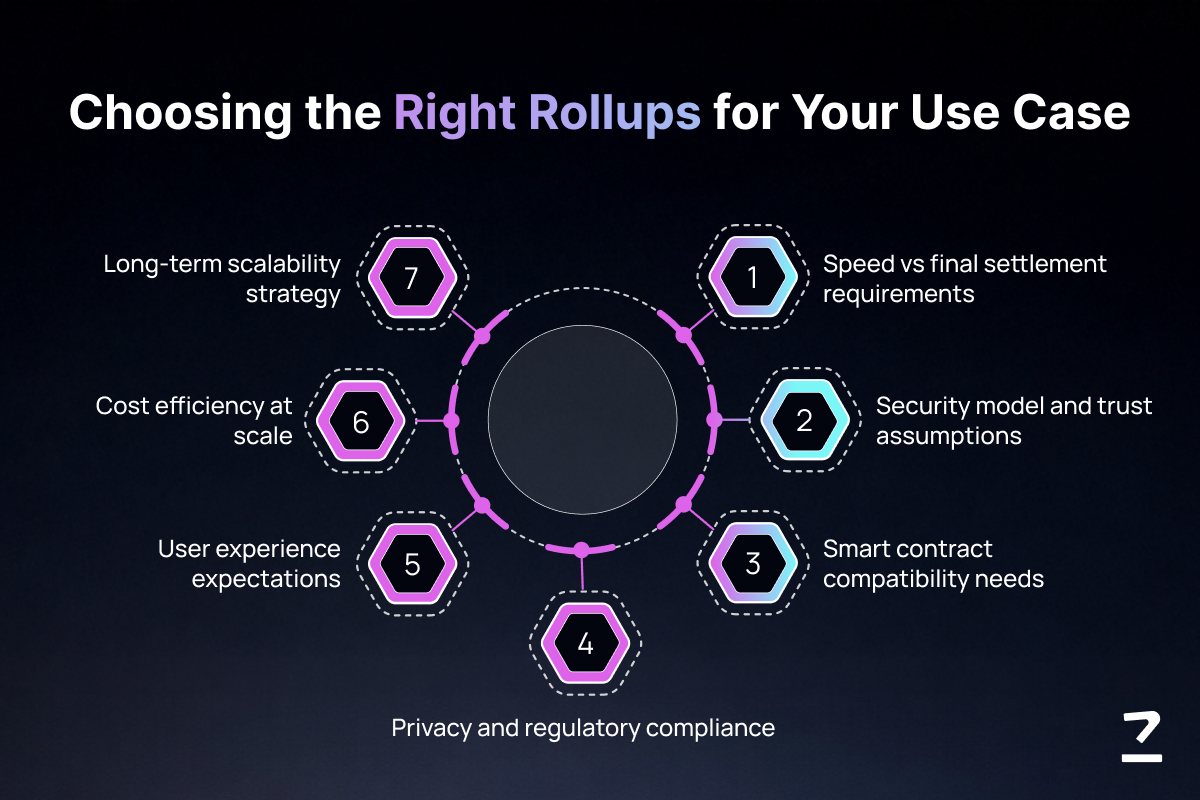
If your application requires users to withdraw funds quickly, ZK-based frameworks like ZK Stack are superior due to their near-instant finality. For applications where a 7-day challenge period is acceptable, OP Stack or Arbitrum Orbit offer more mature ecosystems and lower development overhead.
OP Stack and Arbitrum Orbit are fully EVM-equivalent, meaning existing Solidity codebases can deploy with minimal changes. Polygon CDK allows for more custom execution environments, which may require rewriting smart contracts or adopting new tooling. Choose the framework that aligns with your team’s current expertise to reduce launch time.
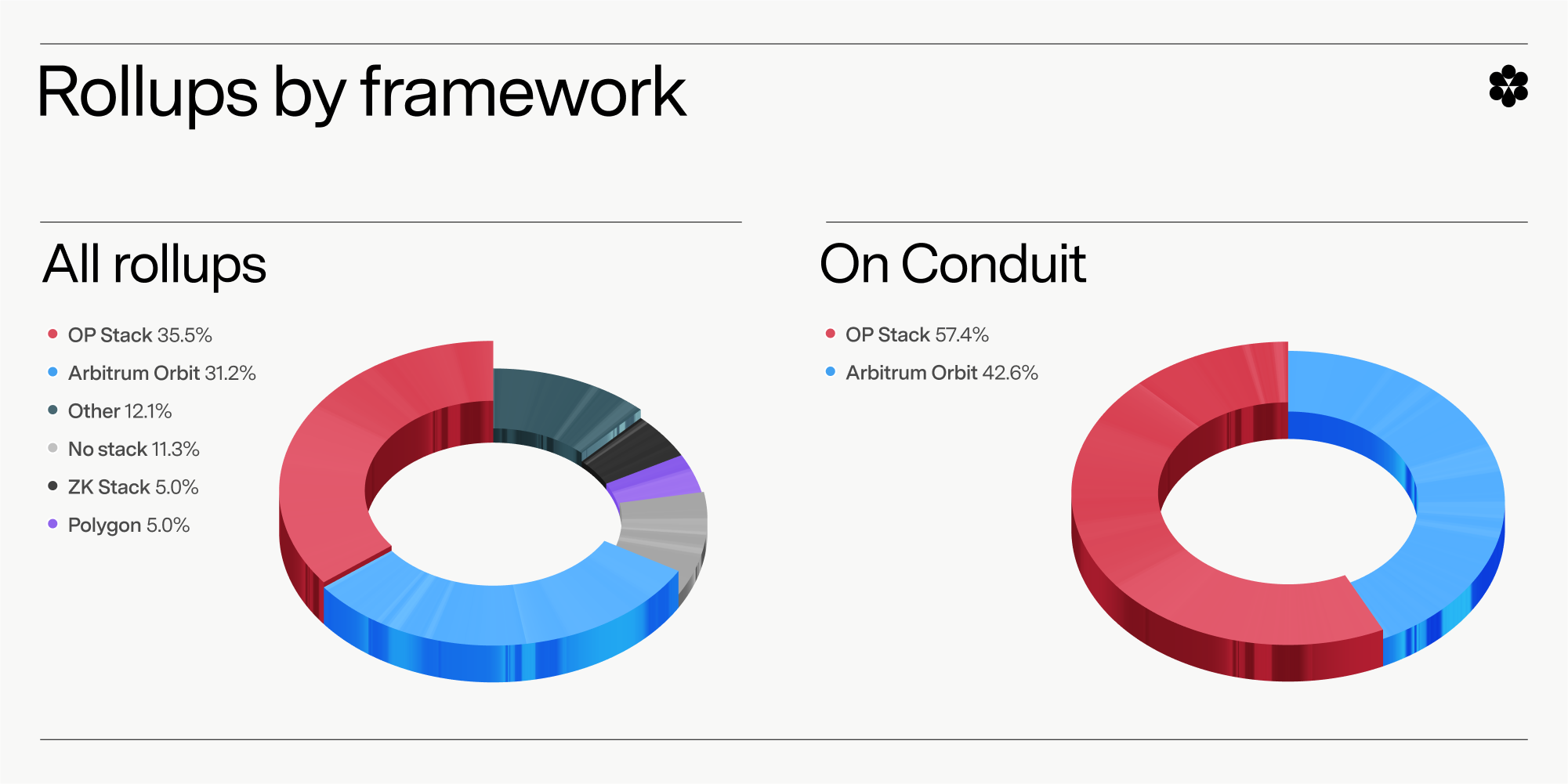
OP Stack and Arbitrum Orbit inherit security directly from Ethereum mainnet validators. ZK Rollups provide cryptographic proof of validity, offering stronger security guarantees against fraud but requiring more complex zero-knowledge circuit development. Polygon CDK’s security model varies based on the underlying chain configuration.
Check the availability of bridges, indexers, and analytics tools for each framework. OP Stack and Arbitrum Orbit benefit from the largest liquidity pools and third-party support. Newer or more specialized frameworks may require building custom infrastructure for indexing or bridging, increasing long-term maintenance costs.
Avoiding Weak Rollup Options
Not every framework fits every chain. While the OP Stack, Arbitrum Orbit, Polygon CDK, and ZK Stack lead 2026 launches, some options lag behind or introduce unnecessary complexity. Choosing a weak framework can delay your mainnet launch or inflate operational costs.
Arbitrum Orbit is often confused with OP Stack. They are distinct. Orbit supports Arbitrum Nitro VM, while OP Stack uses the OP Stack VM. Using the wrong one breaks compatibility with existing tooling and dApps. Polygon CDK requires significant infrastructure knowledge to manage sequencers and data availability layers. It is powerful but overkill for simple token launches.
ZK-based frameworks offer strong privacy but come with steep learning curves. Building zero-knowledge circuits requires specialized expertise that many teams lack. If your goal is speed to market, the development time for ZK proofs may outweigh the benefits. Stick to EVM-compatible frameworks unless your use case demands ZK-specific features.
Always verify the framework's compatibility with your target data availability layer and sequencer setup. Mismatches here are the most common source of delays. Check the official documentation for current VM support and community activity before committing.
Rollup frameworks 2026: common: what to check next
Choosing the right rollup framework in 2026 requires balancing security, speed, and developer familiarity. The market has consolidated around four main stacks: OP Stack, Arbitrum Orbit, Polygon CDK, and ZK Stack. Each handles tradeoffs differently, and the "best" choice depends entirely on your specific use case.
The decision ultimately comes down to your tolerance for complexity versus your need for finality. If you are building a consumer app or game, the speed and liquidity of OP Stack or Arbitrum Orbit are likely sufficient. If you are handling institutional capital or sensitive data, the cryptographic guarantees of ZK Stack justify the higher development overhead. Always test your specific workload against the framework’s constraints before committing.
No comments yet. Be the first to share your thoughts!