Modular rollups have rapidly become the backbone of Ethereum’s scalability strategy, delivering increased throughput and lower transaction fees by processing data off-chain. However, as each rollup operates in its own silo, a new challenge has emerged: fragmented liquidity and limited interoperability. Without seamless cross-rollup communication, users and developers face friction when moving assets or data between different Layer 2s. This is where cross-rollup messaging comes into play, offering a cohesive solution for modular rollup interoperability and unlocking the full potential of decentralized applications.
Illustrated network map of modular rollups enabling cross-chain communication and interoperability in blockchain ecosystems

Why Modular Rollup Interoperability Matters

The rise of specialized rollups such as Celestia, Eclipse, and Conduit has led to an explosion of innovation in blockchain architecture. Each modular rollup excels at optimizing specific aspects, be it execution speed, privacy, or custom logic. Yet these advancements are undermined if assets and data cannot move freely between them. In practice, users may find themselves trapped on one rollup with their tokens or unable to interact with dApps deployed elsewhere.

Interoperability is not just a technical upgrade, it is a strategic necessity for the next generation of decentralized finance (DeFi), gaming, and cross-chain applications. By enabling seamless communication between modular blockchains, we pave the way for greater liquidity, composability, and user-centric experiences across the ecosystem.

“The protocol addresses the challenge of verifying messages across chains in a quasi-linear manner, enabling developers to send arbitrary data. ”

Current Landscape: Leading Cross-Rollup Messaging Solutions

A wave of innovative protocols is tackling the interoperability puzzle head-on. Let’s examine several key solutions that are shaping the future of cross-rollup messaging:

Evolution of Cross-Rollup Messaging Solutions

IBC Protocol Launch 🚀

March 13, 2021

The Inter-Blockchain Communication (IBC) Protocol was launched as part of the Cosmos ecosystem. IBC enables secure authentication and data transfer between independent blockchains, establishing the first widely adopted standard for cross-chain messaging. ![IBC Protocol Logo](/image/legacy/wp/24/assets/c937b812f9758950-cosmos-atom-logo.png)

Axelar Network Debuts

September 27, 2021

Axelar introduces its Cross-Chain Gateway Protocol (CGP) and Cross-Chain Transfer Protocol (CTP), allowing seamless smart contract-based communication and asset transfers across different blockchains and rollups. ![Axelar Logo](/image/legacy/wp/24/assets/6fa71483fd70339c-axelar-axl-logo.png)

LayerZero Mainnet Goes Live

March 30, 2022

LayerZero launches its mainnet, utilizing a Decentralized Verifier Network (DVN) to enable direct, trust-minimized messaging and token transfers between rollups, positioning itself as the 'TCP/IP of blockchains.' ![LayerZero Logo](/image/legacy/wp/24/assets/e992e68d286be509-layerzero-lz-logo.png)

Hyperlane Launches Permissionless Messaging

August 15, 2023

Hyperlane introduces a permissionless interoperability framework, allowing modular rollups to communicate without centralized intermediaries. This enhances cross-chain composability and user experience. ![Hyperlane Logo](/image/legacy/wp/24/assets/4f6b6a2af34f2aec-63e3d3c5d4c3c9a1b5f2d2e8_hyperlane-logo.png)

Entangled Rollups: ZK-Driven Interoperability

June 10, 2024

Entangled Rollups integrate zkRollup concepts to enable trustless, bridge-free interoperability between rollups. This innovation addresses liquidity fragmentation and simplifies cross-rollup user and developer experiences. ![Entangled Rollups Logo](/image/legacy/wp/24/assets/6732d0e63cc737ae-logo.3e4b1f1b.svg)

Key Technologies Powering Cross-Rollup Messaging

  • Hyperlane: This permissionless framework allows any modular rollup to send and receive messages without centralized intermediaries. By integrating Hyperlane’s protocol stack, developers can build applications that span multiple chains while maintaining security and trust minimization. For more on Hyperlane’s approach to inter-rollup connectivity, see this detailed overview.
  • LayerZero: Utilizing a Decentralized Verifier Network (DVN), LayerZero enables direct communication between rollups, supporting arbitrary data transfers as well as token bridging. By acting as the “TCP/IP” layer for blockchains, it empowers developers to maintain granular control over their cross-chain interactions.
  • Axelar: Through its Cross-Chain Gateway Protocol (CGP) and Cross-Chain Transfer Protocol (CTP), Axelar facilitates smart contract-based messaging that connects any chain in the ecosystem. This approach supports asset transfers as well as more complex actions like governance votes or NFT movement.
  • IBC Protocol: Originally designed for Cosmos but extensible elsewhere, IBC provides robust authentication and data transfer capabilities between disparate blockchains, setting a universal standard for secure cross-chain messaging.
  • Entangled Rollups: Pioneering trustless interoperability by leveraging zkRollup primitives without relying on traditional bridges. Entangled designs aim to eliminate liquidity fragmentation while simplifying both developer integration and end-user experience.

The Evolution of Shared Sequencing Layers and Intent-Based Execution

The push toward true modular blockchain communication extends beyond point-to-point messaging protocols. Emerging trends such as shared sequencing layers, exemplified by networks like Espresso and Astria, enable multiple rollups to share decentralized sequencer infrastructure. This allows transactions from different chains to be ordered together in a single block, supporting atomic execution across ecosystems.

An equally significant trend is the rise of intent-based execution environments. Here users specify desired outcomes rather than exact steps; protocols then coordinate across multiple rollups to deliver those results efficiently. These innovations are simplifying both developer workflows and everyday user experiences within multi-chain environments.

As these interoperability solutions mature, the modular rollup landscape is rapidly shifting from isolated silos to an interconnected web of protocols. The result is a blockchain environment where liquidity, assets, and data can flow freely, empowering a new generation of decentralized applications that are not limited by the constraints of any single rollup.

Unlocking Composability and User Experience

With cross-rollup messaging, developers are no longer forced to choose between performance and connectivity. Instead, they can leverage the unique strengths of frameworks like Celestia, Eclipse, and Conduit while ensuring their dApps remain accessible across multiple chains. This composability opens doors for advanced DeFi protocols, imagine lending on one rollup while collateral resides on another, or NFT marketplaces where listings span several execution layers seamlessly.

For users, this translates into a dramatically improved experience. No more navigating complex bridges or worrying about fragmented liquidity. With intent-based execution and shared sequencing layers working in tandem with robust messaging protocols, users interact with applications as if they exist on a single chain, even when their assets and actions traverse many different rollups under the hood.

How to Leverage Modular Rollup Interoperability: A Step-by-Step Guide for Developers and Users
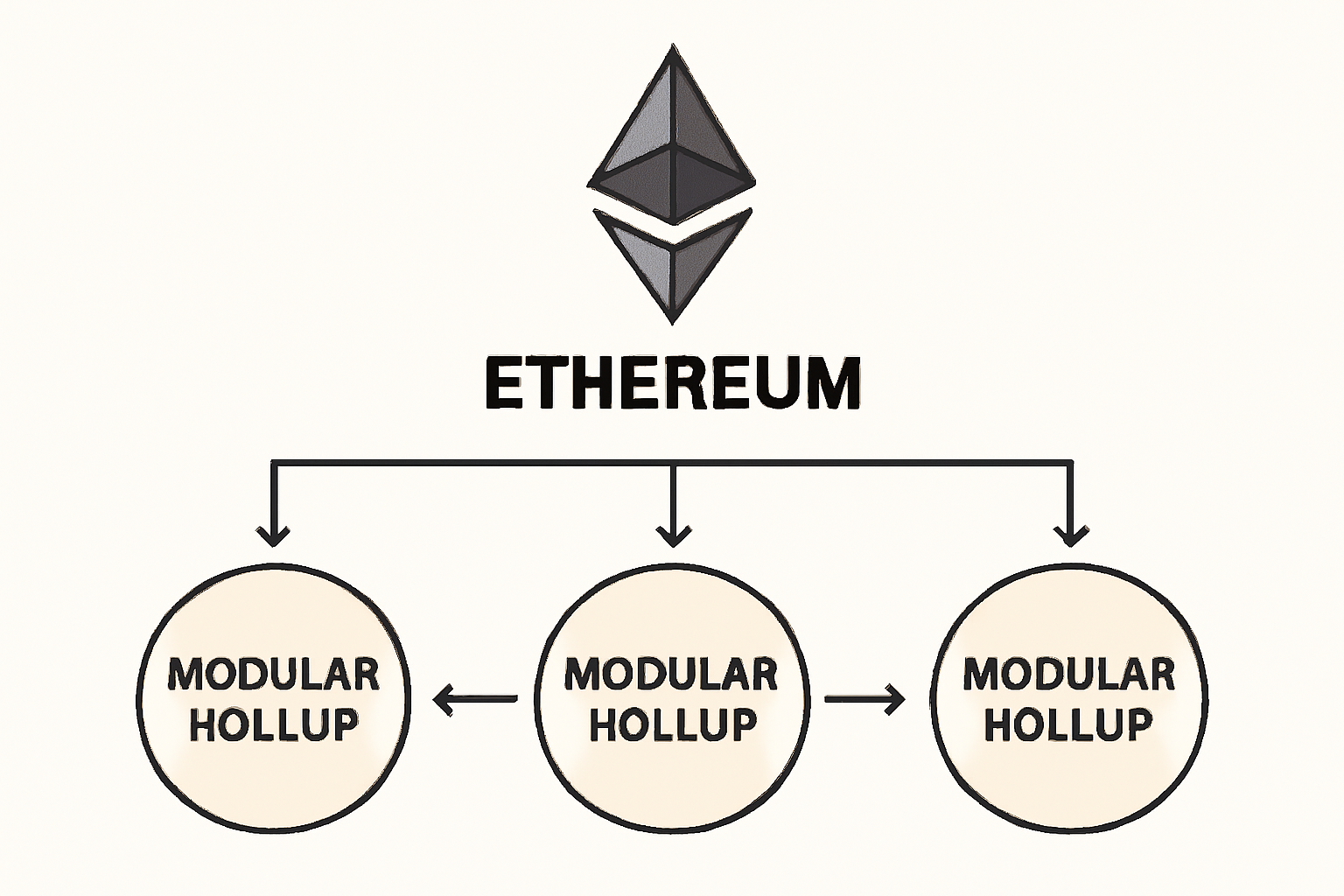
A diagram showing several modular rollups connected to Ethereum, with arrows illustrating data and asset flow between them.
Understand Modular Rollups and Interoperability
Begin by familiarizing yourself with modular rollups—Layer 2 solutions that process transactions off-chain and submit them to Ethereum. Recognize that while they boost scalability, isolated rollups can fragment liquidity and limit cross-chain interactions. Interoperability solutions bridge these gaps, enabling seamless communication and asset transfers across rollups.
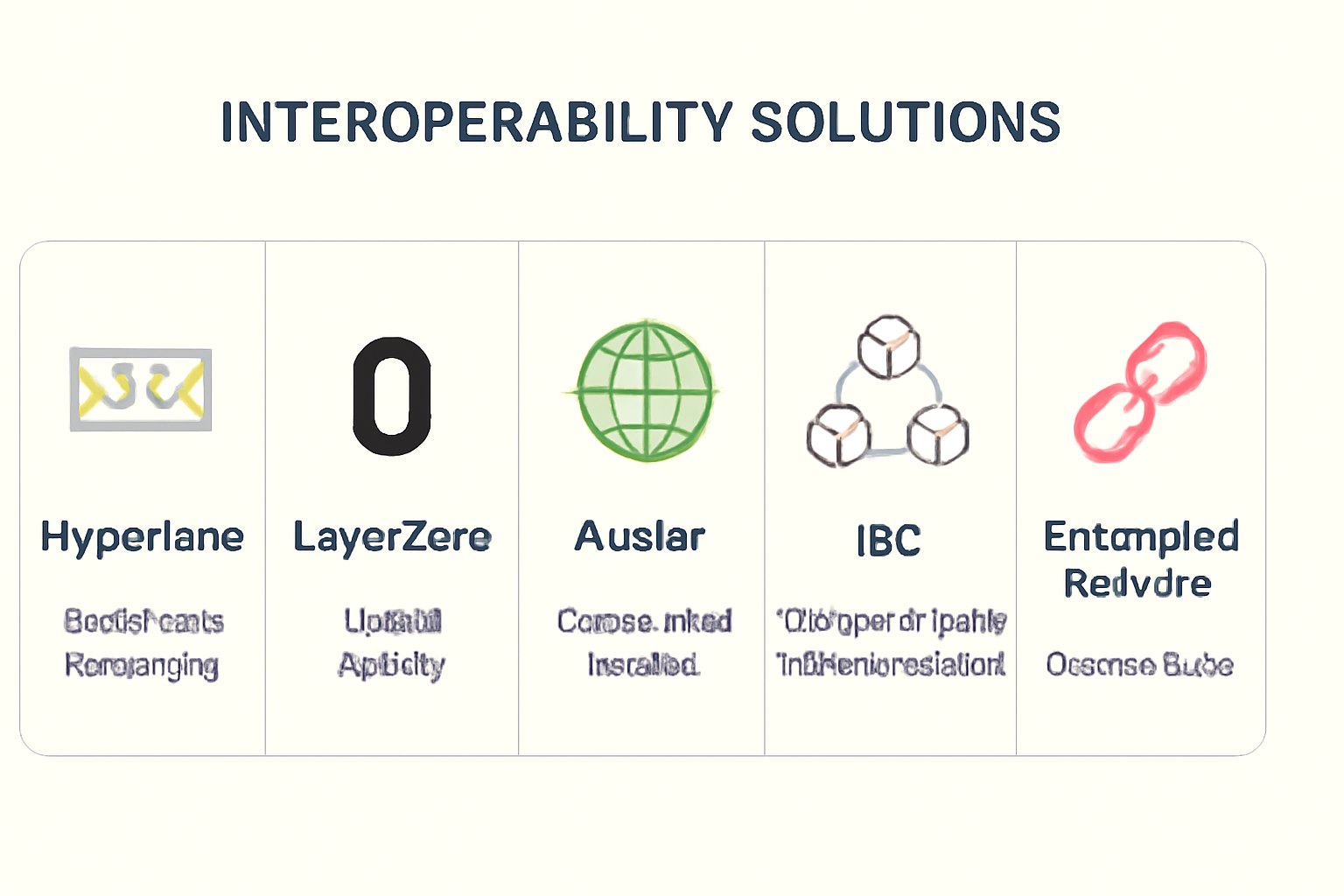
A comparison chart of interoperability solutions like Hyperlane, LayerZero, Axelar, IBC, and Entangled Rollups, each with icons and brief descriptions.
Choose the Right Interoperability Solution
Select an interoperability protocol based on your needs. Options include Hyperlane (permissionless messaging), LayerZero (decentralized verifier network), Axelar (cross-chain smart contracts), IBC (standardized messaging), and Entangled Rollups (trustless, bridge-free transfers). Each offers unique benefits for developers and end-users.
A developer coding on a laptop, with code snippets and protocol logos (e.g., Hyperlane, LayerZero) floating around, and a user interacting with a wallet interface.
Integrate the Interoperability Protocol
For developers, follow the documentation of your chosen solution to integrate it into your rollup or dApp. This typically involves deploying smart contracts, configuring endpoints, and enabling message verification across chains. For end-users, ensure your wallet or application supports the chosen protocol for cross-rollup actions.
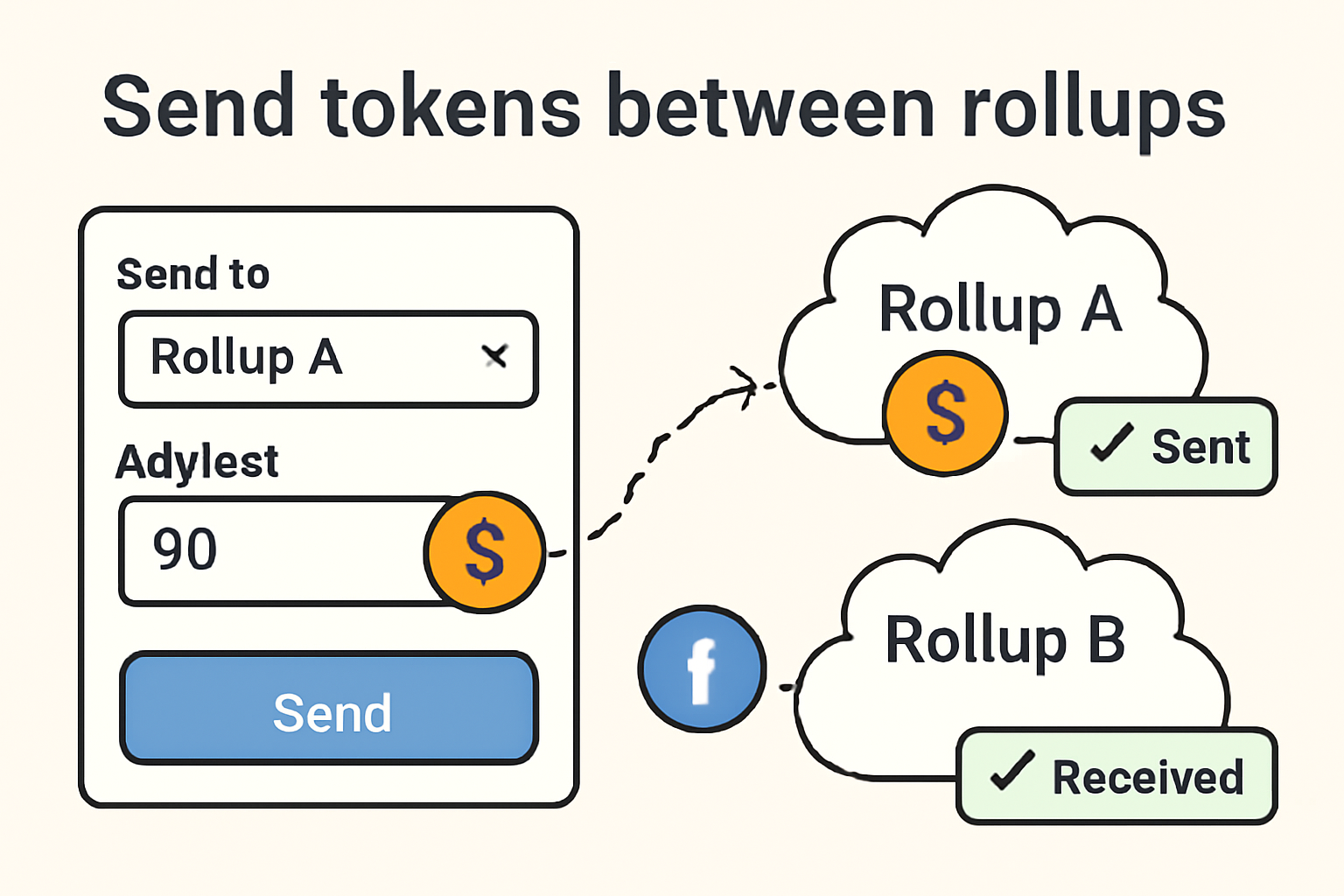
A user sending tokens from one rollup to another via a simple interface, with confirmation messages and asset icons moving between chains.
Initiate Cross-Rollup Actions
Developers can now enable features like cross-rollup asset transfers, messaging, and liquidity sharing within their applications. End-users can perform actions such as sending tokens or interacting with dApps across different rollups, enjoying a seamless experience without manual bridging.
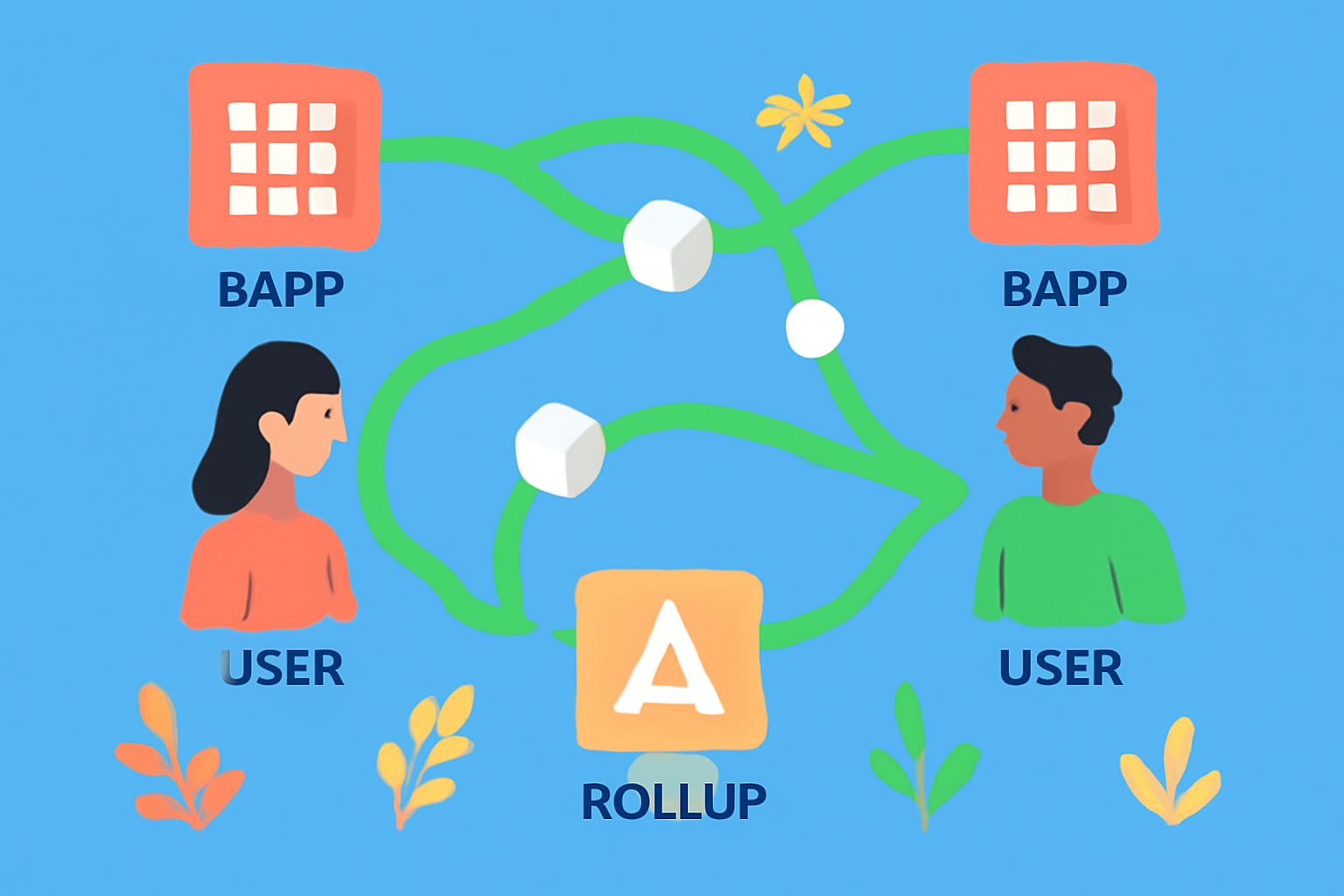
A vibrant ecosystem illustration showing interconnected dApps, users, and rollups, with smooth flows of assets and data between them, symbolizing harmony and efficiency.
Benefit from Enhanced Composability and User Experience
With interoperability in place, both developers and users benefit from unified liquidity, improved composability, and a simplified multi-chain experience. Shared sequencing layers and intent-based execution environments further streamline cross-rollup interactions, making decentralized applications more accessible and powerful.

Challenges Ahead: Security, Standardization, and Adoption

Despite significant progress, several hurdles remain before modular blockchain communication reaches its full potential. Security is paramount, cross-rollup messaging introduces new attack surfaces that require rigorous auditing and ongoing vigilance. Standardization efforts are also critical; without common message formats or authentication schemes, true interoperability risks devolving into bespoke integrations for each protocol pair.

Adoption is another challenge. Integrating cross-rollup messaging often requires substantial upgrades to existing dApps or infrastructure. However, as more projects demonstrate tangible benefits, such as reduced slippage in DeFi or unified user profiles across gaming environments, we can expect momentum to accelerate.

"Cross-rollup interoperability is the secret ingredient powering the next wave of blockchain innovation. "

Looking Forward: The Road to Seamless Modular Blockchain Communication

The future of modular rollup interoperability will likely be defined by continued collaboration between protocol teams and standards bodies. As frameworks like Hyperlane, LayerZero, Axelar, IBC Protocol, and Entangled Rollups evolve, and as shared sequencing layers become mainstream, the ecosystem will move closer to frictionless cross-chain composability.

This paradigm shift will not only benefit developers but also fundamentally improve how users interact with decentralized applications. By breaking down barriers between Layer 2s and enabling seamless asset movement across Celestia, Eclipse, Conduit, and beyond, cross-rollup messaging stands poised to transform both the technical landscape and user expectations in Web3.


Security Risks in Cross-Rollup Messaging: What Developers Need to Know

What are the main security risks associated with cross-rollup messaging protocols?
Cross-rollup messaging protocols introduce new security considerations, primarily around message verification, data integrity, and trust assumptions. Attackers may exploit vulnerabilities in message relayers, decentralized verifier networks, or smart contract implementations, potentially leading to double-spending, replay attacks, or unauthorized asset transfers. Robust protocol design, thorough auditing, and the use of trust-minimized systems like zkRollups or decentralized verifiers are critical to mitigating these risks.
🛡️
How do trust assumptions differ between cross-rollup messaging solutions like Hyperlane, LayerZero, and Axelar?
Each protocol has unique trust models. Hyperlane aims for permissionless, decentralized operation, minimizing reliance on intermediaries. LayerZero uses a Decentralized Verifier Network (DVN), distributing trust across multiple independent actors. Axelar relies on smart contracts and a cross-chain gateway protocol, with security depending on validator honesty and contract correctness. Understanding these models is essential for developers to assess and manage potential risks.
🔗
Can cross-rollup messaging protocols be exploited through replay or double-spending attacks?
Yes, if not properly designed, cross-rollup messaging protocols can be vulnerable to replay and double-spending attacks. These occur when malicious actors resend valid messages or manipulate transaction ordering to extract value. Modern protocols implement nonce management, cryptographic proofs, and strict message validation to prevent such exploits. Developers should ensure these safeguards are integrated and thoroughly tested to maintain system integrity.
🚨
How do shared sequencing layers impact the security of cross-rollup interoperability?
Shared sequencing layers like Espresso and Astria offer enhanced composability but introduce new security dynamics. By aggregating transaction ordering for multiple rollups, they reduce fragmentation but also concentrate risk—if the sequencer is compromised, multiple rollups could be affected. Decentralization, transparent governance, and robust consensus mechanisms are essential to securing these shared layers and minimizing systemic vulnerabilities.
📦
What steps can developers take to minimize security risks when implementing cross-rollup messaging?
Developers should prioritize comprehensive code audits, utilize well-established protocols, and stay updated on the latest security research. Implementing trust-minimized solutions, such as zkRollups or decentralized verifiers, and adhering to best practices for nonce management and message validation are crucial. Ongoing monitoring, bug bounty programs, and community engagement further strengthen protocol resilience against emerging threats.
🔍