

Building EVM-compatible rollups on Celestia’s data availability (DA) layer is rapidly becoming the gold standard for developers seeking scalability, flexibility, and a modular approach to blockchain infrastructure. As of May 2025, more than 56 rollups leverage Celestia’s DA, with 37 already live on mainnet. This surge underscores the growing confidence in Celestia’s unique separation of consensus and execution, which enables developers to focus on application logic while inheriting robust data availability guarantees.
Why Modular Rollups on Celestia Are Gaining Traction
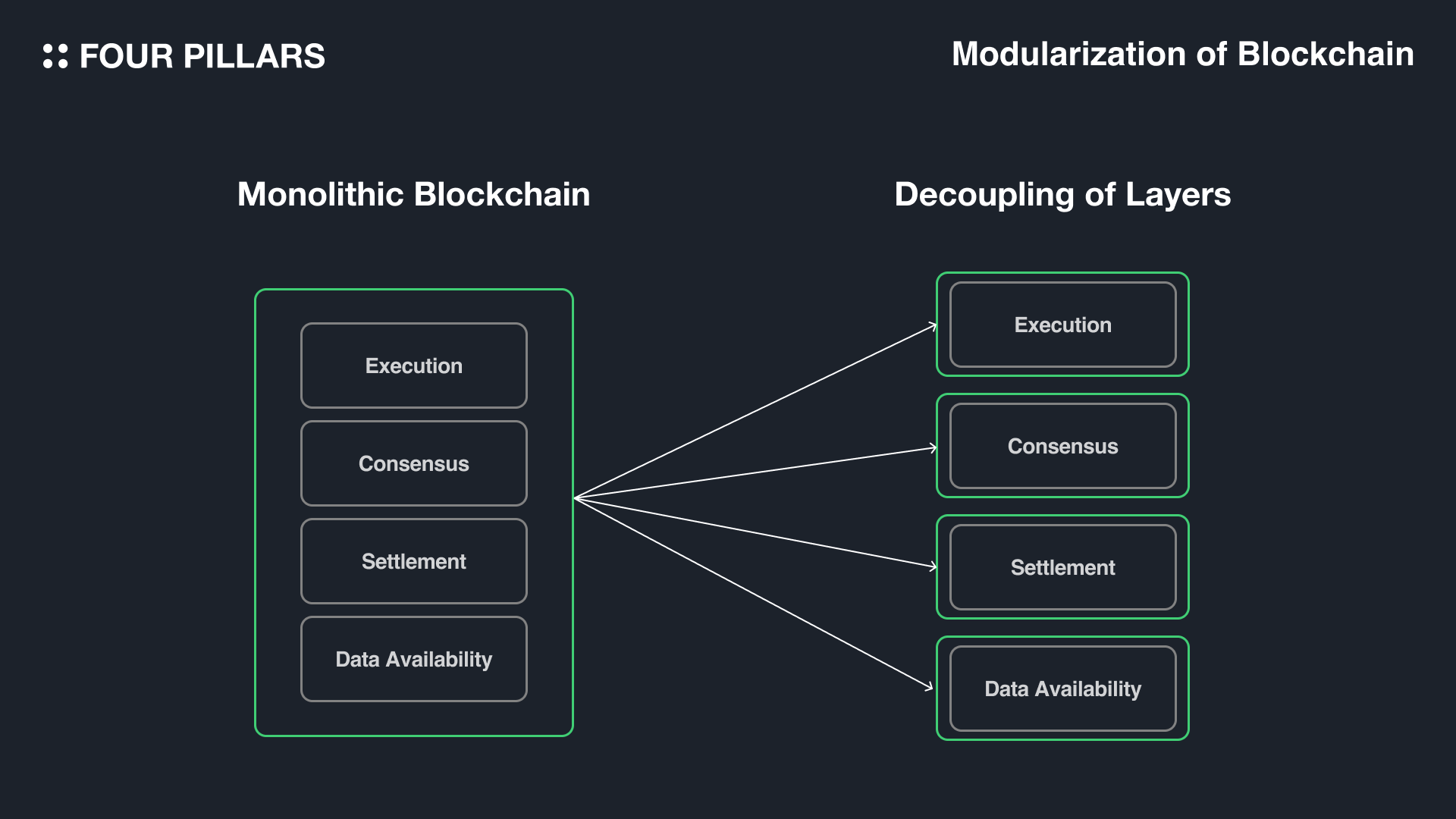
Traditional monolithic blockchains struggle to scale without sacrificing either security or decentralization. Celestia solves this by unbundling consensus and DA from execution, allowing rollups to thrive as independent yet interoperable chains. This modularity means developers can deploy EVM-compatible rollups without running their own consensus networks or worrying about DA bottlenecks.
With frameworks like Rollkit and execution layers such as EVM and and (recently integrated into Rollkit), deploying high-performance EVM environments is now accessible even for small teams. The result? Faster innovation cycles, lower operational overhead, and seamless upgrades, all while relying on Celestia’s highly secure DA layer.
Core Components: Rollkit, EVM and and, and Data Availability in Practice
Rollkit, formerly known as Rollmint, serves as the backbone for modular rollup development. Its ABCI-compatible interface makes it easy to plug in different execution layers, whether you’re building with Cosmos SDK or deploying an Ethereum Virtual Machine (EVM) environment. The integration of EVM and and by Artela Network has been a game changer in 2025: it brings parallelized EVM execution to Rollkit-powered rollups, enabling higher throughput and advanced smart contract capabilities.
The workflow is straightforward:
- Rollkit handles block production, connecting your execution logic with Celestia’s DA network.
- EVM and and provides a familiar environment for Solidity developers, complete with performance enhancements over legacy EVMs.
- Celestia ensures that all transaction data is available and verifiable, removing concerns about hidden state or withheld blocks that can plague traditional L1s.
Step-by-Step: Setting Up Your Development Environment for 2025 Standards
The technical barrier to entry has dropped significantly thanks to improved tooling and documentation. Here’s how most teams are getting started:
- Install Dependencies: Ensure Go is installed (Rollkit is written in Go). Modern package managers streamline this process across OSes.
- Clone the Rollkit Repository: Access the latest codebase directly from its official source. Always check compatibility notes for your target DA layer version.
- Configure Rollkit: Follow official documentation to set up your chain parameters, pointing specifically to Celestia as your data availability provider.
- Add EVM and and Execution Layer: Integrate Artela’s EVM and and module for full Solidity compatibility and enhanced parallelism.
- Create Your Genesis State: Define initial accounts, contracts, and configuration options tailored to your application needs.
This modular approach means you’re not locked into a single stack; frameworks like Caldera and Conduit also support multi-DA deployments if you want optionality across ecosystems. For a deeper dive into optimizing data availability specifically for rollups using Celestia, see our dedicated resource at /optimizing-data-availability-for-rollups-with-celestia.
Once your development environment is configured, the next phase is to implement, test, and deploy your EVM-compatible rollup. The flexibility of Celestia’s DA layer allows you to iterate quickly and focus on application-level improvements rather than infrastructure bottlenecks. A well-architected modular rollup can leverage Celestia batch compression and IBC bridge hooks for even greater scalability and interoperability with other Cosmos and Ethereum ecosystems.
Deployment Best Practices: From Testnet to Mainnet
Testing remains a critical step in any rollup deployment. Begin by deploying your chain to a public or private testnet, simulating realistic transaction loads and edge cases. Utilize Rollkit’s built-in monitoring tools to track block production times, data throughput, and error rates. With EVM and and integrated, you should also benchmark smart contract execution under parallel workloads, this is where many rollups see dramatic performance improvements over legacy EVM setups.
As you prepare for mainnet launch, establish robust sequencer infrastructure and consider redundancy strategies for block producers. Celestia’s DA guarantees do much of the heavy lifting regarding data verifiability, but operational resilience at the execution layer is still paramount.
Example Rollkit Configuration for EVM Rollup on Celestia
Below is an example configuration file (`rollkit-config.yaml`) for deploying an EVM-compatible rollup on Celestia using Rollkit. This configuration outlines essential parameters for connecting to Celestia's Data Availability layer and initializing the EVM chain.
# rollkit-config.yaml

# Rollkit configuration for EVM-compatible rollup deployment on Celestia

chain_id: evm-rollup-1
moniker: my-evm-rollup

# Celestia Data Availability Layer settings
da_layer:
  type: celestia
  rpc_url: https://rpc.celestia.org
  grpc_url: https://grpc.celestia.org
  namespace_id: "c0ffee..."
  auth_token: ""

# EVM settings
evm:
  genesis_file: ./genesis.json
  chain_id: 777
  gas_limit: 30000000

# Rollup node settings
node:
  p2p:
    listen_address: "0.0.0.0:26656"
    seeds: []
  rpc:
    listen_address: "0.0.0.0:26657"
  api:
    enabled: true
    address: "0.0.0.0:1317"

# Logging
log_level: info
Remember to replace placeholder values such as `
Monitoring, Optimization, and Real-World Learnings
After your rollup is live, continuous monitoring becomes essential. Leverage both on-chain analytics and off-chain observability tools to track key metrics like transaction finality times, DA inclusion proofs, gas usage patterns, and user activity growth. Many teams are now using automated scripts to alert operators when DA submission lags or sequencer performance degrades.
Optimization doesn’t stop at launch. Consider tuning parameters such as batch sizes (to maximize Celestia’s DA efficiency), experimenting with Celestia batch compression, or integrating advanced fraud/validity proofs as new frameworks mature. Community feedback from early users can surface pain points or opportunities that aren’t always obvious during testing.
Case Study: Recent Mainnet Successes
The rapid adoption of modular rollup frameworks on Celestia in 2025 has produced several notable success stories. For instance, one high-profile DeFi protocol migrated from a legacy L2 to an EVM and and -powered rollup on Celestia’s DA layer, resulting in transaction throughput tripling, average fees dropping by over 60%, and time-to-finality shrinking below 5 seconds per block.
This kind of real-world performance has attracted both developers and end-users seeking scalable alternatives without sacrificing EVM compatibility or security assurances.
Frequently Asked Questions About Deploying EVM-Compatible Rollups on Celestia
The modular approach championed by Celestia continues to lower barriers for blockchain innovation in 2025. By decoupling execution from consensus and leveraging open frameworks like Rollkit alongside high-performance execution layers such as EVM and and, teams can deploy custom chains tailored precisely to their use case, without inheriting the technical debt of traditional monolithic architectures.
If you’re ready to experiment with next-generation scalability or want more detail on optimizing your chain’s data availability strategy with Celestia, explore our resource at /optimizing-data-availability-for-rollups-with-celestia.




No comments yet. Be the first to share your thoughts!