
Choosing the right rollup stack
In 2026, "rollup frameworks" refers to the modular infrastructure that allows developers to launch Layer 2 blockchains on top of Ethereum. These stacks bundle thousands of transactions off-chain and post compressed data to the mainnet, drastically reducing gas fees while inheriting Ethereum's security. For developers building decentralized applications, choosing a rollup stack is less about picking a generic tool and more about selecting an ecosystem with specific technical trade-offs.
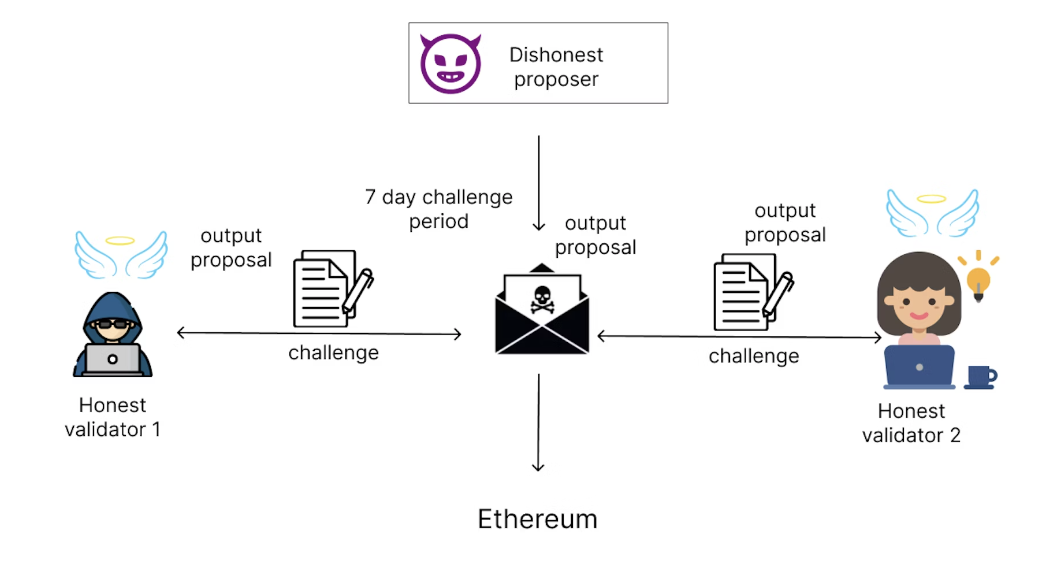
The landscape is defined by two primary architectures: Optimistic Rollups and Zero-Knowledge (ZK) Rollups. Optimistic rollups, such as Arbitrum and the OP Stack (used by Base and Optimism), assume transactions are valid by default and only compute proofs if someone challenges them. This approach offers faster development cycles and broad EVM compatibility, making it the standard for most decentralized finance (DeFi) applications. ZK rollups, including ZKsync and Starknet, generate cryptographic validity proofs for every batch, offering stronger security guarantees and faster finality, though they often require more complex development tooling.
Selecting the right stack depends on your project's priorities. If you need immediate EVM compatibility and a deep liquidity ecosystem, an Optimistic rollup is likely the better fit. If your application requires high-throughput data availability or strict cryptographic security, a ZK rollup framework may be necessary. The following sections break down the leading stacks to help you evaluate which architecture aligns with your technical requirements.
Arbitrum Orbit and Nitro
Arbitrum offers two distinct paths for developers building on Ethereum: Nitro for high-performance chains and Orbit for customizable Layer 3s. The ecosystem split allows teams to choose between raw execution speed and deep protocol customization.
Nitro is the engine behind Arbitrum One and Arbitrum Nova. It replaces the legacy WASM execution environment with a native Go implementation of the Ethereum Virtual Machine (EVM). This shift drastically reduces gas costs and increases transaction throughput. Nitro chains inherit the security of Ethereum while offering a familiar development experience for Solidity developers.
Orbit is the framework for launching independent Layer 3 rollups. Built on top of Nitro, Orbit allows developers to customize the sequencer, data availability layer, and fee markets. This flexibility is ideal for projects that need to operate their own economic incentives or integrate with specific app-chains. Orbit chains settle on Arbitrum, leveraging its existing security and liquidity.
The choice between Nitro and Orbit depends on your project's scale and governance needs. Nitro is best for dApps that want immediate access to Arbitrum's liquidity and low fees. Orbit suits protocols that require full control over their chain's parameters and want to build a distinct ecosystem.
| Feature | Nitro | Orbit |
|---|---|---|
| Best For | High-throughput dApps | App-chains & Custom L3s |
OP Stack and the Superchain
The OP Stack is the open-source software foundation behind Optimism, but its value extends far beyond a single chain. By treating the rollup as a modular stack, it enables the "Superchain" model, where multiple independent chains share a common security layer and communication protocol. This architecture shifts the focus from building isolated silos to creating a cohesive ecosystem of interconnected Layer 2 networks.
For developers, the Superchain model offers a significant advantage: shared security. Instead of each new rollup needing to bootstrap its own validator set and reputation, new chains can inherit the security guarantees of the base Optimism layer. This reduces the friction for launching new projects and allows them to focus on application-level innovation rather than infrastructure maintenance. Chains like Base and Zora are built on this stack, demonstrating how the model supports diverse use cases while maintaining a unified security backbone.
The modularity of the OP Stack also means that developers are not locked into a single chain’s governance or fee structure. They can deploy their own rollup instance, customize the sequencer behavior, and even design their own tokenomics, all while remaining part of the broader Superchain network. This flexibility makes it an attractive option for projects that want the benefits of Ethereum’s security without the constraints of a monolithic Layer 1.
However, this shared model requires careful coordination. As more chains join the Superchain, the complexity of cross-chain messaging and state synchronization increases. Developers must ensure their contracts are compatible with the shared security model and understand the implications of relying on a common base layer for fraud proofs. Despite these challenges, the OP Stack remains a leading choice for teams seeking a scalable, modular, and secure rollup solution.
ZKsync and Starknet: The Cryptographic Heavyweights
Zero-knowledge (ZK) rollups like ZKsync and Starknet solve the finality delay inherent in optimistic stacks. Instead of waiting for a challenge period to pass, these networks generate cryptographic proofs that verify transaction validity instantly. This makes them ideal for applications where immediate settlement and high throughput are non-negotiable.
ZKsync: The Efficiency Specialist
ZKsync focuses on maximizing throughput through custom virtual machines and efficient proof generation. Its architecture is designed to handle high volumes of transactions with lower gas costs compared to older optimistic solutions. For projects prioritizing cost-efficiency and developer familiarity with Solidity, ZKsync offers a streamlined path to mainnet.
Starknet: The Scalability Powerhouse
Starknet takes a different approach by using STARK proofs and a custom Cairo programming language. This allows for greater flexibility in smart contract logic and potentially higher scalability limits. Starknet is particularly strong for complex DeFi protocols and gaming applications that require complex state transitions without sacrificing security.
Finality and Security Trade-offs
While ZK rollups offer near-instant finality, the computational cost of generating proofs can be higher for the sequencer. Optimistic rollups like Arbitrum and OP Stack rely on economic security via fraud proofs, which are cheaper to produce but slower to finalize. ZKsync and Starknet trade computational intensity for time, making them the choice for speed-sensitive dApps.
Developer tools and deployment
The gap between writing code and going live on a Layer 2 rollup depends entirely on the SDK maturity and deployment pipeline. Arbitrum, OP Stack, and ZKsync each offer different levels of friction for developers moving from local testnets to mainnet. The choice often comes down to whether you prioritize familiar tooling or cryptographic proof generation speed.
Arbitrum Nitro
Arbitrum benefits from deep integration with the EVM ecosystem. Developers using Hardhat or Foundry can deploy contracts with minimal configuration changes, as Nitro maintains high compatibility with existing Solidity tooling. The testnet environment is stable, and the documentation for deploying via the Arbitrum SDK is straightforward. This reduces the learning curve for teams already familiar with Ethereum development workflows.
OP Stack
The OP Stack provides a modular approach, allowing projects to customize their execution layer while relying on a shared security layer. The Bedrock upgrade standardized the developer experience, making it easier to spin up a local testnet using the op-geth client. However, the flexibility comes with added complexity; teams must manage their own sequencer infrastructure or rely on third-party providers. The tooling is robust but requires more initial setup than monolithic solutions.
ZKsync
ZKsync offers a dedicated SDK and a unique programming model that supports both EVM compatibility and native account abstraction. The deployment process involves generating zero-knowledge proofs, which can be computationally intensive for local testing. The team provides a comprehensive toolkit for integrating with existing wallets and explorers, but developers must adapt to the specific constraints of the zkEVM. The learning curve is steeper, but the resulting infrastructure offers native scalability benefits.



As an Amazon Associate, we may earn from qualifying purchases.
No comments yet. Be the first to share your thoughts!