
The 2026 rollup landscape
Layer 2 scaling has shifted from experimental proof-of-concept to the primary settlement layer for decentralized applications. In 2026, the choice of rollup framework dictates not just transaction costs, but the fundamental security model and user experience of a protocol. The market has largely bifurcated around two distinct cryptographic approaches: Optimistic rollups and Zero-Knowledge (ZK) rollups. Understanding this divergence is essential for evaluating long-term viability and operational risk.
Optimistic rollups, such as those built on the OP Stack, operate on a "trust but verify" model. They assume all transactions are valid and only compute proofs when a dispute is raised. This approach offers high throughput and broad compatibility with existing Ethereum Virtual Machine (EVM) code, but it introduces a seven-day withdrawal delay to allow for fraud challenges. This delay is a necessary security buffer, ensuring that fraudulent state transitions can be disputed before funds are finalized on Layer 1.
In contrast, ZK rollups, like those developed by ZKsync, generate a cryptographic proof of validity for every batch of transactions before submitting it to Ethereum. This "verify before trust" model eliminates the withdrawal delay, allowing for near-instant finality. While ZK technology requires more complex computational overhead to generate these proofs, it provides a stronger security guarantee that does not rely on user vigilance or time delays.
The decision between these frameworks involves a trade-off between immediate user experience and long-term security assumptions. Optimistic rollups prioritize ease of development and speed of deployment, while ZK rollups prioritize cryptographic certainty and capital efficiency. As the ecosystem matures, the competitive advantage will increasingly favor those who can balance these technical constraints with the actual needs of their users.
Arbitrum One and Orbit: The Optimistic Standard
Arbitrum holds the dominant market share among optimistic rollups, a position built on the maturity of its Arbitrum One mainnet and the flexibility of its Orbit framework. Arbitrum One processes transactions by assuming they are valid and posting compressed data to Ethereum, relying on a seven-day challenge period to resolve disputes through fraud proofs. This design prioritizes high throughput and low fees while inheriting Ethereum's security guarantees for finalized state.
The Orbit framework allows developers to deploy customized Layer 3 chains that connect directly to Arbitrum One. These chains can share security with the base layer or operate with independent validators, enabling specialized use cases like gaming or enterprise applications. This modular approach has attracted a vast ecosystem of applications seeking scalability without sacrificing decentralization.



As an Amazon Associate, we may earn from qualifying purchases.
The Modular Blueprint of OP Stack
OP Stack operates as a modular framework, allowing teams to assemble their own Layer 2 chains by mixing and matching components rather than building from scratch. This approach powers major networks like Base and OP Mainnet, which share a common technical foundation while maintaining distinct governance and economic models. The architecture separates the execution layer from the settlement layer, enabling developers to customize security parameters and data availability strategies to fit specific use cases.
Interoperability and the Superchain Vision
The Superchain vision extends beyond individual chains by creating a unified ecosystem where assets and data move freely between OP Stack deployments. This interoperability reduces friction for users and developers, who can interact with multiple chains as if they were part of a single network. Standardized protocols within the Superchain ensure that bridges and cross-chain messaging remain secure and efficient, addressing one of the most persistent challenges in multi-chain environments.
Sequencer Dynamics and Upgrade Paths
While the framework offers significant flexibility, it introduces operational complexities, particularly around sequencer maintenance. As noted in recent industry discussions, framework lock-in is less severe than in the past, but managing upgrade paths for new OP Stack versions remains a critical responsibility for chain operators. Teams must carefully coordinate upgrades to ensure compatibility across the Superchain, preventing fragmentation and maintaining the seamless experience that defines the network’s appeal.
ZKsync and Starknet Architecture
Zero-knowledge rollups prioritize immediate finality through cryptographic proofs rather than the challenge periods seen in optimistic networks. This architectural choice removes the withdrawal delay, allowing users to move funds back to Ethereum Layer 1 without the multi-day wait typical of fraud-proof systems.
ZKsync Era utilizes a STARK-based proof system, which scales efficiently with transaction volume while maintaining security against quantum threats. The framework emphasizes high throughput for consumer applications, though the computational cost of generating these proofs remains higher than optimistic alternatives. Developers benefit from a toolchain that closely mirrors Ethereum Virtual Machine (EVM) standards, reducing the friction of porting existing smart contracts.
StarkNet takes a different approach with its native Cairo programming language. This custom language allows for greater flexibility in circuit design and potentially lower proof generation costs for complex computations. While the learning curve is steeper for developers accustomed to Solidity, the ecosystem offers superior scalability for high-frequency trading and complex DeFi protocols.
The trade-off between these two frameworks often comes down to development speed versus computational efficiency. ZKsync offers a smoother onboarding experience for Ethereum-native teams, while StarkNet provides deeper customization for specialized use cases. As the ZK rollup landscape matures in 2026, the choice between these architectures will depend heavily on the specific throughput and privacy requirements of the project.
| Feature | ZKsync Era | StarkNet |
|---|---|---|
| Proof System | STARKs | STARKs |
| Language | EVM (Solidity) | Cairo |
| Finality | Immediate | Immediate |
| Dev Experience | High | Moderate |
Arbitrum, OP Stack, and ZKsync Compared
Choosing the right rollup framework requires balancing security guarantees against transaction speed and cost. The following table breaks down the structural differences between Arbitrum, OP Stack, and ZKsync to help you evaluate which architecture fits your deployment needs.
| Feature | Arbitrum | OP Stack | ZKsync |
|---|---|---|---|
| Security Model | Fraud Proofs | Fraud Proofs | Validity Proofs |
| Finality Time | ~10 seconds | ~7 days | ~10 minutes |
| Ecosystem Size | Large | Large | Growing |
| Data Availability | Blob/Calldata | Blob/Calldata | Blob/Calldata |
| VM Compatibility | EVM+ | EVM | zkEVM |
Choosing the right rollup stack
Selecting a rollup framework requires balancing security, speed, and decentralization. There is no single best option; the right choice depends on your project’s specific risk tolerance and operational needs. Developers must evaluate how each stack handles sequencer maintenance and upgrade paths, as these factors heavily influence long-term stability.
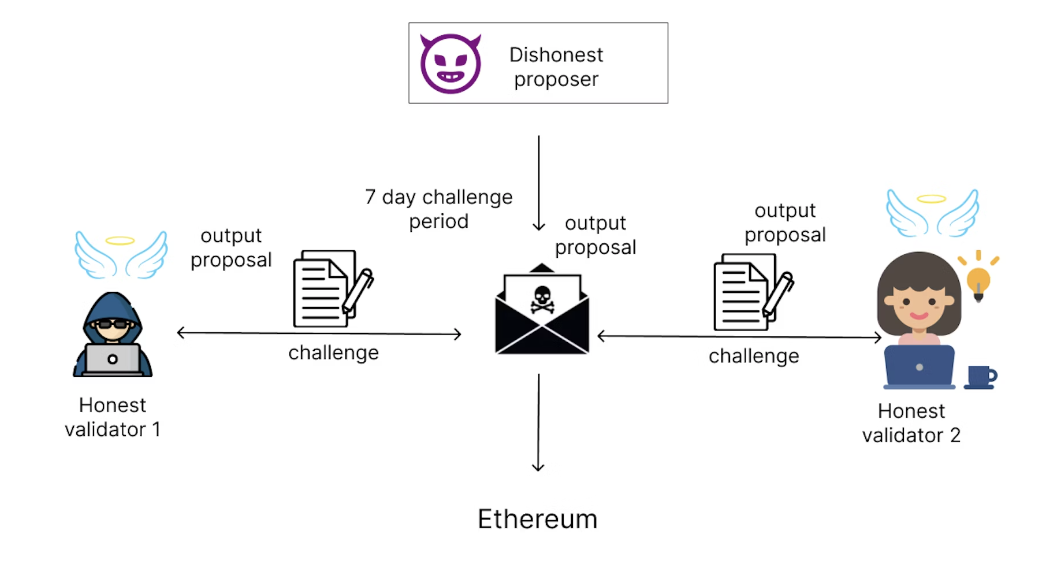
Optimistic rollups like OP Stack offer high security through dispute periods but introduce withdrawal delays. ZKsync provides mathematical proof of validity, offering faster finality. Assess whether your users can tolerate the 7-day challenge period typical of optimistic rollups or if immediate settlement is critical for your use case.
Centralized sequencers pose a single point of failure. Arbitrum and Optimism are actively transitioning to decentralized sequencer networks. Evaluate the roadmap for each framework to ensure the sequencer model aligns with your decentralization goals. A centralized sequencer can censor transactions or halt the chain during maintenance.
Full EVM equivalence simplifies deployment for existing Solidity developers. Arbitrum Nitro and OP Stack offer near-native compatibility, reducing migration friction. ZKsync requires more adaptation due to its distinct virtual machine. If your team lacks ZK-specific expertise, the learning curve may outweigh the technical benefits of zero-knowledge proofs.
-
Security model matches risk profile
-
Sequencer decentralization roadmap is clear
-
EVM compatibility supports existing codebase
-
Upgrade mechanism is tested and reliable
-
Liquidity and user base are sufficient
The decision ultimately hinges on your project’s priorities. If speed and finality are paramount, ZKsync’s approach may be superior. For ease of development and established ecosystem support, Arbitrum and OP Stack remain strong contenders. Always verify the current state of decentralization efforts, as this landscape shifts rapidly with new protocol upgrades.
No comments yet. Be the first to share your thoughts!