
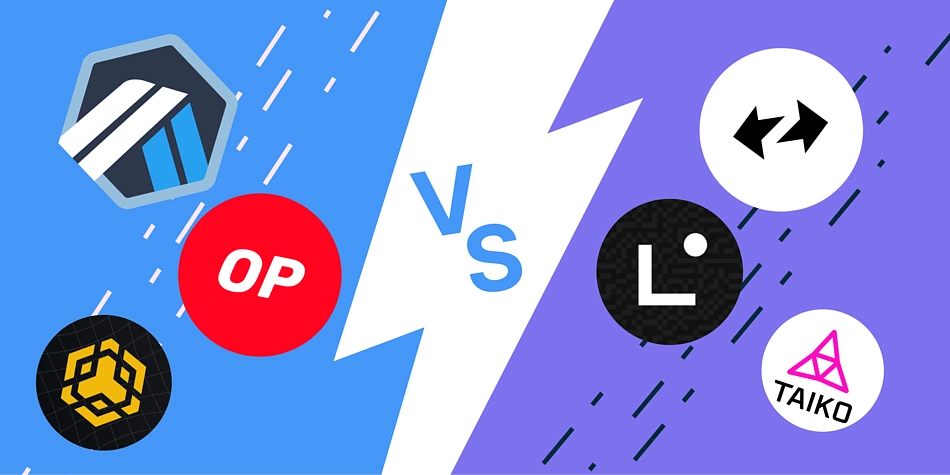
Why rollup frameworks matter in 2026
The narrative around blockchain scaling has shifted decisively. In 2026, developers are bypassing complex sharding architectures in favor of rollup frameworks. This transition is driven by a simple reality: rollups deliver the throughput and cost efficiency that mainnets cannot, without requiring the network-wide consensus changes that sharding demands.
The economic argument is stark. Layer 1 mainnets like Ethereum process transactions at a premium, often costing users several dollars per interaction. Rollups, by contrast, batch these transactions off-chain and post compressed data to the mainnet. This mechanism slashes costs by orders of magnitude. A single transaction on a rollup like Base or Arbitrum typically costs less than a cent, making micro-transactions and high-frequency trading viable on-chain for the first time.
Throughput is the other critical factor. While mainnets are capped by block space and computational limits, rollups can process thousands of transactions per second. This capacity allows for complex smart contract interactions that would otherwise time out or fail on slower networks. The result is a user experience that rivals centralized applications, but with the transparency and security of the underlying blockchain.
The choice between optimistic and zero-knowledge (ZK) rollups now defines the developer experience. Optimistic rollups, such as Optimism and Arbitrum, rely on fraud proofs and assume transactions are valid unless challenged. They are easier to develop for, as they support the EVM (Ethereum Virtual Machine) directly. ZK rollups, including projects like zkSync and StarkNet, use cryptographic proofs to validate transactions instantly. They offer faster finality and stronger security guarantees but require more specialized tooling and compilation steps.
For most applications in 2026, the framework choice hinges on this trade-off. If rapid deployment and EVM compatibility are priorities, optimistic rollups remain the standard. If finality speed and data availability are critical, ZK frameworks are the superior path. The market has matured enough that both options are production-ready, allowing developers to select the architecture that best fits their specific contract requirements.
Optimistic rollups: Speed and compatibility
Optimistic rollups scale Ethereum by assuming transactions are valid until proven otherwise. This approach batches thousands of offchain transactions and posts a single compressed proof to the mainnet, drastically reducing gas costs. Unlike ZK rollups, which require complex mathematical proofs for every batch, optimistic rollups rely on a challenge period. If no one disputes a batch within a set window—typically seven days—the transactions are finalized. This design prioritizes developer familiarity and throughput over immediate finality.
The primary advantage of this architecture is full EVM equivalence. Because optimistic rollups do not need to compile smart contracts into special circuit-friendly code, developers can deploy existing Ethereum dApps with minimal changes. Tools like Arbitrum One and the OP Stack (used by Base and Optimism) offer this compatibility, allowing Solidity code to run exactly as it does on Layer 1. This lowers the barrier to entry for teams migrating from Ethereum mainnet.
| Feature | Arbitrum One | OP Stack (Base/OP) |
|---|---|---|
| EVM Equivalence | Full | Full |
| Challenge Period | 7 days | 7 days |
| Primary Focus | DeFi throughput | Developer ecosystem |
While the speed and compatibility are compelling, the seven-day withdrawal window remains a trade-off. Users must wait for this period to bridge assets back to Ethereum mainnet securely. For high-frequency trading or applications requiring instant settlement, this latency can be a bottleneck. However, for most dApps, the combination of low fees and native Ethereum compatibility makes optimistic rollups the most practical scaling solution today.
ZK rollups: Privacy and instant finality
Zero-knowledge rollups (ZK rollups) process transactions off-chain and submit a cryptographic proof to the main chain. This proof verifies that all computations were correct without revealing the underlying data. The result is a system that prioritizes security and speed over the transparency-first approach of optimistic rollups.
The core advantage is instant finality. Unlike optimistic rollups, which require a 7-day challenge period to detect fraud, ZK rollups are final the moment the proof is verified on Ethereum. This makes them ideal for applications requiring immediate settlement, such as high-frequency trading or real-time gaming.
Data availability and privacy are also significant benefits. ZK rollups can compress transaction data into a single proof, reducing the burden on Ethereum’s layer 1. This compression lowers fees and allows for greater throughput. Additionally, zero-knowledge proofs enable privacy-preserving transactions, where users can prove they meet certain criteria without exposing their full transaction history.
Concrete implementations like zkSync Era and Scroll are leading the charge. zkSync Era offers a zkEVM that is compatible with existing Ethereum tools, making it easier for developers to migrate. Scroll focuses on maximizing EVM compatibility while maintaining high performance. These projects demonstrate the practical viability of ZK technology in 2026.
Choosing the right framework for your stack
Selecting a rollup framework requires matching your technical constraints to the specific architecture of the tool. There is no single best option; the decision hinges on whether your team prioritizes EVM compatibility, development speed, or cryptographic security. The choice defines your sequencer requirements, upgrade paths, and eventual user experience.
Optimistic frameworks for EVM compatibility
Optimistic rollups, such as OP Stack and Arbitrum Nitro, assume transactions are valid unless proven otherwise. This approach allows them to run EVM code natively with minimal modifications. If your existing smart contracts rely heavily on Ethereum-specific opcodes or complex state management, these frameworks offer the smoothest migration path. The trade-off is the seven-day challenge period for withdrawals, which impacts capital efficiency for users.
ZK frameworks for performance and security
Zero-Knowledge rollups, including Polygon CDK and Aztec Connect, generate cryptographic proofs for every batch of transactions. This method offers immediate finality and stronger security guarantees, as validity is mathematically verified rather than assumed. However, ZK development often requires adapting contracts to fit specific proof circuits, which can introduce complexity. Choose ZK if your application demands high throughput and fast settlement, and your team has the resources to handle the compilation overhead.
The Sequencer Trade-off
Beyond the cryptographic choice, you must decide on sequencer centralization. Centralized sequencers offer lower latency and simpler operations but create a single point of failure. Decentralized sequencer sets improve censorship resistance but add operational complexity. As noted in recent developer discussions, framework lock-in is less of a concern than the long-term maintenance of sequencer infrastructure and upgrade paths. Your team’s ability to manage this infrastructure should heavily influence your selection.
Pre-deployment checklist
Before committing to a rollup framework, verify the following against your project requirements:
-
EVM Equivalence: Does the framework support your existing Solidity/Vyper contracts without major refactoring?
-
Sequencer Model: Can your team manage the sequencer, or do you need a managed service?
-
Data Availability: Does the framework use Ethereum calldata, blob data, or an alternative DA layer?
-
Upgradeability: What is the process for upgrading the rollup contracts in case of a critical bug?
-
Tooling: Are there existing CI/CD pipelines and testing frameworks compatible with the chosen stack?
Rollups-as-a-Service options
Deploying a rollup from scratch requires managing sequencers, data availability layers, and validator sets—a heavy lift for teams focused on smart contract logic rather than infrastructure. Rollups-as-a-Service (RaaS) platforms abstract this complexity, offering pre-configured templates that let developers spin up an Optimistic or ZK rollup in hours instead of months.
These providers handle the node infrastructure, allowing your team to focus on application development and user acquisition. By treating the rollup as a managed service, you reduce operational risk and avoid the common pitfalls of misconfigured sequencers or failed data availability commitments.
Leading RaaS providers like Caldera, Chainstack, and AltLayer offer distinct advantages depending on your consensus needs. Caldera excels at rapid deployment of custom L3s, while Chainstack provides robust enterprise-grade infrastructure for both Optimistic and ZK architectures. Choosing the right RaaS partner ensures your rollup remains secure and performant without requiring a dedicated DevOps team.
Frequently asked questions about rollups
What is the difference between Optimistic and ZK rollups?
Optimistic rollups, such as those powering Arbitrum and Optimism, assume transactions are valid and only run verification if a fraud proof is submitted. This makes them faster to develop but requires a seven-day challenge period for funds to withdraw to Ethereum mainnet. ZK rollups, like zkSync Era and Scroll, generate a cryptographic proof for every batch. This allows for instant finality and faster withdrawals, though the development complexity is higher due to the need for zero-knowledge circuit design.
Are Optimistic rollups secure?
Yes, but the security model relies on the Ethereum mainnet. If a malicious actor attempts to submit invalid transactions, anyone can submit a fraud proof to revert the state. The primary risk is the withdrawal delay; if you need immediate access to your funds, the seven-day challenge window is a constraint. ZK rollups offer stronger security guarantees for time-sensitive assets because their validity proofs are verified on-chain immediately, eliminating the withdrawal wait time.
Can I migrate my smart contracts from L1 to a rollup?
Most rollups are EVM-equivalent, meaning you can deploy existing Solidity smart contracts with minimal changes. Frameworks like Arbitrum and zkSync Era support standard Ethereum tooling. However, you must test for gas cost differences and ensure your contracts do not rely on L1-specific opcodes or timing assumptions. For ZK rollups, you may need to refactor contracts to fit within the ZK circuit constraints, which can be more restrictive than standard EVM execution.
Which rollup framework is best for new projects in 2026?
The choice depends on your priority. If you want the largest user base and established liquidity, Optimistic rollups like Arbitrum One are the standard. If you prioritize low gas fees and fast withdrawals for high-frequency trading or gaming, ZK rollups like zkSync Era or Scroll offer better performance. Consider the developer experience: Optimistic rollups have a lower barrier to entry, while ZK rollups require more specialized knowledge but offer superior scalability for specific use cases.
Helpful gear
Use these product recommendations as a starting point, then choose the size, material, and price point that fit how you actually use the gear.

As an Amazon Associate, we may earn from qualifying purchases.
No comments yet. Be the first to share your thoughts!