
The two rollup types defined
Layer 2 rollups solve Ethereum’s congestion by moving computation off the main chain, but they use two very different methods to prove those transactions are correct. Understanding the split between ZK and Optimistic rollups is the foundation for evaluating any L2 project.
ZK rollups: validity proofs
ZK rollups generate a cryptographic proof that every transaction in a batch is valid before posting it to Ethereum. This validity proof allows the network to accept the state change immediately. Because the proof guarantees correctness, users can withdraw funds to Layer 1 without waiting for a challenge period. This structure provides the fastest finality among rollup types.
Optimistic rollups: fraud proofs
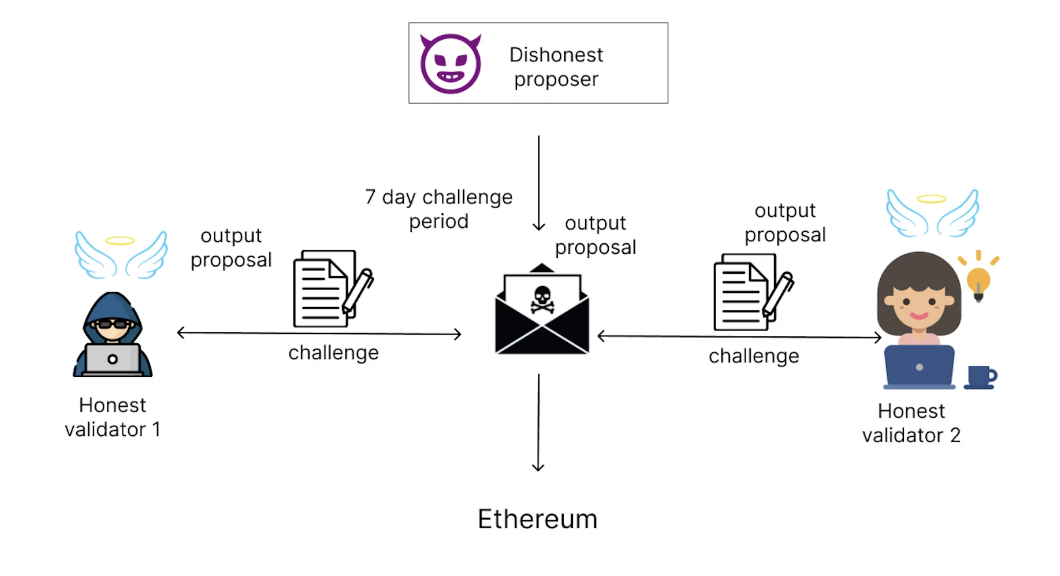
Optimistic rollups assume transactions are valid unless proven otherwise. They post transaction data to Ethereum but do not generate a validity proof upfront. Instead, they rely on a 7-day challenge window where anyone can dispute a fraudulent transaction. If no one disputes the batch within that period, the state is finalized. This approach simplifies development but introduces withdrawal delays.
The choice between these frameworks dictates the trade-offs you face. ZK rollups offer speed and security at the cost of higher computational complexity. Optimistic rollups offer easier development and lower immediate costs but require users to wait for the challenge period. This fundamental architectural split influences everything from transaction fees to withdrawal speeds.
Arbitrum Orbit vs OP Stack performance
Use this section to make the ZKsync vs Starknet vs Arbitrum vs Optimism decision easier to compare in real life, not just on paper. Start with the reader's actual constraint, then separate must-have requirements from details that are merely nice to have. A practical choice should survive normal use, maintenance, timing, and budget. If a recommendation only works in an ideal situation, call that out plainly and give the reader a fallback path.
| Factor | What to check | Why it matters |
|---|---|---|
| Fit | Match the option to the primary use case. | A good deal still fails if it does not fit the job. |
| Condition | Verify age, wear, and service history. | Hidden condition issues erase upfront savings. |
| Cost | Compare purchase price with likely upkeep. | The cheapest option is not always the lowest-cost option. |
ZK Stack vs ZKsync Era architecture
Zero-knowledge rollups prioritize immediate finality and cryptographic security over the dispute-window model of optimistic rollups. The current market is dominated by two primary frameworks: Starknet and ZKsync Era. While both achieve similar security guarantees, their underlying mathematical proofs and resulting developer tooling create distinct trade-offs for builders.
Starknet relies on STARKs (Scalable Transparent Arguments of Knowledge), which are quantum-resistant and do not require a trusted setup. This makes Starknet highly secure against future threats but computationally expensive to generate proofs. Developers use Cairo, a domain-specific language that requires a different mental model than standard EVM-compatible code. This approach favors high-throughput, complex applications that need robust privacy features or massive scale.
ZKsync Era uses PLONKs (Permutations over Lagrange-bases for Oecumenical Noninteractive arguments of Knowledge), which are faster to generate but require a trusted setup. The ecosystem is built on a custom virtual machine, zkEVM, which allows developers to port existing Solidity code with minimal changes. This lower barrier to entry has driven significant adoption for DeFi and consumer applications that prioritize speed and cost over the absolute theoretical security of STARKs.
The choice between these stacks often comes down to the project's specific needs. Starknet offers a more specialized, high-performance environment for complex logic, while ZKsync Era provides a smoother transition for teams already familiar with the Ethereum Virtual Machine.
| Framework | Proof Type | Virtual Machine | Trusted Setup |
|---|---|---|---|
| Starknet | STARK | Cairo | No |
| ZKsync Era | PLONK | zkEVM | Yes |
Gas fees and withdrawal delays
The cost of using a rollup splits into two distinct buckets: the immediate fee for posting data to Ethereum and the time value of money tied up during withdrawals. Understanding this split is essential because the cheapest transaction fee does not always mean the fastest access to your capital.
L1 data availability costs
Every rollup must publish its transaction data to Ethereum to ensure security. This is where gas fees originate. The fee you pay is primarily driven by Ethereum’s base fee and the size of the data blob. Rollups that compress data more efficiently, such as ZKsync and Starknet, often post smaller data payloads than optimistic rollups like Arbitrum and Optimism. Smaller payloads mean lower L1 data costs, which can translate to cheaper transactions for the end user.
However, these costs fluctuate with Ethereum network congestion. During high-demand periods, the price of posting data rises for all rollups. While the relative efficiency of ZK rollups remains, the absolute cost increases for everyone. This dynamic makes L1 data availability the primary variable in your transaction costs.
The withdrawal timeline trade-off
Withdrawals reveal the fundamental architectural difference between rollup types. Optimistic rollups like Arbitrum and Optimism assume transactions are valid by default. They rely on a "challenge window" to allow validators to dispute fraudulent activity before finalizing the withdrawal on Ethereum. This security model requires a delay, typically around seven days, to ensure the network can detect and punish bad actors. For users moving large sums, this lock-up period represents a significant opportunity cost and liquidity risk.
In contrast, ZK rollups (ZKsync and Starknet) use cryptographic proofs to verify validity instantly. There is no challenge window because the proof itself guarantees correctness. This allows withdrawals to be finalized in minutes rather than days. You trade higher computational complexity for immediate liquidity. If you need rapid access to your funds, the ZK architecture offers a distinct advantage over the optimistic model.
Developer experience and tooling
Deployment ease, debugging, and community support define the practical friction of each rollup framework. While the underlying cryptography differs, the developer interface is increasingly converging around Ethereum compatibility.
Framework lock-in and EVM alignment
Framework lock-in remains a real concern, though it is less severe than in previous cycles. Most 2026 launchers use the OP Stack, Arbitrum Orbit, or ZK Stack, which prioritize EVM equivalence. This alignment allows developers to deploy existing Solidity contracts with minimal modification. However, unique features like Arbitrum’s Nitro or Starknet’s Cairo-to-EVM bridging require specific knowledge. The bigger operational hurdle is often sequencer maintenance rather than initial deployment.
Debugging and community support
Debugging on optimistic rollups can be slower due to the challenge window, whereas ZK proofs offer immediate finality but complex tooling. Community support is strongest for Arbitrum and Optimism, which have larger ecosystems of third-party tools like block explorers and analytics dashboards. Starknet offers robust documentation but a steeper learning curve for developers accustomed to EVM. ZKsync’s tooling is improving rapidly but remains less mature than its competitors.
FAQ: Rollup questions answered
What are the two types of rollups?
The two main types are Optimistic Rollups and Zero-Knowledge (ZK) Rollups. Both batch transactions offchain to reduce congestion on Ethereum, but they verify validity differently. Optimistic rollups assume transactions are valid unless proven otherwise, while ZK rollups use cryptographic proofs to verify correctness instantly.
How does Optimism's rollup really work?
Optimism publishes state commitments to Ethereum without immediate validity proofs. These commitments enter a "challenge window"—typically 7 days—where anyone can dispute fraudulent activity. If no disputes occur, the transactions are finalized. This design prioritizes simplicity and compatibility over immediate finality.
Why do optimistic rollups take 7 days to withdraw?
The delay is a security feature, not a bug. The challenge period allows the network to detect and dispute invalid state roots before they are permanently recorded on Layer 1. While this adds security, it means users must wait for the window to close before moving funds back to Ethereum.
What is the difference between sidechain and rollup?
Rollups inherit Ethereum's security by posting data to Layer 1, whereas sidechains operate independently with their own consensus mechanisms. Sidechains often offer faster, cheaper transactions but sacrifice the robust security guarantees of the mainnet. Rollups are generally preferred for applications requiring high security and Ethereum compatibility.
Helpful gear
Use these product recommendations as a starting point, then choose the size, material, and price point that fit how you actually use the gear.



As an Amazon Associate, we may earn from qualifying purchases.
No comments yet. Be the first to share your thoughts!