
Why rollups dominate layer 2 in 2026
The Ethereum scaling landscape has shifted from experimental testing to production dominance. In 2026, rollups are no longer just a secondary option; they are the primary method for processing transactions on the network. This shift is driven by the maturation of both Optimistic and Zero-Knowledge (ZK) proof systems, which now offer the throughput and cost-efficiency that legacy Layer 1 networks cannot match.
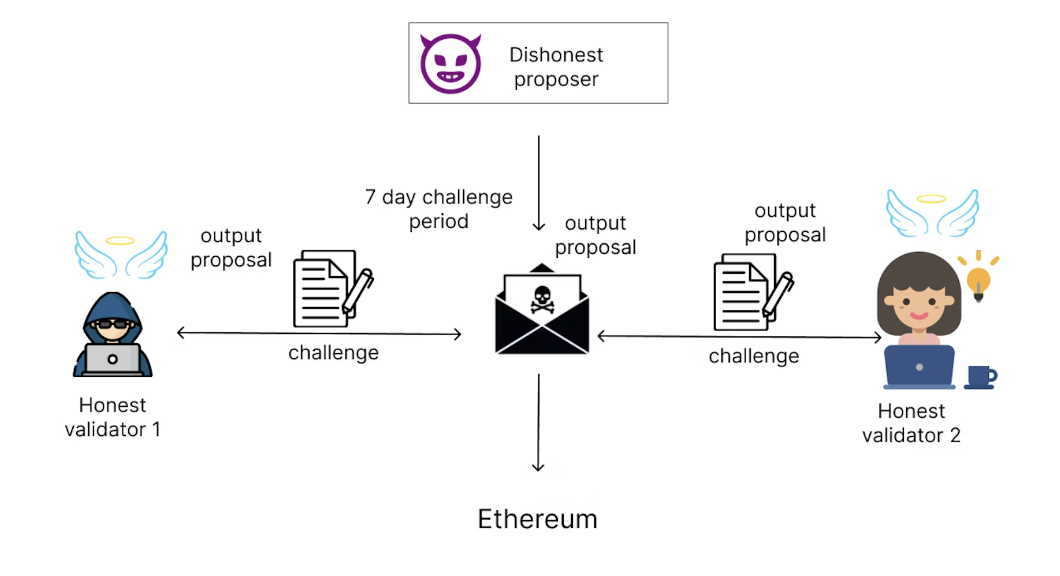
The distinction between proof types remains critical for developers and investors. Optimistic rollups, such as OP Mainnet and Arbitrum, batch transactions off-chain and assume validity unless challenged. This approach offers faster development cycles but requires a challenge period for withdrawals. ZK rollups, including ZKsync and Starknet, generate cryptographic proofs that verify transaction validity instantly. While ZK technology is more complex to build, it provides faster finality and stronger security guarantees.
Market data reflects this technical maturation. The Rollups-as-a-Service (RaaS) sector is expanding rapidly, with projections indicating growth from $89.2 million in 2025 to $354 million by 2032. This infrastructure boom allows teams to deploy custom rollups without managing the underlying consensus layer, accelerating adoption across DeFi, gaming, and AI sectors.
This transition to rollups has fundamentally changed how Ethereum scales. Instead of forcing all transactions onto the base layer, the network now uses rollups to handle the heavy lifting. This modular approach allows Ethereum to maintain its security while achieving the transaction speeds required for mainstream applications. As the five major frameworks—Arbitrum, OP Mainnet, ZKsync, Starknet, and Base—compete for dominance, the choice of framework will dictate the user experience and cost structure for millions of daily users.
5 Rollup Frameworks for 2026: Arbitrum, OP Mainnet, ZKsync, Starknet, and Base
Selecting a rollup framework in 2026 requires evaluating concrete trade-offs between finality speed, security models, and developer tooling rather than relying on theoretical benchmarks. This analysis compares Arbitrum, OP Mainnet, ZKsync, Starknet, and Base using official documentation and primary adoption metrics to support high-stakes infrastructure decisions.
1. Arbitrum: The optimistic leader
Arbitrum dominates transaction volume with its Nitro stack, delivering near-instant finality through optimistic rollups. It offers the most mature developer ecosystem, supporting existing Ethereum tooling with minimal changes. This approach prioritizes high throughput and low costs, making it the default choice for DeFi applications seeking scalability without compromising security guarantees or compatibility.

2. OP Mainnet: The modular challenger
Built on the open-source OP Stack, OP Mainnet enables modular blockchain construction through the Superchain vision. It allows developers to deploy custom L2s with shared security and liquidity. This framework emphasizes composability and standardization, offering a flexible infrastructure that balances decentralization with the ability for projects to customize their governance and economic models independently.
3. ZKsync: The zero-knowledge standard
ZKsync Era leverages zero-knowledge proofs to guarantee mathematical validity for every transaction, offering stronger security assumptions than optimistic models. Its account-abstraction-first design simplifies user onboarding by integrating smart contract wallets natively. This framework appeals to developers prioritizing cryptographic proof of correctness and seamless user experiences without complex gas management overhead.
4. Starknet: The Cairo ecosystem
Starknet utilizes STARK proofs for scalability, distinguishing itself with the Cairo programming language. Cairo enables advanced meta-programming and parallel execution, allowing for complex computations that other VMs cannot efficiently handle. This unique toolset attracts developers building high-performance applications that require significant computational power, offering a distinct advantage in specialized dApp development.
5. Base: Coinbase’s user-friendly rollup
Base, built on the OP Stack, focuses heavily on user experience and mainstream adoption. Backed by Coinbase, it integrates seamlessly with major Web2 platforms, lowering the barrier to entry for new crypto users. Its design prioritizes simplicity and accessibility, making it an ideal choice for projects targeting mass-market applications rather than specialized institutional or developer niches.

How to choose the right rollup framework
Selecting a rollup framework requires aligning technical constraints with business goals. The decision hinges on three core variables: EVM compatibility, the security model (Optimistic vs. ZK), and available developer tooling. There is no universal best option; the right choice depends on your specific deployment needs.
EVM compatibility determines how easily you can migrate existing Solidity smart contracts. Arbitrum, OP Mainnet, and Base offer near-native EVM support, allowing developers to deploy unmodified code. ZKsync and Starknet require more significant adaptation, though they offer higher throughput and lower costs for specific use cases.
Security models differ in their finality guarantees. Optimistic rollups assume transactions are valid unless proven otherwise, relying on a challenge period. ZK rollups use cryptographic proofs to validate every transaction instantly, offering stronger security guarantees but higher computational overhead. Choose ZK for high-value, low-latency applications; choose Optimistic for general-purpose dApps where speed of deployment matters more than instant finality.
| Framework | Type | EVM Compatible | Security Model |
|---|---|---|---|
| Arbitrum | Optimistic | Yes | Fraud Proofs |
| OP Mainnet | Optimistic | Yes | Fraud Proofs |
| Base | Optimistic | Yes | Fraud Proofs |
| ZKsync | ZK | Partial | Validity Proofs |
| Starknet | ZK | No | Validity Proofs |


As an Amazon Associate, we may earn from qualifying purchases.
Frequently asked questions about rollups
Which rollup service is best for blockchain projects? There is no single "best" rollup; the right choice depends on your project's specific trade-offs between speed, cost, and decentralization. Optimistic rollups like OP Mainnet and Base offer strong developer compatibility with Ethereum Virtual Machine (EVM) equivalence, making them ideal for dApps prioritizing ease of migration. ZK-rollups like ZKsync and Starknet provide superior finality and lower data costs but require more complex development tooling. For AI agents or high-throughput data needs, specialized ZK architectures may offer distinct advantages over general-purpose EVM chains.
How does Optimism's rollup really work? Optimistic rollups operate on a "fraud proof" model. They assume all transactions are valid by default and batch them off-chain before posting the compressed data to Ethereum. This approach allows for high throughput and full EVM compatibility. However, if a transaction is invalid, there is a seven-day challenge period during which anyone can submit a fraud proof to dispute the state. This security mechanism ensures that the L2 state remains anchored to Ethereum's security without requiring every user to verify every transaction individually.
Which rollup became a full ZK rollup for AI agents? Phala Network recently transitioned from an optimistic model to a full ZK rollup using OP-Succinct technology, powered by Conduit. This shift enables Phala to offer the privacy and scalability of zero-knowledge proofs while maintaining the EVM compatibility needed for broader developer adoption. This move highlights a growing trend where projects are adopting ZK technology to enhance security for sensitive applications, including AI agents and confidential computing workloads, without sacrificing the developer experience provided by existing EVM ecosystems.
No comments yet. Be the first to share your thoughts!