
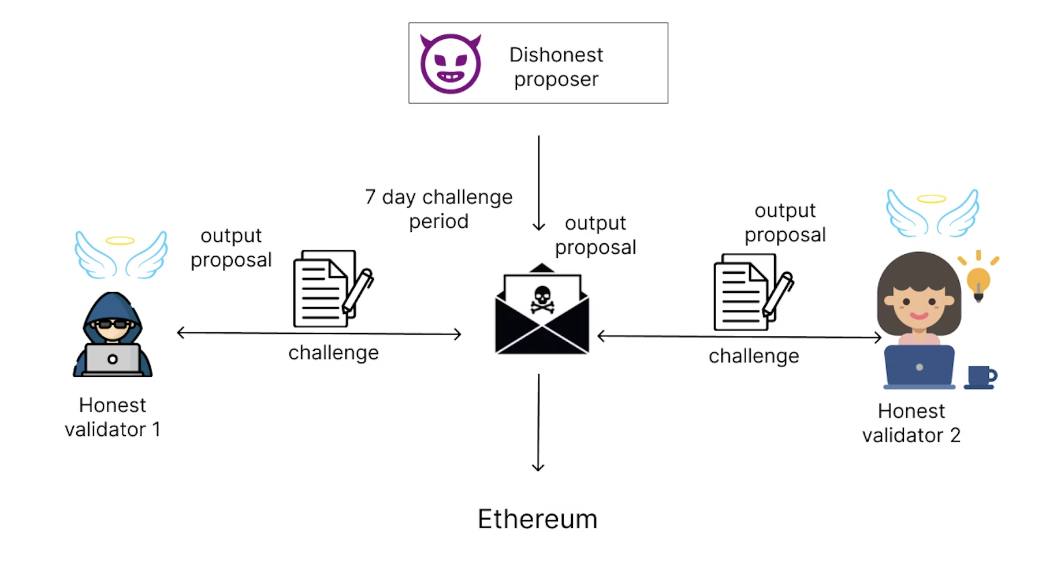
Rollup frameworks in 2026: how we picked the contenders
Rollup technology has moved from experimental to essential for any enterprise building on Ethereum. In 2026, the decision is no longer about whether to use a rollup, but which framework best handles the scale and complexity of your application. This comparison focuses on three distinct approaches: Next.js 15 for its full-stack maturity, Remix for its data-loading reliability, and Astro for its content-first performance.
We selected these frameworks based on strict enterprise criteria. First, we evaluated their ability to handle high-throughput transaction batching without compromising user experience. Second, we assessed their integration capabilities with existing Layer 2 infrastructure, including Optimistic and ZK rollups. Finally, we looked at long-term maintainability, prioritizing frameworks with strong official documentation and active community support.
The goal is to help you choose the right tool for your specific scalability needs, not just the most popular one. Each framework offers unique tradeoffs in developer experience, bundle size, and server-side rendering capabilities. Understanding these differences is critical for making a decision that will impact your application's performance and cost structure for years to come.
15 critical checks for the 2026 rollup framework showdown
Use this section to make the Rollup Framework Showdown decision easier to compare in real life, not just on paper. Start with the reader's actual constraint, then separate must-have requirements from details that are merely nice to have. A practical choice should survive normal use, maintenance, timing, and budget. If a recommendation only works in an ideal situation, call that out plainly and give the reader a fallback path.
The simplest way to use this section is to write down the must-have criteria first, then compare each option against those criteria before weighing nice-to-have features.
- Verify the core specs: Confirm the core specs, condition, and fit before comparing extras. Ensure the framework supports the specific version of Solidity or Rust you are using for your smart contracts.
- Price the downside: Look for the repair, maintenance, or replacement cost that would change the decision. Calculate the potential gas fees for contract upgrades and the cost of migrating users if you switch frameworks later.
- Compare alternatives: Check at least two comparable options before treating one listing as the benchmark. Do not rely solely on the default settings; test with custom configurations to see how they impact performance.
- Assess sequencer latency: Measure the time between transaction submission and finality. For high-frequency trading, sub-second latency is non-negotiable, whereas content sites can tolerate longer delays.
- Evaluate data availability costs: Analyze the cost per byte of data posted to Ethereum mainnet. OP Stack and Arbitrum Orbit use different strategies (calldata vs. blob space), which can drastically change monthly operational costs.
- Check ZK proving overhead: If using ZK Stack, estimate the computational resources required for proof generation. This includes GPU availability and the complexity of integrating with existing prover networks.
- Review bridge security: Audit the cross-chain bridge protocols you plan to use. Look for historical security incidents and the size of the security budget backing the bridge.
- Test developer onboarding: Time how long it takes a new developer to set up a local environment and deploy a simple contract. Frameworks with complex configuration files may slow down team scaling.
- Analyze bundle size: Measure the JavaScript bundle size for client-side applications. Larger bundles increase load times and reduce user retention, especially on mobile networks.
- Verify monitoring capabilities: Ensure the framework integrates with your existing observability tools (e.g., Prometheus, Grafana). Lack of real-time metrics can lead to undetected failures during peak traffic.
- Check wallet compatibility: Test the framework with popular wallets (MetaMask, WalletConnect, Coinbase Wallet). Incompatibilities can block user access and require custom workarounds.
- Assess indexer performance: Evaluate how quickly the indexer syncs new blocks. Lag in data indexing can lead to stale UI states and incorrect user balances.
- Review deployment automation: Check the ease of setting up CI/CD pipelines for automated testing and deployment. Manual deployments increase the risk of human error and security vulnerabilities.
- Evaluate community support: Look at the frequency of updates, issue resolution times, and the size of the active community. Strong community support can provide critical help during outages.
- Plan for long-term maintenance: Consider the framework’s roadmap and the team’s ability to maintain it over 3-5 years. Avoid frameworks with uncertain futures or declining adoption.
Pick the right fit
Use this section to make the Rollup Framework Showdown decision easier to compare in real life, not just on paper. Start with the reader's actual constraint, then separate must-have requirements from details that are merely nice to have. A practical choice should survive normal use, maintenance, timing, and budget. If a recommendation only works in an ideal situation, call that out plainly and give the reader a fallback path.
-
Verify the basicsConfirm the core specs, condition, and fit before comparing extras.
-
Price the downsideLook for the repair, maintenance, or replacement cost that would change the decision.
-
Compare alternativesCheck at least two comparable options before treating one listing as the benchmark.
The 2026 rollup framework showdown: next.js 15 vs. remix vs. astro for enterprise scalability: what to check next
Which framework best supports enterprise-grade scalability for rollup infrastructure?
OP Stack remains the standard for optimistic rollups, while Arbitrum Orbit and ZK Stack dominate their respective categories. For enterprise teams prioritizing security and existing tooling, OP Stack offers the most mature ecosystem. If your focus is on raw throughput with minimal fraud proofs, Arbitrum Orbit provides a robust alternative. ZK Stack is the only viable choice if you require zero-knowledge proofs, though it demands more specialized cryptographic expertise.
How does framework lock-in affect long-term maintenance costs?
While framework lock-in is less severe in 2026 than in previous years, it remains a significant operational risk. The primary challenge is not code portability but sequencer maintenance. Each framework has its own sequencer client and consensus logic. Migrating a live rollup between OP Stack and Arbitrum Orbit is not a simple code swap; it requires re-architecting the settlement layer and potentially migrating users. Choose a framework based on your team’s ability to maintain its specific sequencer infrastructure, not just its developer experience.
What are the hardware and infrastructure requirements for each framework?
OP Stack and Arbitrum Orbit share similar infrastructure needs, requiring standard L2 sequencer nodes and data availability layers. However, OP Stack’s reliance on Ethereum’s calldata or blob space for data availability can lead to higher gas costs during peak congestion. ZK Stack demands significantly more computational power due to proving circuits. Running a ZK prover cluster is resource-intensive and often requires dedicated GPU infrastructure, making it more expensive to operate than optimistic alternatives.
Can I mix different rollup frameworks in a single enterprise stack?
Yes, but interoperability is complex. Many enterprises run multiple rollups for different use cases—for example, an OP Stack chain for user-facing transactions and an Arbitrum Orbit chain for high-frequency trading. Cross-chain communication requires custom bridges or relying on third-party protocols like LayerZero. Ensure your architecture includes robust monitoring for cross-chain messaging failures, as bridge exploits remain a primary security vector in 2026.
Helpful gear
Use these product recommendations as a starting point, then choose the size, material, and price point that fit how you actually use the gear.

As an Amazon Associate, we may earn from qualifying purchases.
No comments yet. Be the first to share your thoughts!